

In this article I’m going to explain the Asset Creator Business model.
It’s the model I’ll use to get to $1M and beyond.
I came up with it after burning out after I hit $15k/mo doing things ‘the right way’.
I won’t bore you with a long story, but let me quickly tell you the problem I had and how the Asset Creator model helped me to fix this. If you’re a creative person who wants to make a lot of money online while doing meaningful work, this is for you.
You see, I went from 0 to $10k/mo and 10K+ X followers in 10 months.
I worked very hard for it, and at first, it felt great. I finally hit the magical $10k/mo. But unlike what I expected, I slowly started to feel worse. By the time I hit my first $15k month, I felt worse than I did when I hit my first $1k month.
This was confusing to me. Everything seemed to be going up on the outside, but everything felt like it was going down from the inside.
I was more stressed
I lost my passion for writing
I didn’t find my work meaningful anymore
So I reflected on it.
Because I used to love being a creator. But at some point, I stopped feeling passionate about it. This was a weird feeling because I still felt like this was what I wanted to do. It was not like I had outgrown it. I still wanted to do this.
But somehow, I went from loving it to tolerating it just so I could make more money.
So I analyzed the last year.
When I did, I noticed that I fell for a trap. A trap that most creators fall for.
You see, when I got into the creator economy, I just wanted to make content and products. And eventually also books. In other words, I wanted to build things that scale. Client work and consulting were never a part of the plan.
In fact, if you’ve been following me for a while you probably know that I hate calls and DMs. But somehow, they had creeped their way into my schedule. It wasn’t aligned with what I wanted to do. But I forced myself to do it because the money was good.
And this misalignment slowly started to wear me down. That’s why I felt burned out. Not because I was working hard. But because I was doing the wrong type of work. The wrong type of hard work feels exhausting. The right type of hard work feels fulfilling.
So a few months later I made a change. I decided that I would no longer do client work and outreach. I would also drastically limit the amount of calls I did and I would only do a small amount of consulting. It was simply costing me too much energy.
This may sound extreme, but I’m ultra introverted according to personality tests:
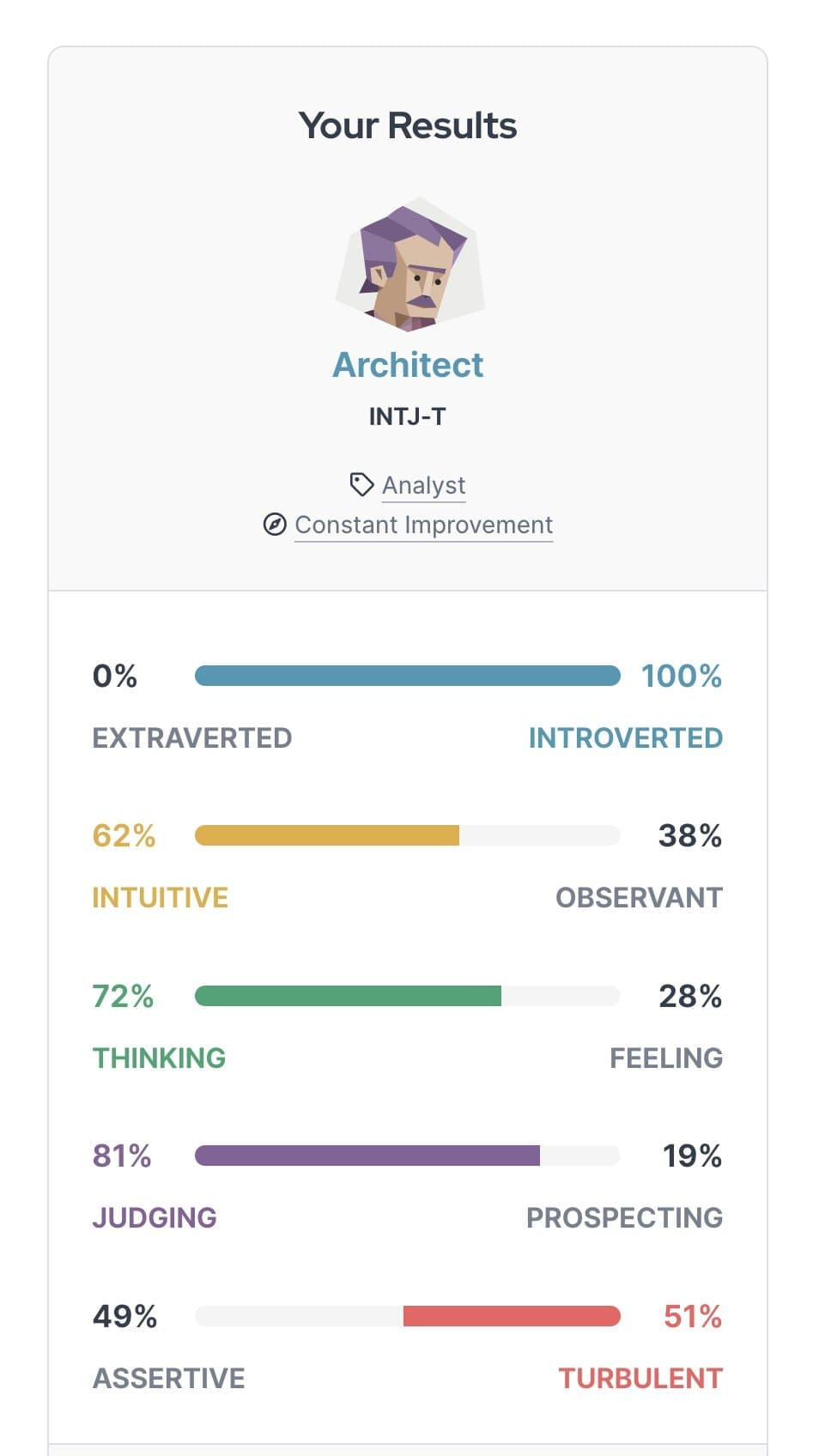
So calls, and also messages in general, are just a horrible fit for me.
The more out of alignment something is, the more energy it takes to sustain it. That’s why I needed to limit it. Because I used to work 12 hour days with ease and enjoyment, but somehow 6 hour days had become draining.
So I had to come up with a new model. Because the regular stuff that gurus recommend just didn’t fit me. So instead of trying to fit myself into a business, I had to come up with a business model that fit me.
To do this, I went back to why I got into the creator economy. Back then, work felt like play to me. So I decided to design my business model around that.
No more outreach, no more client work, and barely any consulting. I would only focus on content, emails, and assets. And I labelled this as the Asset Creator Business model. Most creators are Client Creators, but I decided to become an Asset Creator.
Here are the main differences:
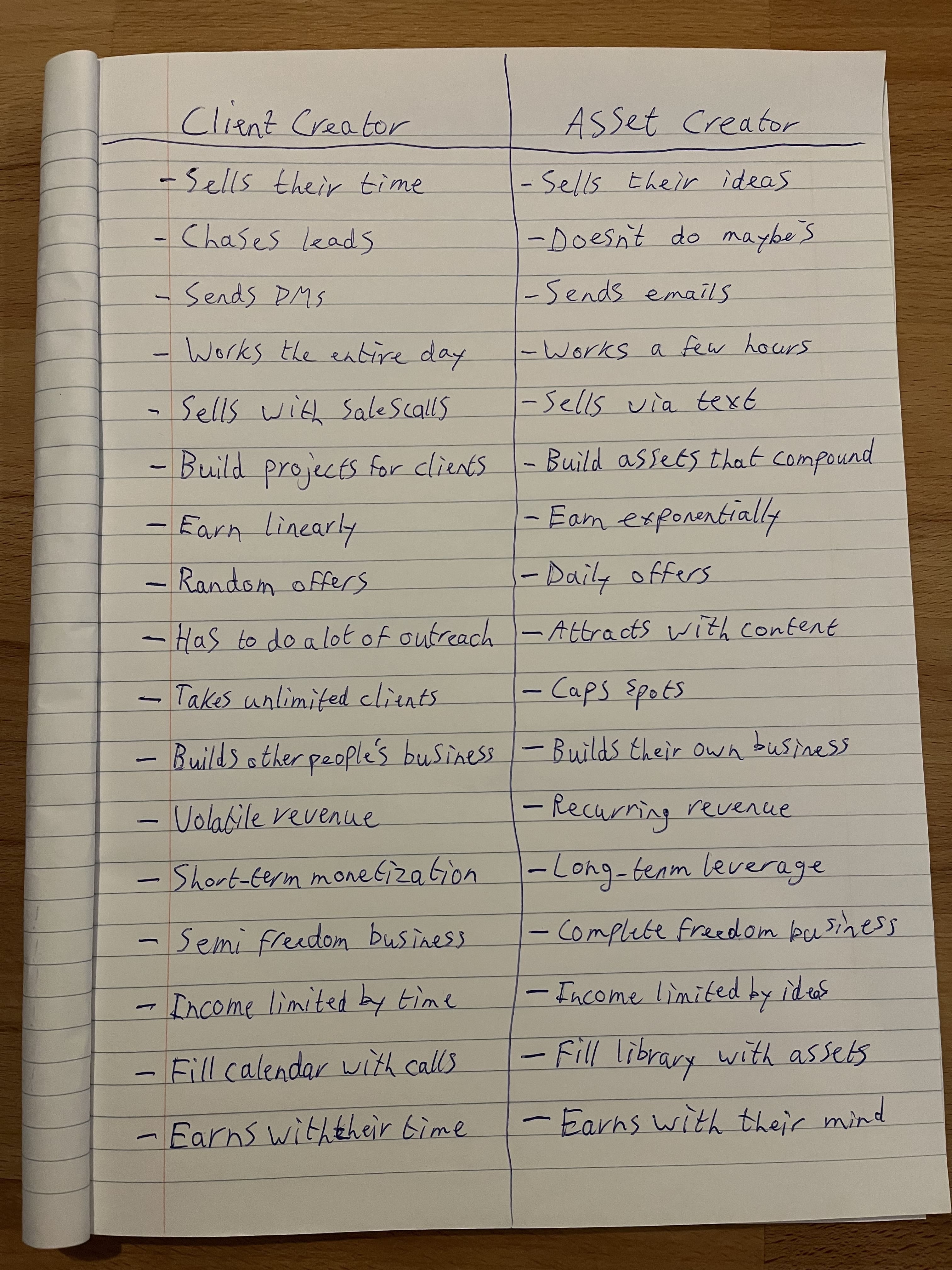
When I made this change, my energy levels instantly went back up again.
I started enjoying my work again for the first time in months.
No more repeating myself on calls, no more feeling burned out, no more demanding clients. Just creating content, writing emails, and building assets so I could help people on scale while making a lot of money.
To me, it makes no sense to build a business you hate just to make money. You still need to find something to do after you’ve made the money.
It makes more sense to pick a model you love that you can keep working on. It’s ok if it takes a bit longer. When you love what you do, you keep practicing and getting better. And that’s what makes you more money in the long run.
That’s why I developed the Asset Creator Business model.
It allows you to earn with your ideas and assets instead of your time.
In this newsletter, I’ll explain how I plan on using the Asset Creator Business model to make $1M+ online in the next few years. I’ll show you how it works and after that I’ll give you practical steps so you can implement it too if it appeals to you.
Before we dive in:
Don’t forget to subscribe to my free newsletter if you’re reading this online.
CHAPTER 1
The Asset Creator Business Model Simplified
Let’s begin by simplifying the Asset Creator Business model.
An Asset Creator is someone who earns with their ideas and assets. Not their time.
They solve problems. They turn the solutions into digital assets. And they distribute and sell those assets to the people who have those problems. On scale.

An asset can be anything that solves a problem in a scalable way.
Ideas are assets.
Books are assets.
Videos are assets.
Visuals are assets.
Courses are assets.
Newsletters are assets.
Other products are assets.
Tweets and threads are assets.
Your audience and email list are assets.
You work to build it once. Then it keeps working for you without you (forever). It’s like a micro employee that works for free his entire life after you take the time to build him.
Asset Creators can have many assets, but they have one Core Asset.
This is the asset that you use to help your clients. The goal is to make it as good as possible so that it solves every problem your client has in an efficient way.
People come to you because they want to go from where they are (point A) to their desired state (point B). They can’t get there themselves because there are problems standing in the way. You help them to solve their problems so they achieve the result.
This is what the Core Asset helps with. It’s a productized version of all your solutions that helps your clients to solve their problems step-by-step. You can start small and build it up or you can break it into multiple offers to sell parts of it:
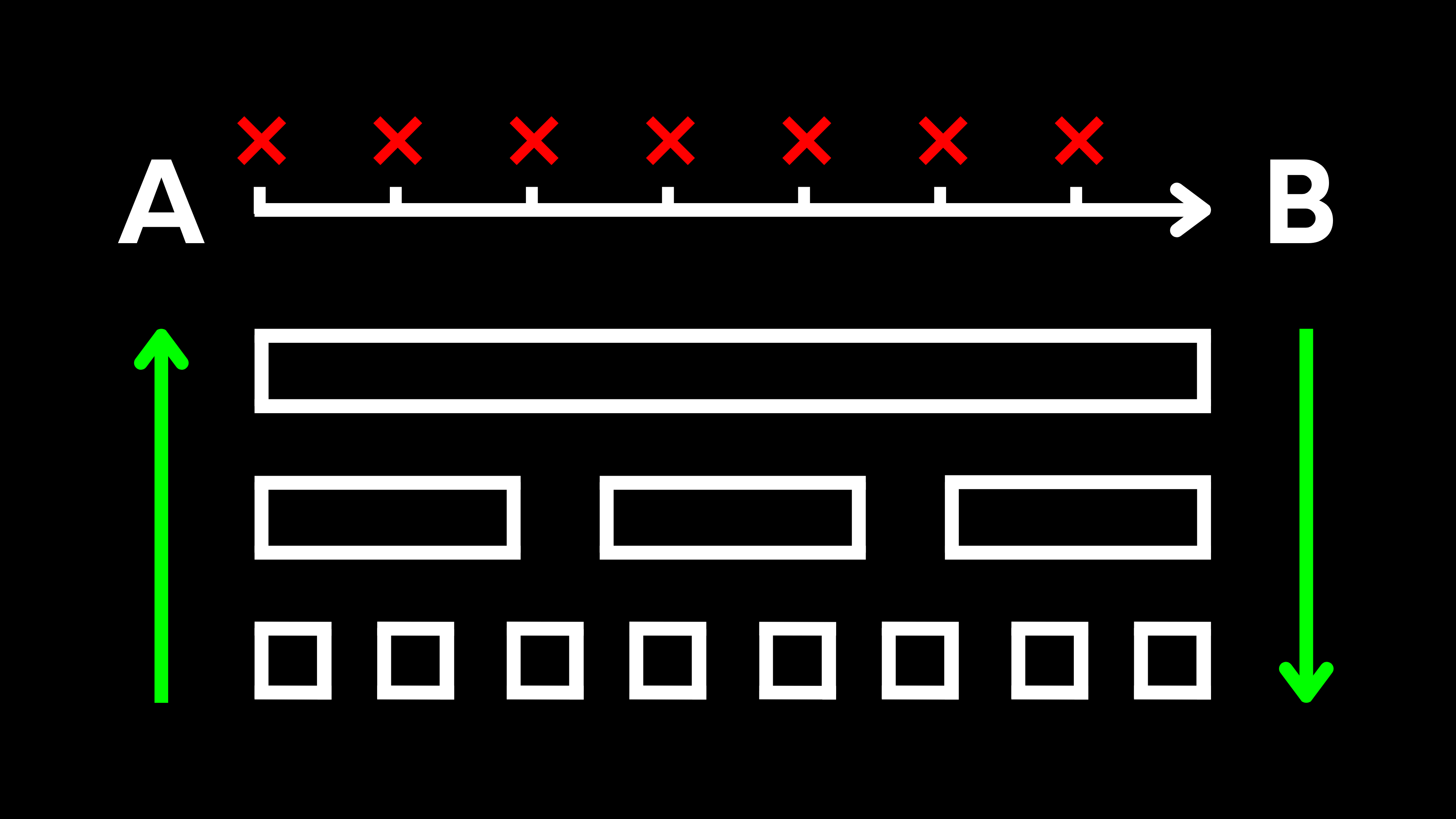
You can take parts of the Core Asset and sell it as courses, cohorts, or workshops (arrow down). Or you can create new workshops or courses and make them part of the Core Asset (arrow up).
The Core Asset is what allows you to save a lot of time and effort in the future.
You build it once, and then you benefit from it forever.
Creating this asset is what will allow you to earn with your mind instead of your time.
Instead of going on a consulting call to explain the same process in the same way for hundreds of times, you simply give your clients access to the asset. Then, you create a plan for them based on their goals and you tell them which parts of the asset they need for this. Then they implement these action steps and ask you for help and feedback via text.
It’s 10x or even 100x more efficient and scalable than a client creator business.
Client creators spend time on a client project. Then when the project is done, they move on to the next one. They made some money, but they spent a lot of time on something that doesn’t compound for them. The Asset Creator Business model solves this problem. You only spend your time on things that compound.
The business gets easier the longer you run it. Every new client improves the asset. Every improvement helps the next client faster. It’s just much more efficient.
This allows you to earn with your assets. Not your time.
Now that you understand how the Asset Creator Business model works, let’s talk about the 4 core pillars you need for this.
CHAPTER 2
The 4 Pillars Of An Asset Creator Business
The Asset Creator Business has 4 pillars:
1. The Content — builds the audience.
2. The Emails — educates the audience.
3. The Offers — monetizes the audience.
4. The Assets — serves the audience.
We take an audience-first approach. Which means that we start by building the audience. Then we set up systems to turn our followers into email subscribers. Then we make them offers for our assets.
So the process is:
Content → Emails → Offers → Assets.
Those are the core 4 pillars.
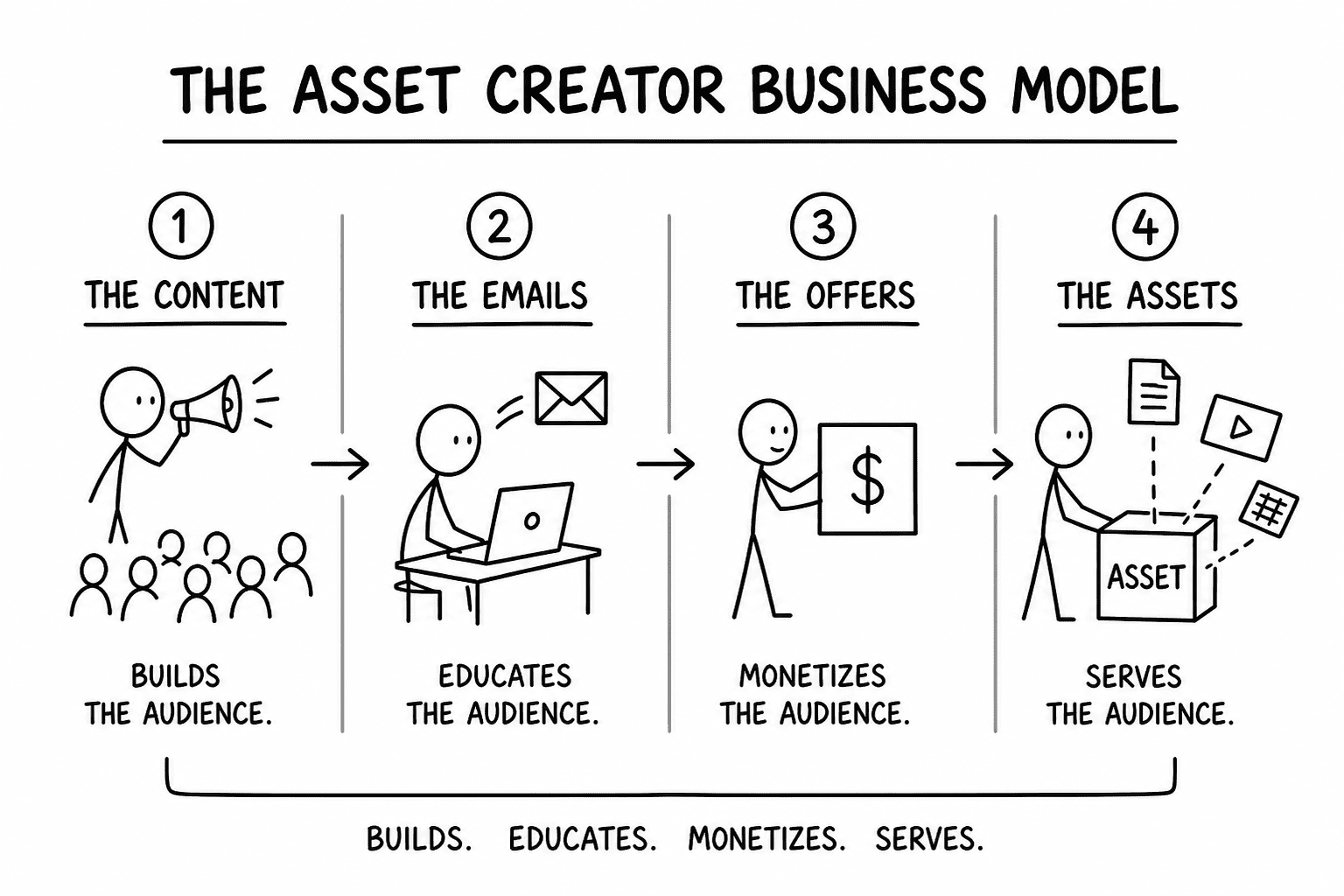
Let’s begin with pillar 1: the content.
PILLAR 1 - THE CONTENT
We use content for 3 things:
Growing our audience
Getting more email subscribers
Getting inbound leads and clients
That’s what we’re optimizing for. So that’s what we track.
Because you can’t improve what you aren’t tracking.
For growth → track profile clicks.
For email subs → track link clicks.
For inbound leads → track keyword DMs.
If something does well, double down on it. Create like a scientist.
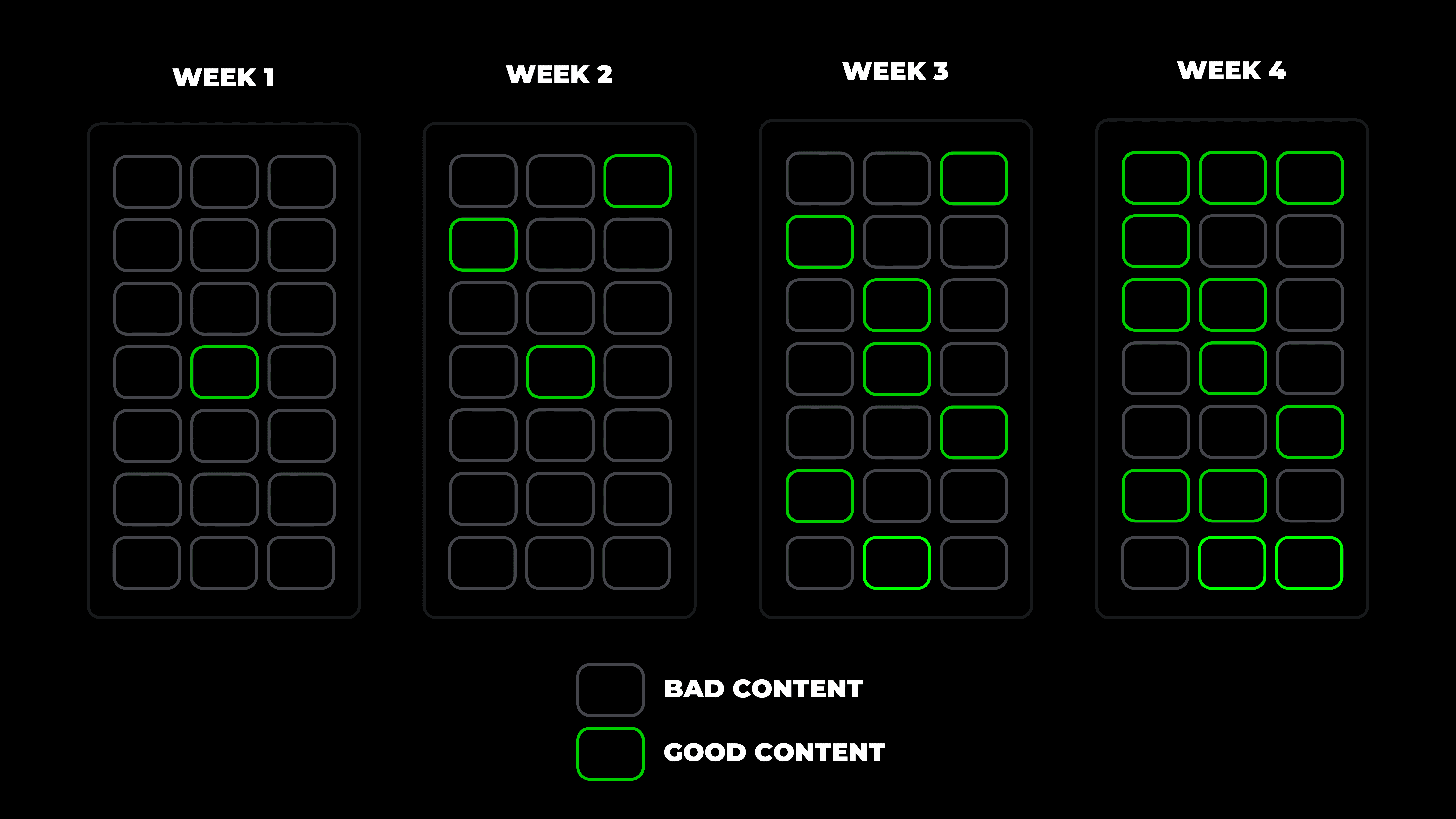
I recommend using Hypefury to schedule your content. It lets you schedule on X, LinkedIn, Instagram, Threads, and even TikTok and YouTube. You can also add auto plugs (links to your newsletter or lead magnet) and auto reposts and un-reposts.
As for the types of content, I recommend posting Primary Topics, Secondary Topics, and Non-Negotiable Topics. These are based on the Customer Journey. This is the path they need to take to achieve their desired outcome. Let’s simplify what it means.
Primary topics are necessary to achieve the outcome.
You can’t get to the outcome without them.
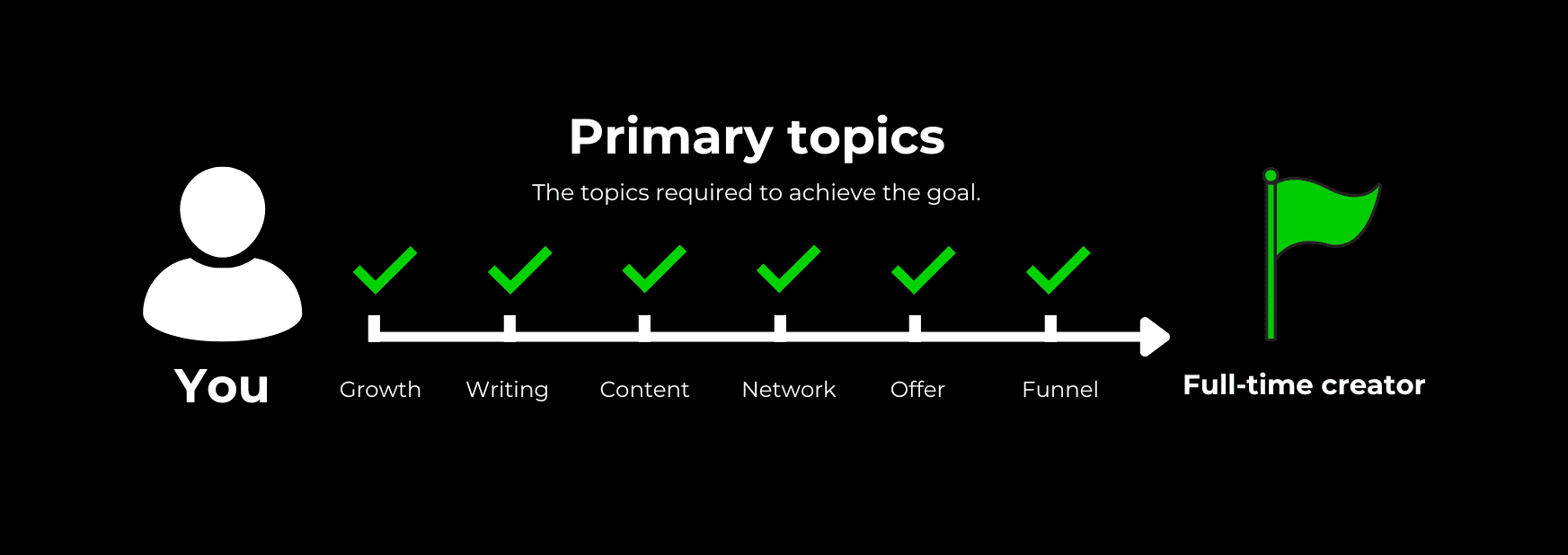
If you’re in the creator business niche, content creation is a primary topic. And if you’re in the dating niche, communicating is a primary topic.
You need these topics and skills to get to the outcome. There’s no way around it.
But here’s where a lot of people go wrong:
Just because you need these things doesn’t mean that you can only talk about this.
You can still talk about almost everything else. And this is where the secondary topics come into play.
Secondary topics are useful to achieve the outcome.
You can get to the outcome without them, but it’s definitely harder.
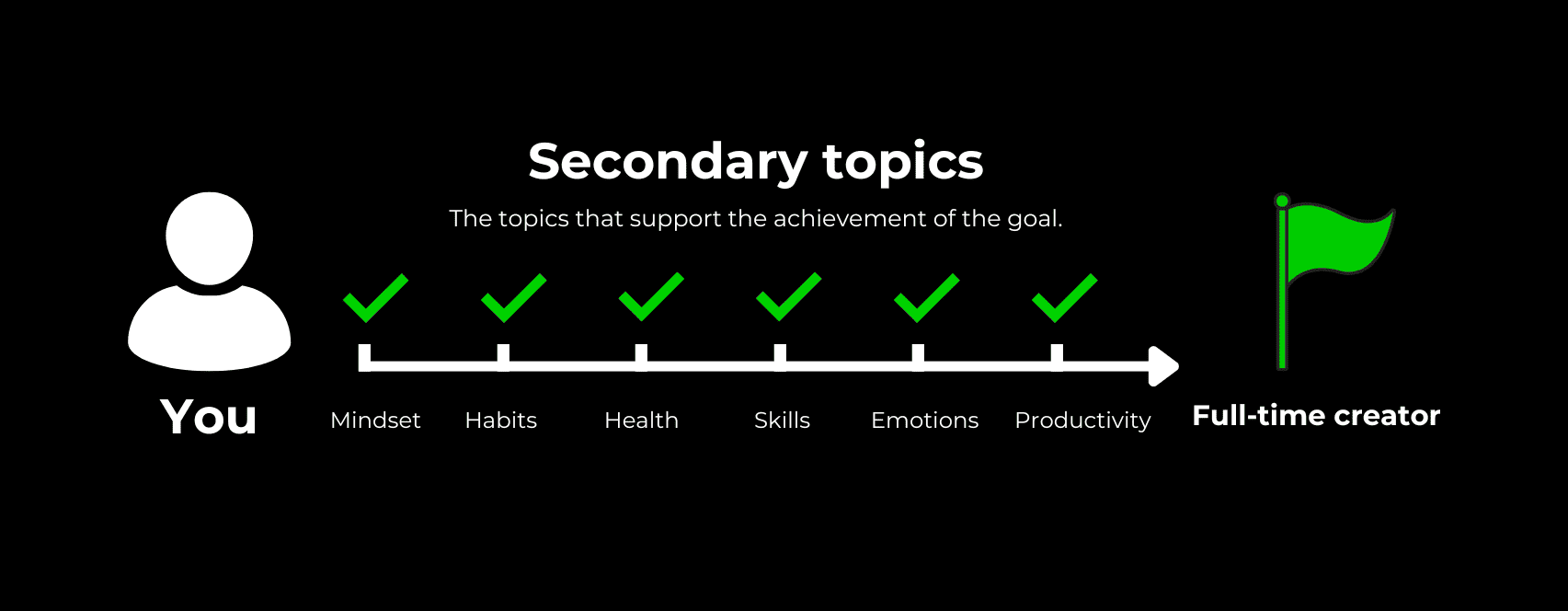
Topics like mindset, time management, and habit-building are secondary topics.
You can technically get to the outcome without them, but it will be much harder.
Business people who only care about money will usually call these topics distractions, but the smartest business people I know realize the importance of these topics.
And that brings me to the third one: non-negotiable topics.
These are the topics you absolutely want to talk about. Even if they don’t seem relevant for what you are trying to help people with.
Because the truth is that everything is related. You just need to know how to position the thing that you want to talk about in a way that appeals to your audience.
It doesn’t matter what the topic or interest is.
It matters that you make it interesting to your ideal reader.
If I want to talk about chess, I can. But I need to it in a specific way. My audience won’t care if I randomly start giving chess tips. But they will care if I show how it’s relevant for them. I can do this with a metaphor:
The metaphor shows how chess is like something they care about. And that’s why they read it (and care about it). You can do this with literally anything.
You simply take:
1) A topic you want to talk about.
2) A topic your audience cares about.
And then you explain how they are similar or alike.
Good metaphors also make it easier for your audience to remember the lesson.
They’re a powerful tool.
If you link their goals to your interests, they will care about your interests.
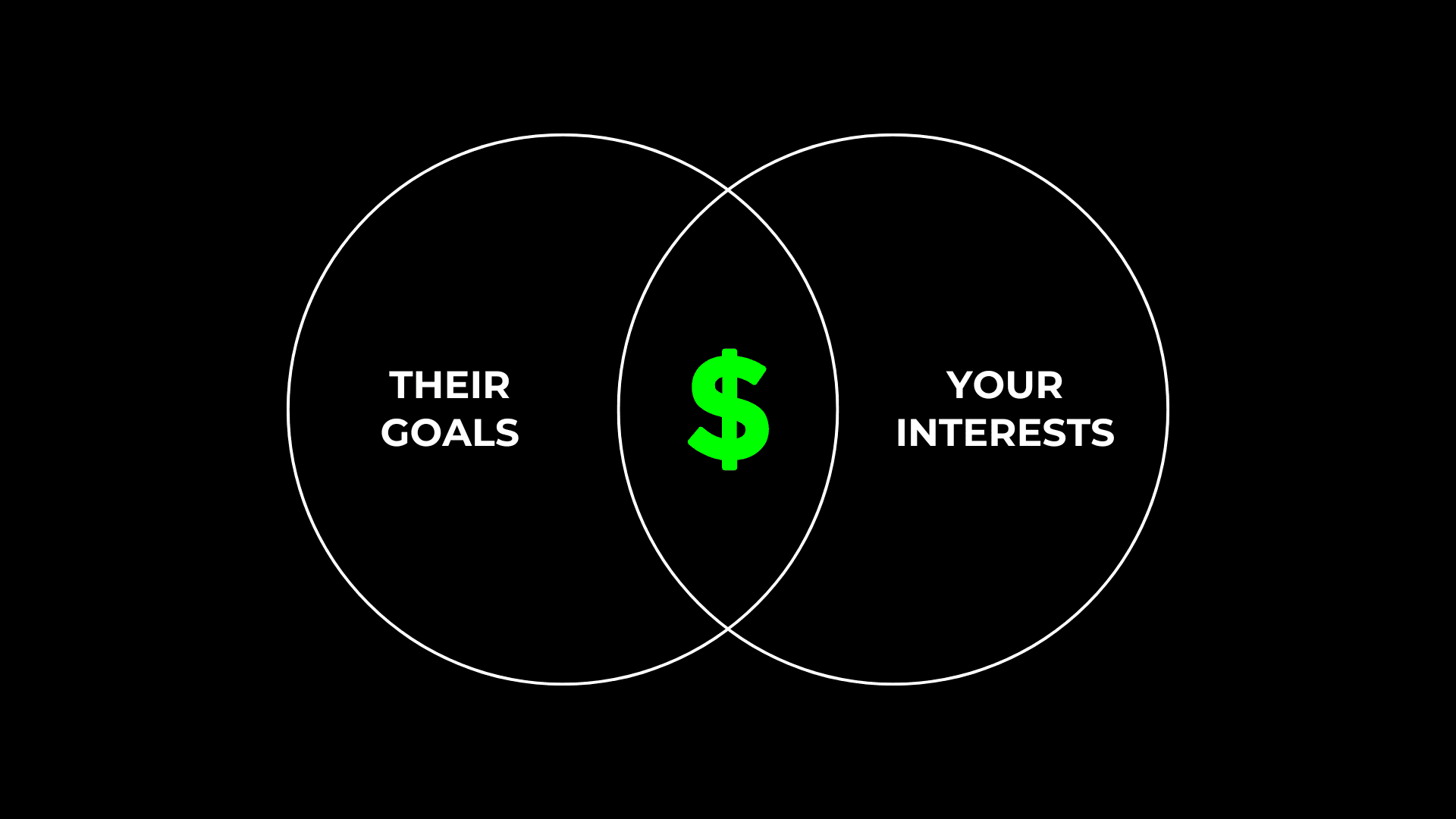
This is one of the ways in which you can write about whatever you want while still keeping it interesting to your audience (I explain all the other ways in the X Growth System so check it out if you want to become a full-time creator or writer).
If you use the above you will grow your audience. After that, you need to send them emails and offers. That’s why the emails are the second pillar we’ll talk about.
PILLAR 2 - THE EMAILS
The goal of your content is to get people on your email list.
Because social media may be useful to get traffic, but it’s hard to really educate people there. Most people are distracted and looking for quick dopamine hits, so longer content tends to do worse (except on YouTube and sometimes X or Substack).
That’s why we send them emails.
There are many different ways you can go about this.
Some preach daily. Some weekly. Both work. It’s up to you what you want to do.
The important part is that you send them at least 1 high-quality email per week.
In the email, you can:
Dive deep into your big ideas
Explain your ideas and philosophy
Share stories of you and your clients
Promote your products and services
Share strategies you use to get results
It’s basically a place to dive deeper into your ideas. You educate people on what you know and you offer to help them. The goal is to get them to want your asset(s).
Most of my revenue (+80%) comes from email so it’s an important part of the Asset Creator Business model. If you learn to do it well, you won’t have to send DMs or do sales calls.
So pick an email schedule you can stick with. Don’t worry about picking the perfect quantity. You can always pivot later if you don’t like it or if it isn’t effective.
The important part is that you educate them in more depth on the transformation that you can help them with. Then you make them an offer on how they can get more help.
So that brings us to the third pillar: the offers.
PILLAR 3 - THE OFFERS
Your offer is what you sell. Your product or service is what they get.
Think about it like a vacation.
People buy the beach vacation. That’s what they want. But in order to get there, they need to buy a plane ticket. But trying to sell a plane ticket wouldn’t be effective. It’s the means to the end, not the end they want.
Your offer works the same.
Don’t just make a list of what people get. Tell them what it will help them to achieve.
Not ‘buy this diet’, but ‘lose 20 pounds in 3 months’.
Not ‘buy this dating course’, but ‘get a girlfriend in 3 months’.
Not ‘buy this writing course’, but ‘get 10,000 followers in a year’.
You sell them what they want (the offer). Then you give them what they need to get what they want (the product or service).
The offer is like the packaging. It makes the product or service sellable.
As you recall from the image above, you can sell multiple things:
Books
Courses
Cohorts
Workshops
Consulting
DFY service
I recommend having offers at multiple price points so you can monetize a bigger part of your audience. Cheaper offers also give people a chance to try out your stuff. This can get you more customers. The Value Ladder shows this best:
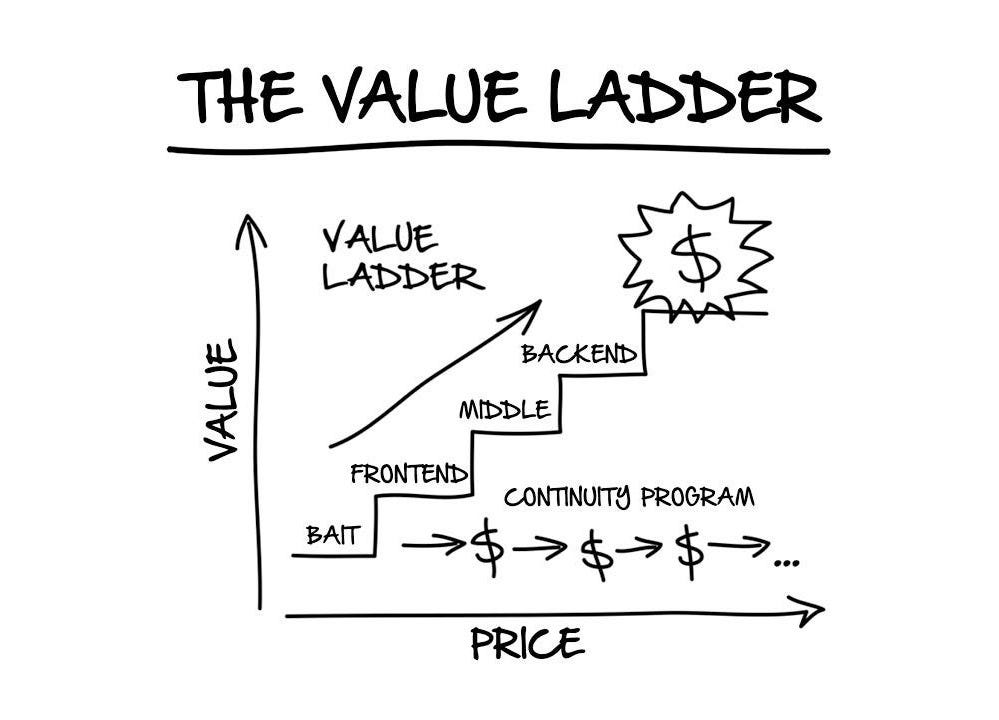
A common misconception is that you have to build a big audience before you monetize. You don’t. Yes, it makes it easier to monetize. But it’s not required.
Don’t monetize after you build your audience. Monetize while you build.
You can start by creating a Minimum Viable Offer.
This can be:
A service that you can sell for $500-$1000 (f.e. web design or ghostwriting)
A consulting service where you can sell a pack of 4 calls for $500-$1000
An affordable product ($29-$97) that teaches a skill or system
Just tell people what you’ll help them with and how they can benefit from this.
You don’t need a fancy website, funnel, or landing page to start. You can simply start by writing content and sending DMs to people who engage with your content.
This is how you can get started fast. One of my clients got a $2K/mo ghostwriting client this month. He only has 300 followers and started working with me a week ago. He plans on leaving the 9-5 he hates once he hits $3K/mo (which will be soon). He expected it to take 6-12 months, but it can go fast if you have the right things in place.
You don’t need to overcomplicate it. Just think of how you can help people and then make them a good offer. With enough volume you will get clients.
If you want my 1-1 help with this to speed up the process, DM or mail me ‘1M’.
That brings us to the 4th pillar: the assets.
PILLAR 4 - THE ASSETS
The assets are what they get when they buy your offers.
This can be:
Tools
Books
Courses
Systems
Programs
Templates
Worksheets
Anything you can productize.
The goal is simple:
Solve a problem in a scalable way.
You take what you know and turn it into something people can use without you. That’s how you stop trading time for money and disconnect your time from your income.
Because people pay money to receive value. People receive value when problems are solved. And problems are solved when key information is implemented.
Your asset does this for you without you having to be there.
Asset Creators have one Core Asset.
This is your main asset. The one that takes people from A to B. You keep improving this asset. Every client, every result, and every iteration makes it better. Over time, this becomes your most valuable asset.
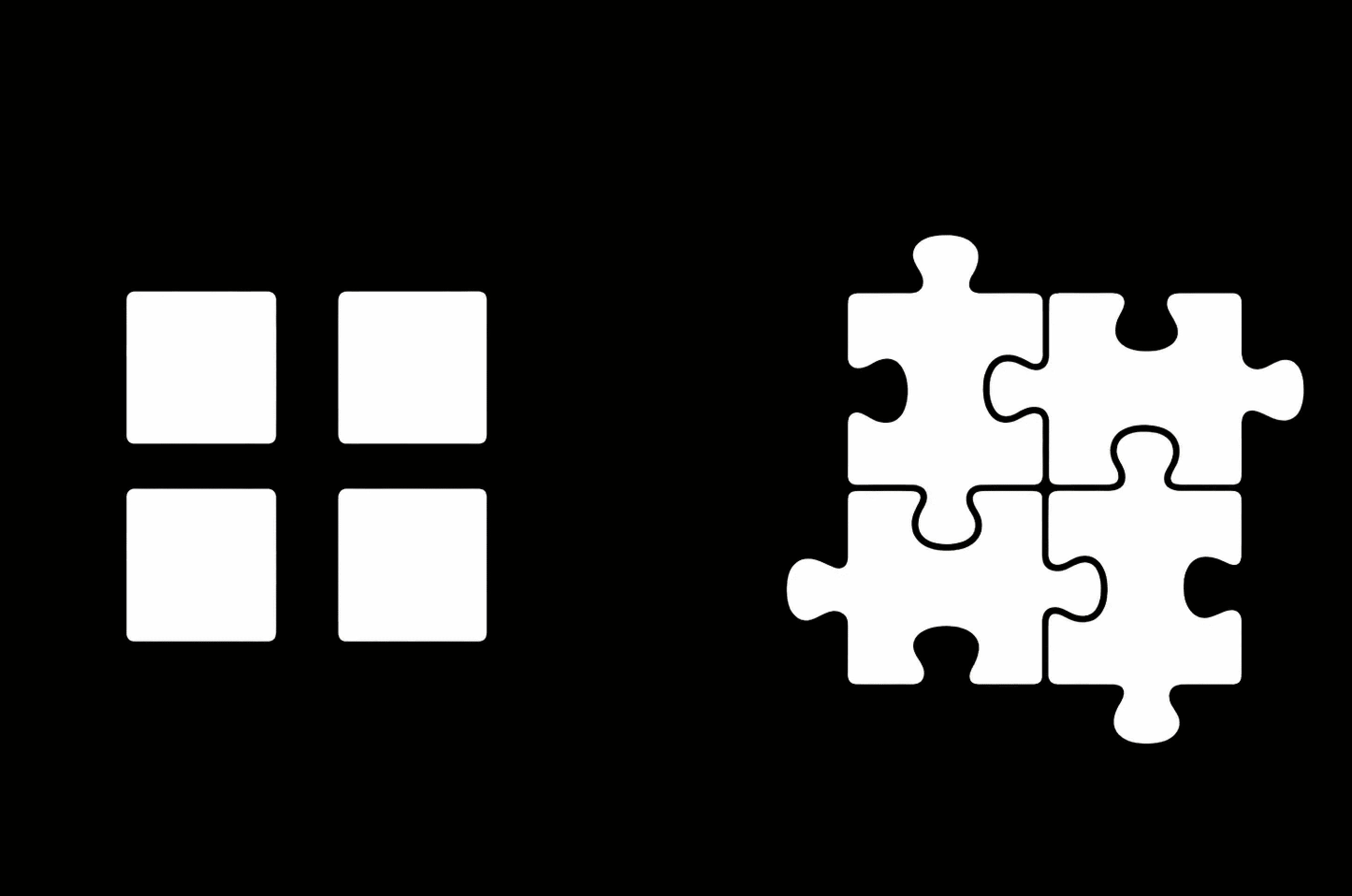
Most creators make new stuff all the time. They sell it, and then they move on to the next thing. After a while, then end up with a bunch of unconnected stuff.
We also make new stuff all the time, but we make our new stuff part of the Core Asset so that it keeps getting more valuable over time.
It’s more like puzzle pieces and less like separate blocks:
Then you have smaller assets. I call these Micro Offers.
These solve one or a few specific problems. You can sell them separately and include them in your Core Asset. They help people get quick wins and they bring more people into your world. It also gives your audience a chance to try out a part of your Core Asset to test if it works for them. If it does, and if they need more help, your Core Asset is the logical next step.
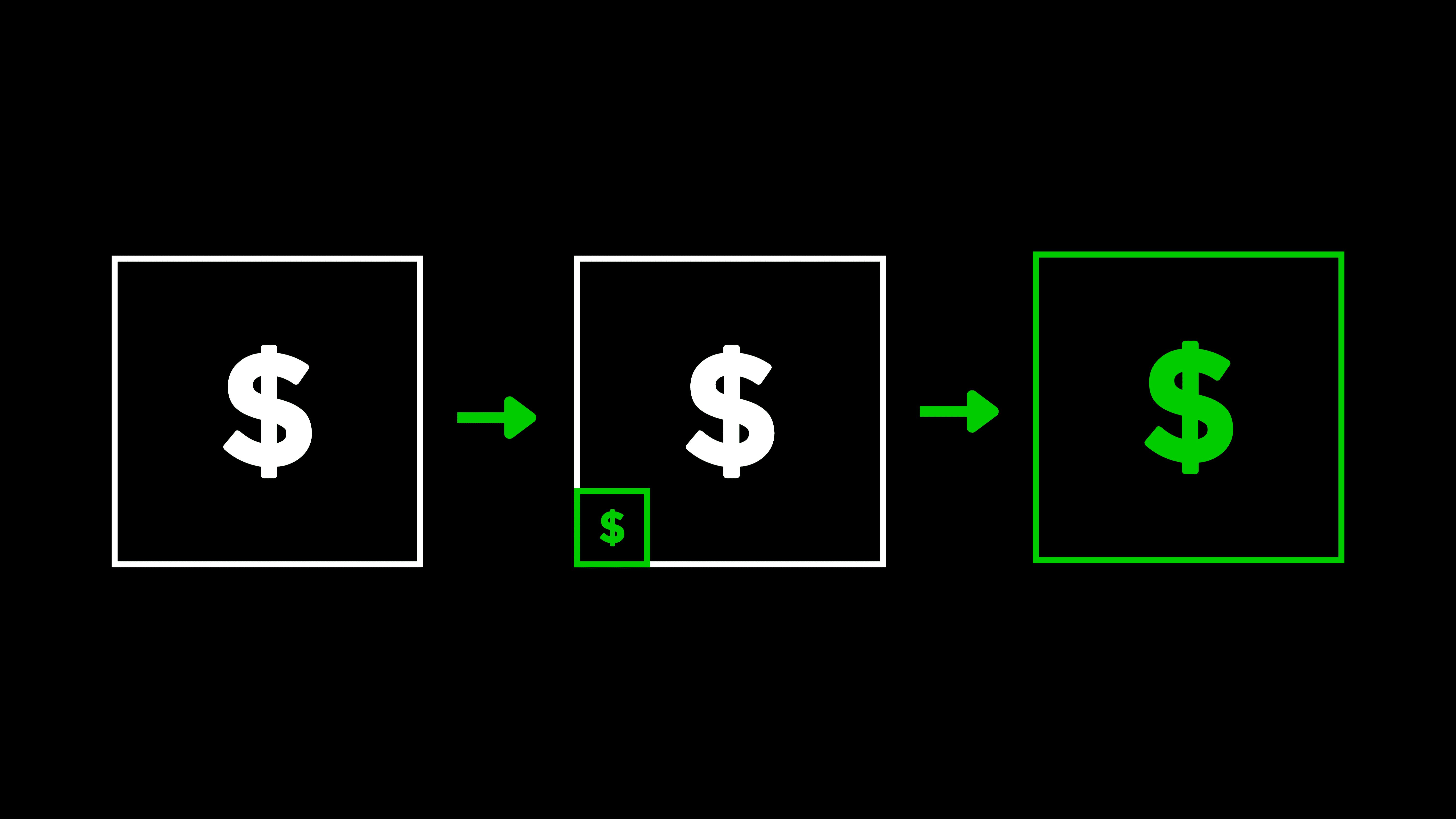
Your content is also an asset.
Tweets, emails, newsletters, podcasts, videos, articles.
Especially long-form content like videos, newsletters, and podcasts are valuable. It keeps working after you post it. It builds trust, gets traffic, and sells your offers.
Those are the assets we use.
You build assets once
You improve them over time
They keep working for you forever
That’s how you start to earn with your mind instead of your time.
Those are the 4 Pillars of the Asset Creator Business Model. Let’s end with a short but practical gameplan so you can start building your Asset Creator Business today.
CHAPTER 3
How To Build Your Asset Creator Business
This is already a long newsletter so I’ll keep this section short and to-the-point.
Here are 10 steps you can take today to build your Asset Creator Business.
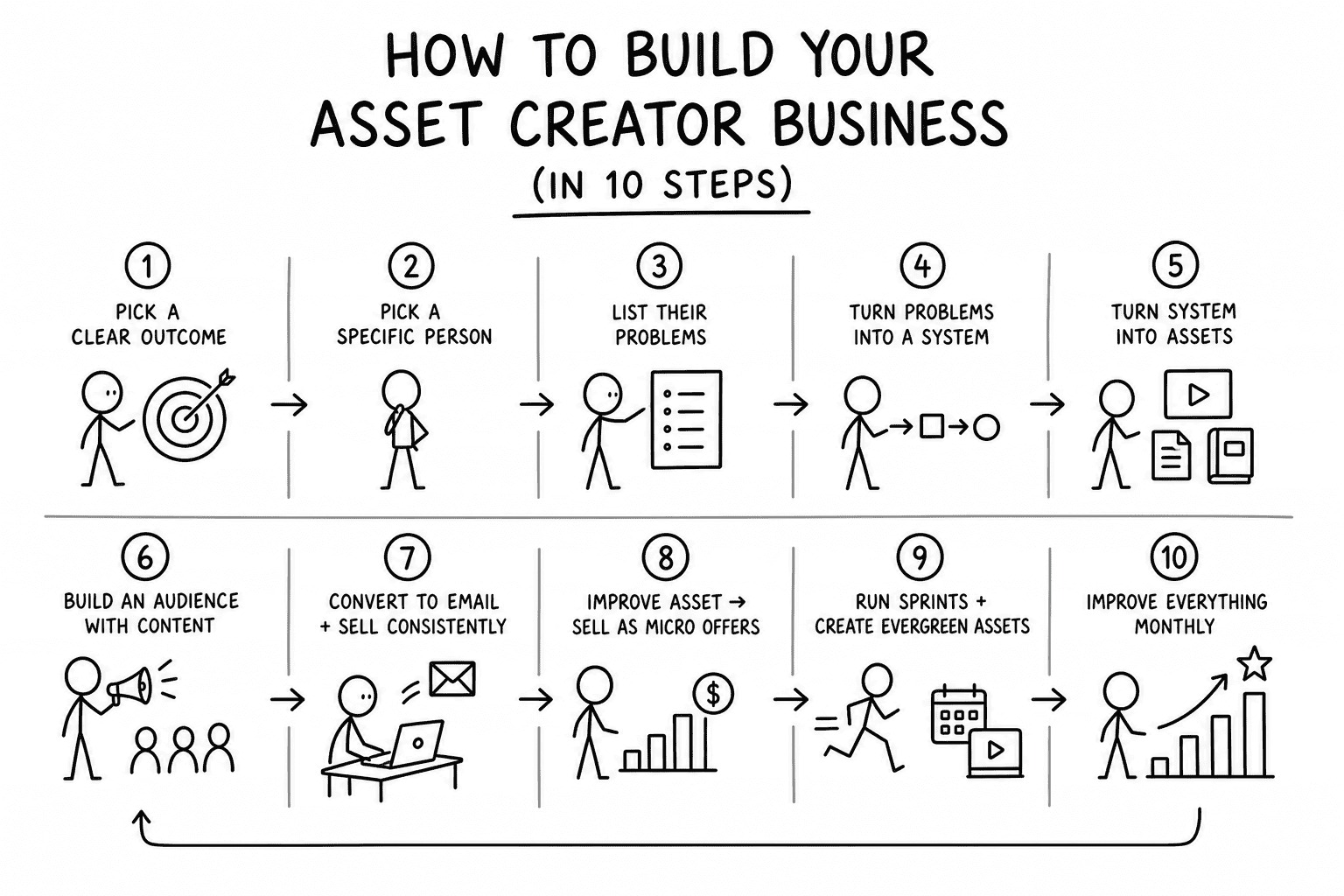
1) Pick an outcome.
First, pick a clear outcome.
Decide the exact result you help people achieve.
The more specific and measurable this is, the easier it becomes to create content, offers, and assets that actually convert and help people.
2) Pick a specific person.
Then pick a specific person. Don’t try to help everyone.
Pick one type of person with one main goal so your messaging becomes clear and relevant to the right people.
Who you help, what you help them with, and how you help them is your ‘niche’.
3) Make a list of all the problems.
Next, make a list of all the problems standing in their way.
Break down everything that prevents them from getting the result. These problems become the foundation for your system, your content, and your offers.
4) Solve these problems and create systems.
Then solve these problems and turn your solutions into a system.
Create a clear, step by step path from A to B that people can follow and implement.
The goal is to have every tiny step in there so it’s always clear what they need to do.
5) Turn your solutions into different digital assets.
After that, turn your solutions into different digital assets.
Build your Core Asset that covers the full transformation and create smaller assets that solve specific parts of the journey in a simple and focused way.
6) Build your audience and email list with organic content.
Build your audience and email list with organic content.
This could have been step 1 because you should do this from the start.
Use content to attract the right people, get their attention, and move them into your email list where you can educate them in more depth (to learn how to grow your audience fast, check out the X Growth System).
7) Send daily or weekly emails with offers.
Write daily or weekly emails with offers. Both work and have different trade-offs. Pick the one you can stay consistent with. Right now, I send multiple short emails per week and one deep dive newsletter like the one you’re reading right now. I might change this to 2 deep dives per week depending on what works best and what I enjoy.
It’s fine if you pivot later. The important part is that you provide a lot value, build trust, and regularly show people how they can go deeper with your assets.
8) Make improvements to your asset and sell them as Micro Offers.
You should improve your Core Asset consistently.
Ideally, you make at least 2 new significant improvements to your Core Asset every month. Then you sell those as Micro Offers.
This improves your Core Asset and it gives you new things to sell.
9) Run 1 sprint or cohort and create 1 evergreen course per quarter.
On top of that, you can run 1 sprint or longer cohort every month or quarter.
You can help people to implement a part of your system (for me, this is audience growth, writing, or monetization). This is optional but useful because it gives people another way to get help from you (without you having to make extra stuff).
You can also create 1 evergreen course to help even more people and to get some passive income. This is another asset that can pay you for years to come (and it can literally just be a part of your Core Asset).
10) Keep improving your content, emails, offers, and assets every month.
Finally, keep improving everything.
Your content, emails, offers, Core Asset, and Micro Offers should all get better every month. That’s how the system compounds over time.
Here’s how you can visualize the Asset Creator Funnel (if you’re not on Twitter you can just replace Twitter with the writing platform(s) that you are active on):
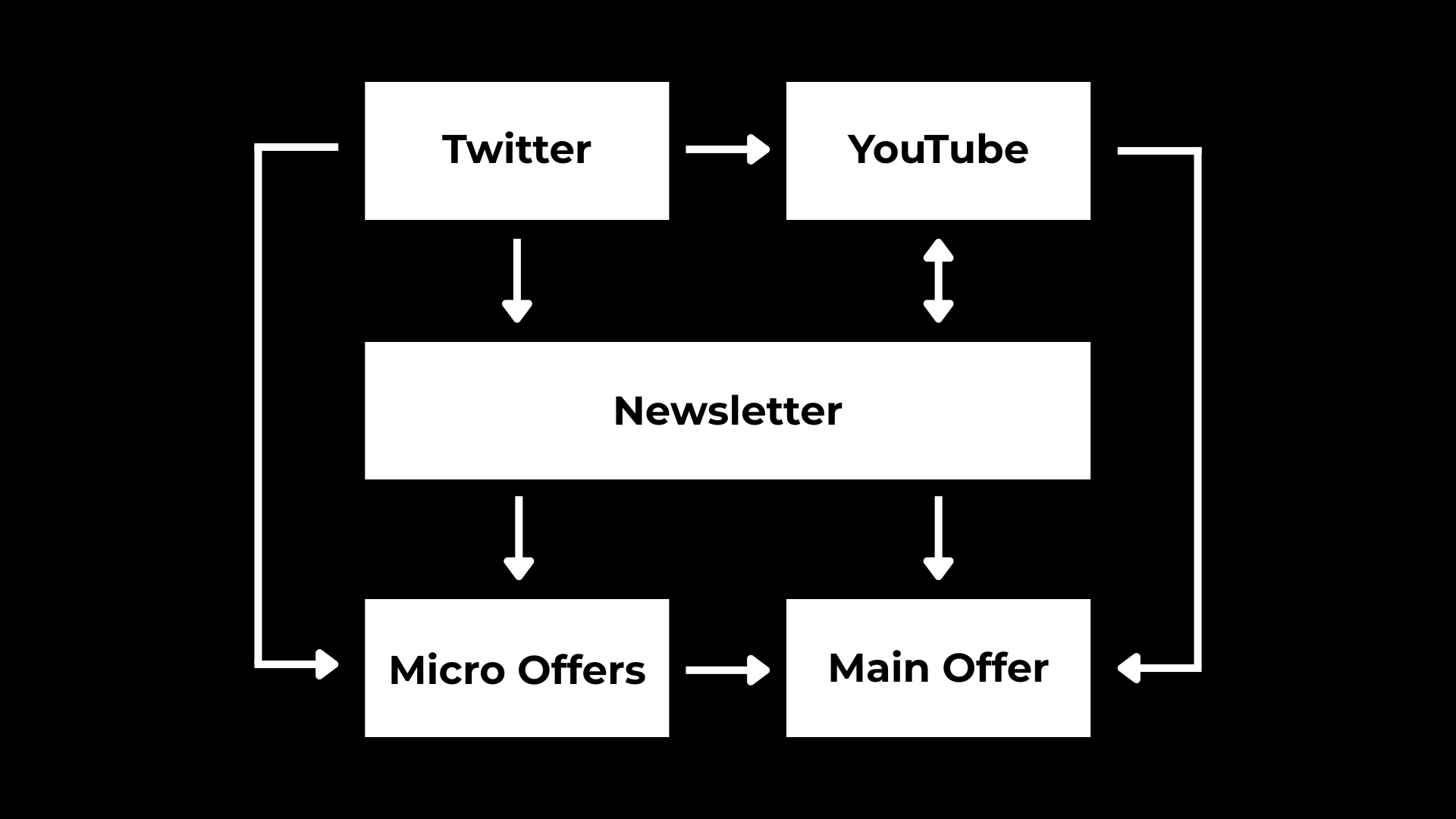
In short:
1) Pick an outcome.
2) Pick a specific person.
3) Make a list of all the problems.
4) Solve these problems and create systems.
5) Turn your solutions into different digital assets.
6) Build your audience and email list with organic content.
7) Send daily or weekly emails and/or newsletters with offers.
8) Make improvements to your asset and sell them as Micro Offers.
9) Run 1 sprint or cohort and create 1 evergreen course per quarter.
10) Keep improving your content, emails, offers, and assets every month.
This is the full process.
Build → sell → improve → repeat.
Most people think freedom requires a massive audience or a complex business.
But it doesn’t.
Your goal is just a number.
$5k/mo = 3 clients at $1k/mo + 20 customers at $100.
$10k/mo = 6 clients at $1k/mo + 40 customers at $100.
$30k/mo = 20 clients at $1k/mo + 100 customers at $100.
Just change the numbers based on your goal.
I’m not saying that it’s easy or that you will achieve it overnight. But you definitely don’t need millions of followers to achieve this.
You just need:
One Core Asset
Quality daily content
Multiple Micro Offers
A simple email system
An audience and email list
You track which content and emails get you the most growth and sales. Then you stop doing what isn’t working and you keep doing what works well.
That’s all you need.
I’ve had clients with 900 and 4000 followers who hit $10K/mo and I’ve had multiple clients who made a full-time living with only a small audience. And this model helped me to get many 5-figure months myself without ads, cold outreach, or sales calls.
So this is the business model I will use to make $1M+ online. I’m not sure how long it will take, but this is what feels aligned for me so I know I can stick with it long-term (which is what’s needed to hit the 7-figure milestone).
It’s not for everyone, but if you’re a big introvert like me then it might be a great model for you too. If you want my help to build a 6 or 7 figure Asset Creator Business, send me a DM on X with ‘1M’. If we’re a good fit, I’m happy to help you.
That’s it for this newsletter. Talk to you in the next one.
Thanks for reading,
– Stijn Noorman
PS: I only have 2 spots left to work 1-1 with me while I’m writing this. If you want one of those 2 spots, send me a DM on X with ‘1M’. We can get started right away or I can add you to the top of the waitlist the spots are gone. Talk soon.
How I Can Help You
1. X Growth System. How I grew from 0 to 61,000 𝕏 followers, 100,000+ followers across social media, +100M organic X views in a year, and 6-figures.
2. Work with me 1-1. DM me ‘1M’ (or reply via email) if you’re an entrepreneur or educational creator who want my help yo build a 6 or 7-fig Asset Creator Business.
3. Free Content. I backlog my best newsletters and articles on my website. I also turn them into video podcasts. Click here to subscribe so you don’t miss them. I also post simple self-improvement videos on my other channel. Click here to subscribe.
I am 17 year old. I am using substack so that I can by my writings. I want money so that I could make my education accelerate.
Thanks for such valuable insights!
I see “how to productize yourself” and think, yeah, this is what I need