

If you’re not a writer yet, please start writing.
If you’re already writing, please continue.
I’ve been obsessed with self-improvement since I was 18 years old. That’s about 10 years today (I’m 28 already, time flies). In that period, I’ve tried almost every habit, hack, and tool that you can find online. And besides the most foundational habits like sleep, lifting weights, and eating clean, writing has changed my life the most.
Everyone agrees that you should exercise, sleep enough, and eat healthy. But unless you spend time on X or Substack, you rarely hear anyone talk about writing.
I believe writing is the most underrated habit for self-improvement.
Writing helps you think more clearly, understand yourself better, learn faster, help others better, and communicate your ideas more effectively. It’s also one of the best skills you can develop if you want to build a valuable network, grow an audience, and build a creator business.
Writing is the skill that allowed me to escape the 9-5 life by doing work I love. I’m far from being a billionaire or whatever, but being able to control my time, work, and location has been life-changing for me. But even if you have no interest in building an audience or business, I still believe writing can dramatically improve your life.
In this article, I’ll explain why writing is one of the most valuable things you can do, 5 reasons why it can change your life, and 7 practical steps to get started.
Before we dive in:
I’ve just opened early access to my new flagship program: The Digital Writer.
Inside, you’ll learn how to write better content and grow your audience across all writing platforms using the systems and strategies that helped me gain 120,000+ followers, 12,000+ newsletter subscribers, and 200M+ organic views.
To celebrate the launch, I’m offering 50% off until Black Friday midnight ET.
After that, you can get 25% off until Cyber Monday midnight ET.
If it’s a good fit for you, this is your chance to get the program at its lowest price.
You’ll get lifetime access and all future updates at no extra cost.
» Click here to get early access.
With that out of the way, let’s talk writing.
I. Writing is one of the best ways to learn
If you want to master something, teach it.
– Richard Feynman
Writing is one of the best tools I’ve found for learning new things.
When I want to learn about a new topic, I start researching it.
I read books
I watch videos
I listen to podcasts
I ask AI questions
I take notes on everything
Then I try to explain what I’ve learned in my own words by writing about it.
When you do this, you’ll quickly discover what you understand and what you don’t.
Because when you write about something, you need to organize the information, make connections, and explain it in a way that makes sense to someone else.
Writing is a form of teaching. And teaching is one of the best ways to learn.
There’s a scientific explanation for why this works.
According to science, two of the most effective learning techniques are:
Active recall: Actively trying to remember what you’ve learned
Spaced repetition: Reviewing what you’ve learned multiple times over time
And this explains why writing is such a great tool for learning.
Because writing can help you practice both techniques.
When you try to write about what you’ve learned without looking at your notes, you’re actively recalling what you’ve learned. And when you consistently write about the same topic multiple times, you practice spaced repetition.
That’s why I recommend writing about the things you want to understand.
Most people won’t write about something if they don’t understand it. But writing about it is actually a great way to start understanding it. The fastest way to learn something new is to read and write about it until you’re no longer confused.
You don’t need to be an expert before you start writing. Writing is part of how you become one. It’s how Carl Jung, Friedrich Nietzsche, and many others learned.
Read to get ideas. Write to understand ideas.
II. Writing is the best way to think clearer
If you can’t explain it to a six-year-old, you don’t understand it yourself.
– Albert Einstein
Writing is thinking.
You literally can’t write without thinking.
I often write about things that I think I understand. But when I sit down to explain them, I realize that I don’t understand them nearly as well as I thought I did. This is because an idea can seem completely logical in your head, but when you try to put it into words, you suddenly notice that something is missing.
Writing exposes these gaps in your thinking.
This can be frustrating, but it’s also rewarding. Because every time you discover a gap in your thinking, you have an opportunity to close it with new information. And every time you do this, you improve your understanding of the subject.
I like to think about knowledge as a web of interconnected dots.
When you consume information by reading books, watching videos, or listening to podcasts, you’re collecting dots. When you write, you connect the dots.

This is important because collecting information isn’t the same as understanding it.
That’s where writing comes in.
When you sit down to write, you’re forced to clarify what you think. If something doesn’t make sense, you instantly notice it. This process of consuming information, thinking it through, and making connections is what makes you a clearer thinker.
And I believe this is becoming increasingly important in the age of AI. I have nothing against AI. I use it myself and I think it’s extremely useful. But there’s a big difference between using AI to help you think and letting it do all your thinking for you.
If you constantly outsource the difficult parts of thinking, you’re missing opportunities to develop that ability yourself. And if you don’t use it, you eventually lose it.
That’s why I believe writing is one of the most valuable habits you can develop. It forces you to clarify what you think. And in a world where everyone can get answers in seconds, being able to think clearly is becoming even more valuable.
Don’t use AI, then think. Think first, then use AI.
Use writing as a tool to clarify your thinking.
III. Writing teaches you many valuable skills
You can have brilliant ideas, but if you can't get them across, your ideas won't get you anywhere.
– Lee Iacocca
Before I started writing online, I thought copywriting was about copyright.
So I was confused when someone started talking about it in a cohort. But it turned out that it was an entirely different skill. In simple terms, copywriting is writing that persuades people to take action. In most cases, it’s using writing to sell something.
This is an extremely valuable skill to learn. Especially if you ever want to build your own business. It’s also useful to write compelling content and persuade people.
Copywriting is just one example of why writing is so valuable.
Writing is the foundation of content and business:
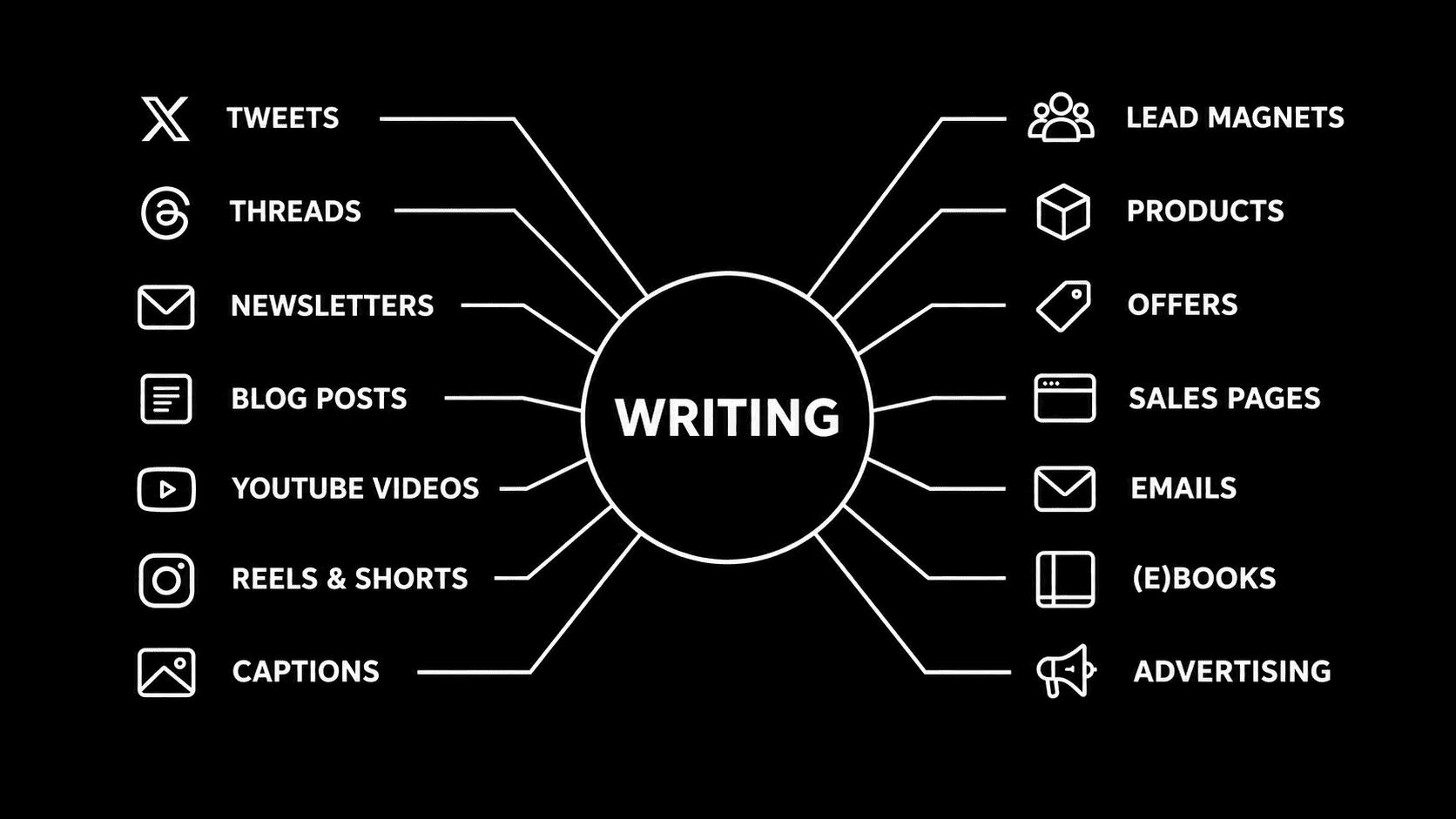
But writing does more than help you create content and build a business.
It also teaches you many other valuable skills:
Storytelling
Critical thinking
Learning how to teach
Structuring arguments
Communicating clearly
Simplifying complex ideas
Understanding human behavior
Capturing and holding attention
These skills are extremely valuable and they can help you in lots of different life areas.
It doesn’t matter if you want to build an audience, improve your skillset, or just write for fun. Being able to explain ideas, persuade people, and communicate clearly will help you in job interviews, negotiations, relationships, and many other situations.
IV. Writing can give you a lot of opportunities
You are not your resume. You are your work.
– Seth Godin
In my experience, writing gives you more opportunities than a degree ever will.
I have a degree in criminology. I went to university for 4 years to get it. I still haven’t received a single opportunity or job offer because of it. In fact, the ROI has been negative if you look at the costs (not even mentioning the opportunity costs).
But writing online has given me many opportunities. I’ve received multiple good job offers. A few for writing roles, one as head of content for a famous creator, and even a creative director role at one of the biggest audience growth firms in the world. Even though I was told by my English high school teacher that I “was bad at writing”.
I’ve also met many cool people, more than 10 millionaires, dozens of very smart experts, and I’ve even met some of the people I used to watch YouTube videos of.
The ROI of writing online has been incredibly high for me.
Again, it doesn’t matter if you want to build a business or if you want a better job. In my experience, writing online is better for both (for most people). If you publish your writing online, then you create a body of work that shows how you think. If people like this, you’ll have a better shot at a job or opportunity than other people.
V. Writing is the best way to build leverage
Code and media are permissionless leverage. They’re the leverage behind the newly rich. You can create software and media that works for you while you sleep.
If you can’t code, write books and blogs, record videos and podcasts.
– Naval
I went to university because I wanted to become a judge or prosecutor. That’s why I studied both Law and Criminology simultaneously. However, as I got further into university I realized that I actually wanted freedom. More precisely, the freedom to control my work, time, and location. That’s when I realized that I needed to pivot.
Around this time, I read Naval’s thread on How to Get Rich (Without Getting Lucky), and it introduced me to the power of leverage.
Leverage is about using your resources to achieve greater results with less effort.
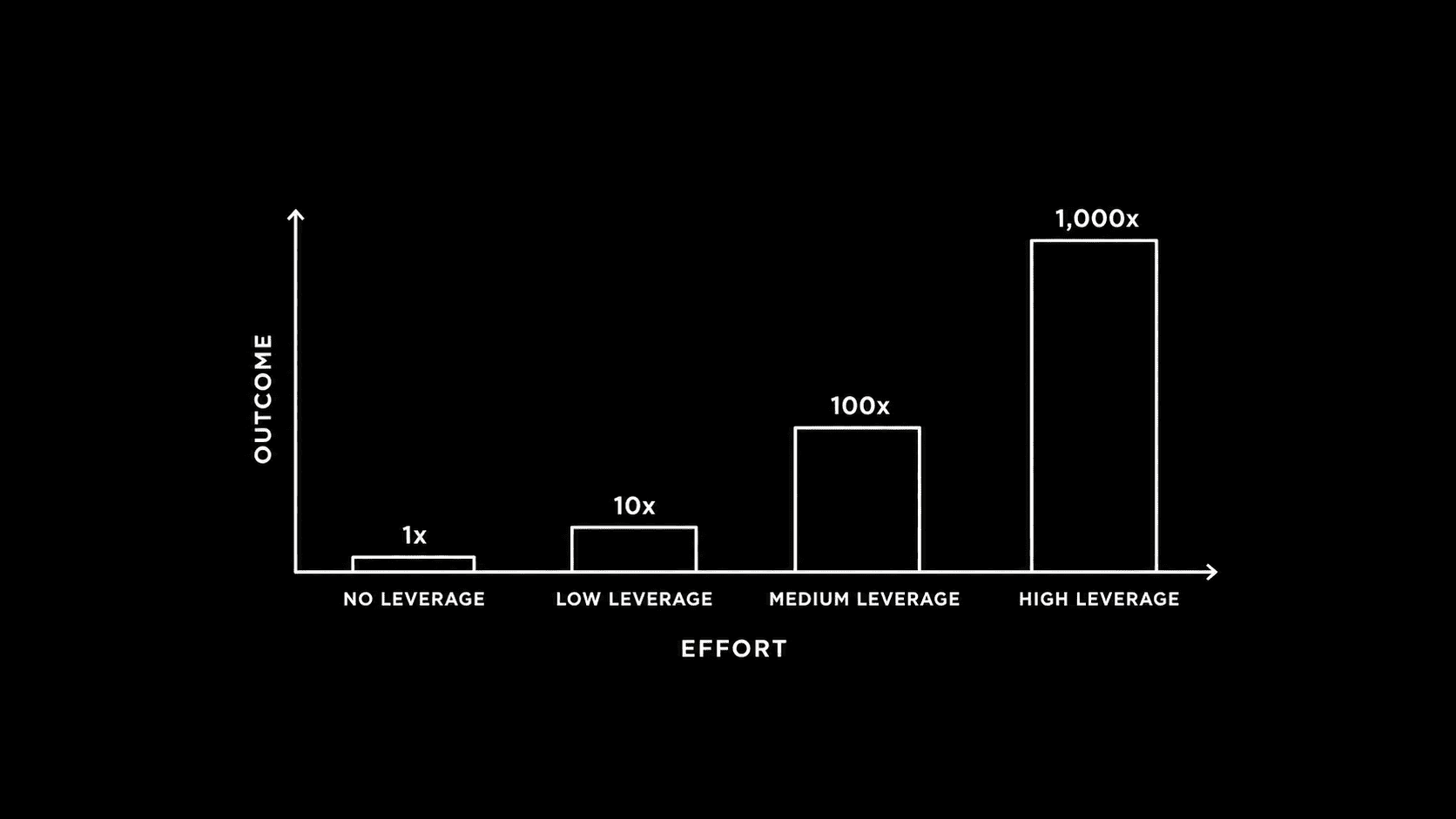
Writing is one of the best ways to build leverage. It takes the same amount of effort to write one article for 10, 1,000, or 100,000 people. But the results and impact can be much bigger. And the benefits don’t stop there.
An article you publish today can continue attracting readers, helping people, and generating income for years to come. You do the work once, but you can keep benefiting from it long after you’ve finished writing.
In this way, writing allows you to help millions of people while potentially earning a good income. All while maintaining control over your time and location. Because your readers don’t care where you write or when you write.
They only care about the quality of your writing and the value you provide.
This means you can get paid for the value of your work instead of the hours you put in. This isn’t for everyone because it takes time, effort, and the ability to deal with uncertainty. But it’s appealing to me, and it was one of the reasons I started writing.
If you want to learn how to build leverage with writing, check out The Digital Writer.
How to Become a Digital Writer (7 Steps)
The better you write, the higher you go.
– David Ogilvy
Now that we’ve talked about how writing can benefit you, let’s discuss how you can get started. I’ve been writing online for more than five years now.
Here’s the process I use and recommend.
1. Decide what you want to write about.
Start by choosing a few topics that genuinely interest you.
I recommend creating a Content Portfolio. This is a collection of topics you want to explore, learn about, and share your ideas on. Just like an investment portfolio, you can buy, sell, or hold topics based on your current conviction in them.
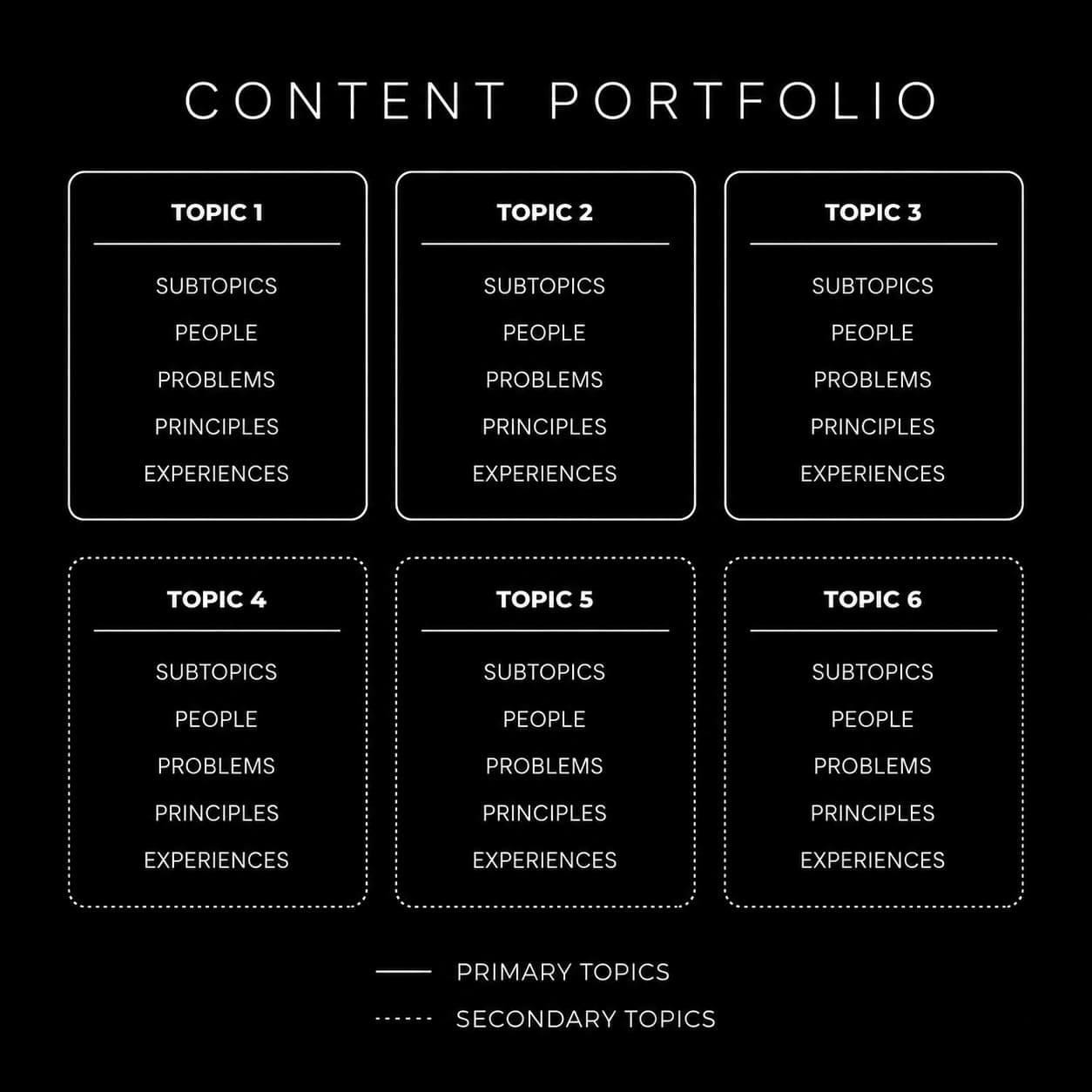
Start with your main topics. For example, my main topics are self-improvement, writing, and business. You can break these down into subtopics.
Then find people to learn from and problems to solve. Also make a list of the principles you’ve learned and your personal experiences with each topic.
You can add, remove, or change topics as your interests evolve.
Don’t worry about finding the perfect niche. You can rebalance over time.
2. Choose your platform(s).
I recommend starting with Substack and X.
Substack is great for publishing articles and building an email list. X is great for sharing shorter ideas and reaching new people.
Create for one platform, then repurpose your content to other platforms.
You can repurpose your content to Threads, LinkedIn, Instagram, and YouTube.
But don’t try to master every platform at once.
Start with one or two platforms, learn how they work, and expand when you’re ready.
3. Find good content ideas.
Pay attention to what interests you.
Read books, watch videos, listen to podcasts, and save interesting ideas.
I also use Eden (aff. link) to find high-performing content.
You can filter by things like:
Likes
Topic
Shares
Creator
Platform
Timeframe
Content type
In short, you can basically filter on anything and find the best content within those constraints.
This makes it easy to find proven content around the topics you want to write about.
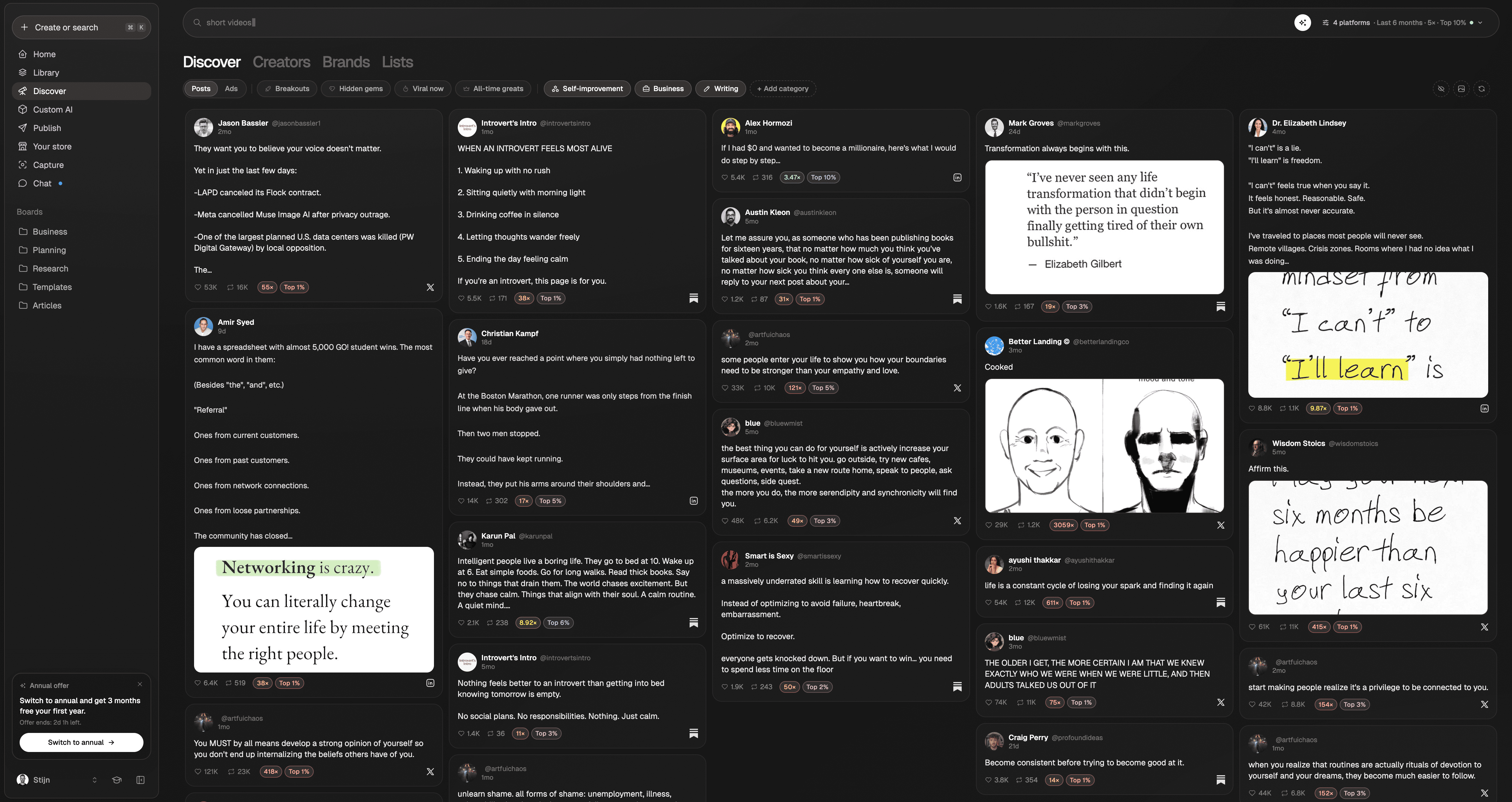
If an article about a topic that interests you performs well, consider writing about it yourself. Never blindly copy. Use other people’s content as inspiration, then add your own ideas, stories, and perspectives.
Steal like an artist, don’t copy like a fool.
4. Research and create an outline.
Once you’ve chosen an idea, start researching it.
Read books and articles. Watch videos. Listen to experts. Ask AI questions if anything is unclear. Take notes on anything that you deem valuable.
Then organize your ideas into an outline.
I usually start with a rough list of the main points I want to cover. After that, I organize them into a logical structure and identify what information is still missing.
You don’t need to know exactly what you’re going to write before you begin.
But having a basic outline makes the writing process much easier.
5. Write a terrible first draft, then improve it.
Now we start writing.
Your first goal is simply to get your ideas onto the page. Don’t try to make every sentence perfect and don’t worry about whether your writing is good enough.
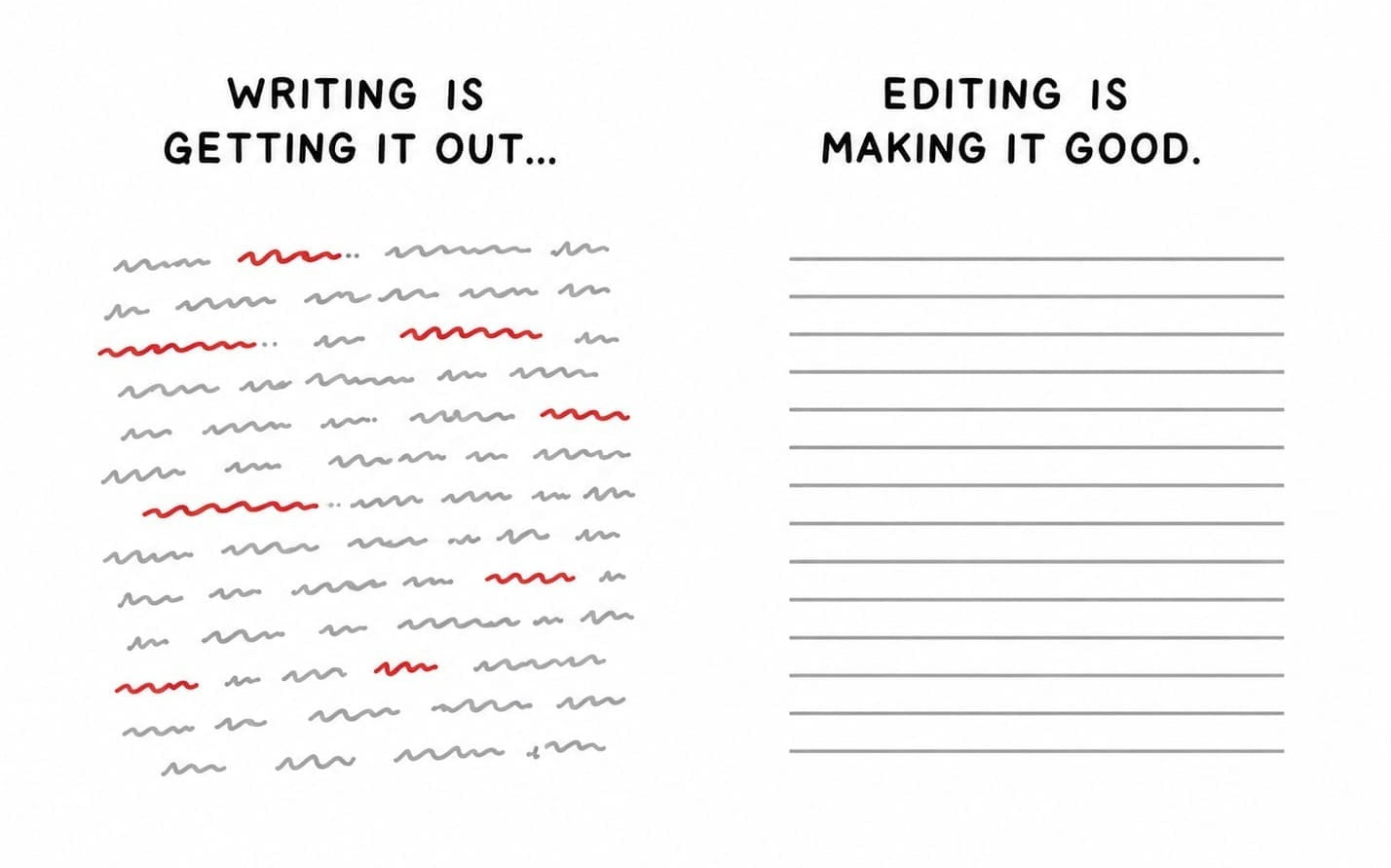
I like to think of writing and editing as two separate activities. They require different modes of thinking. Writing is about getting your ideas onto the page, while editing is about improving them. Trying to do both at once will slow you down.
When you’re writing, give yourself permission to write a terrible first draft. You can improve it later, but you can’t improve what doesn’t exist.
When you’re editing, cut unnecessary words, improve the structure, and add visuals.
Make your writing valuable, clear, and easy to read.
Write first, edit later.
6. Publish and repurpose your content.
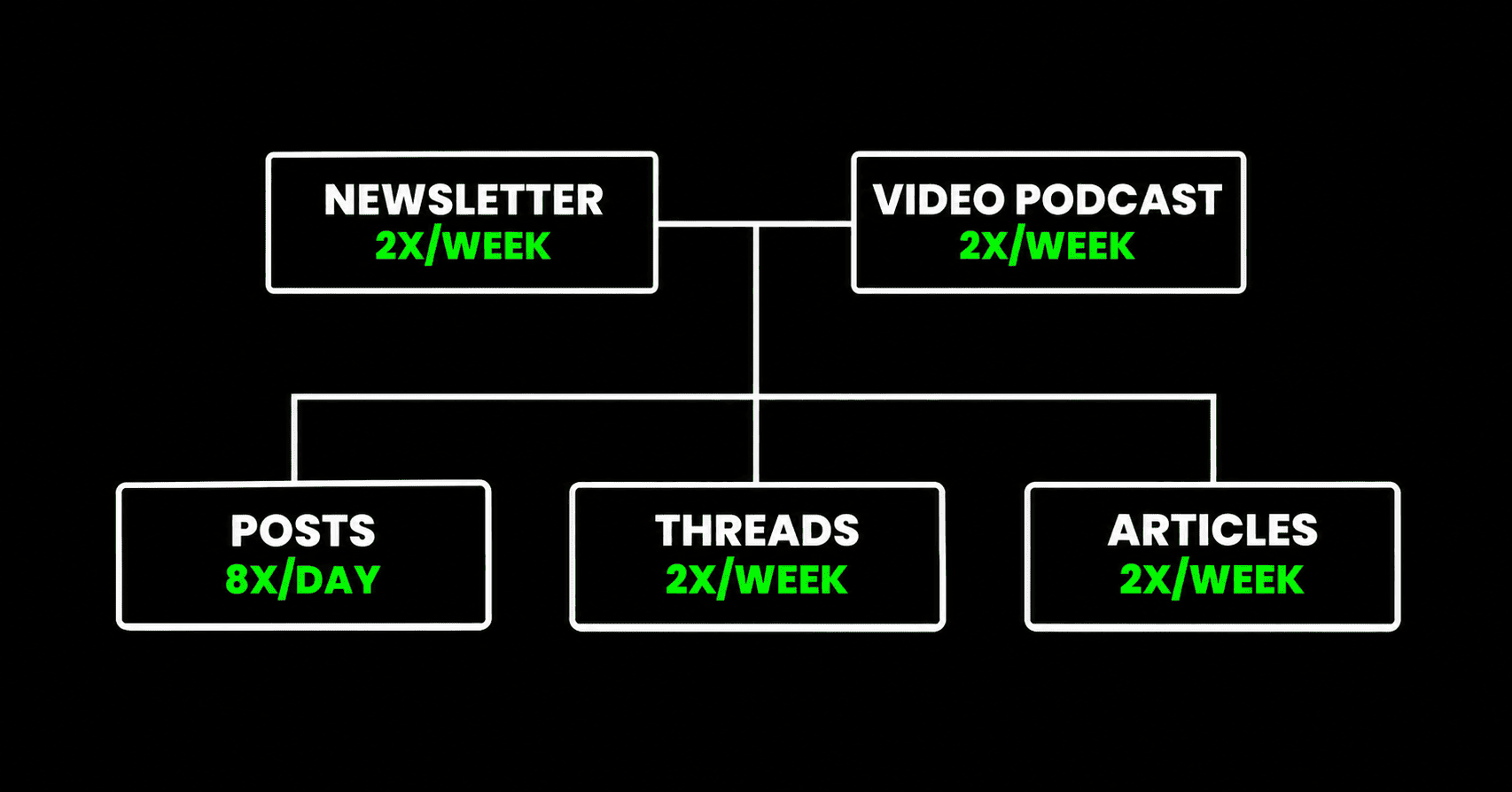
I recommend writing 1 or 2 long-form newsletters per week and publishing them on both X and Substack. Then turn each one into multiple pieces of shorter content.
For example, one newsletter might become:
2 X threads
20 short posts
5 LinkedIn posts
1 Instagram carousel
1 podcast or YouTube video
You don’t need to create completely new ideas for every platform.
Instead, do the deep, original thinking in your long-form content. Then use AI to help you extract ideas, create shorter posts, and adapt your writing to different formats.
And whenever it makes sense, include links to your newsletters in your short-form content. This helps turn social media views into newsletter subscribers.
7. Build your body of work.
I call my website and blog my Lifework Library.
I like to think of it as my own Library of Alexandria, where I document the most valuable ideas, lessons, and insights I discover throughout my life.
Every article adds something new to that library.
And over time, those articles become a collection of knowledge that reflects how you think, what you believe, and what you’ve learned.
This is one of my favorite things about writing long-form content. You’re not just creating content for an algorithm. You’re creating something that can continue to help others, build your audience, and grow your income for many years to come.
So don’t worry too much about how many views your first article gets.
Focus on becoming a better writer, developing valuable ideas, and consistently adding to your body of work. The results will come with time.
I’ll leave it as this for now. If you have any questions about becoming a digital writer, feel free to message me. I’d be happy to help you out.
Talk to you in the next one!
Stijn
PS: If you want to learn how to write content that grows your audience, don’t forget to check out The Digital Writer. It contains all my best strategies that helped me gain 120,000+ followers, 12,000+ newsletter subscribers, and 200M+ views. You can get 50% off until Black Friday midnight ET (with lifetime access and all future updates).
How I Can Help
1. YouTube videos. I turn my articles into videos in case you prefer to watch or listen.
2. Articles & Workshops. I publish 1–2 free articles like this every week. Subscribe using the button below. I’m also working on a paid newsletter with extra guides and workshops on using writing to improve yourself, grow your audience, and build your business. Sign up today to lock in the lowest price before it increases (coming soon).
I've already published 2 books and written more than 1,500 articles. Reading and writing have already changed my life for the better, and I want to help others fall in love with them as I did.
The more I write, the more clear minded I become