

The world is changing fast.
Tasks that once required years of training can now be performed by AI in minutes.
And as technology continues to improve, many of the skills that are valuable today may become virtually worthless in a few years.
A lot of people are panicking, but this is nothing new. Technological progress has always made certain skills less valuable and others more valuable.
What’s different this time is the speed at which it’s happening.
It sometimes seems like almost every skill is at risk of becoming obsolete. But after thinking deeply about this for a few weeks, I’ve come to a different conclusion. While many skills are becoming less valuable, some are actually becoming more valuable.
In this article, we’ll explore 5 skills that I believe will only become more valuable in the years ahead. If you give me a few minutes, I’ll explain what these 5 skills are, why they are becoming more valuable, and how you can develop them. If you master these skills, you’ll be able to learn faster, work smarter, and thrive in the age of AI.
Before we dive in:
I’ve opened early access to my new flagship program: The Digital Writer.
Inside, you’ll learn how to write better content and grow your audience across all writing platforms with the best strategies I used to gain 130,000+ followers, 12,000+ newsletter subscribers, and 200M+ organic views.
To celebrate the launch, I’m offering 50% off until Black Friday midnight ET.
After that, you can get 25% off until Cyber Monday midnight ET.
You’ll get lifetime access and all future updates at no extra cost.
» Click here to get early access.
With that out of the way, let’s begin.
I. Decision-Making: Make the Right Moves
The quality of our lives depends on the quality of the decisions we make.
— Michael Porter
The first skill we’ll discuss is decision-making.
Decision-making is the ability to evaluate your options and choose the best course of action. It’s basically making the right move in your current position.
Good decision-making comes down to answering 5 questions:
What should I do?
What should I not do?
When should I do it?
How should I do it?
Why should I do it?
The second question is particularly important today because we live in a world of abundance. There are more opportunities than ever before.
For most of human history, there was a large gap between knowing what to do and being able to do it. You could have a great software idea, but without the technical skills or money to hire a developer, there wasn’t much you could do with it.
But AI is closing that gap.
And as execution becomes easier, your results will depend more and more on the quality of your decisions. If everyone has the ability to create almost anything they want, the people who win will be the ones who can decide what’s worth creating.
That’s why decision-making is becoming even more valuable than it already was.
But it’s also becoming more difficult.
The more opportunities we have, the harder it becomes to decide which ones are worth pursuing. You may have a nearly unlimited number of opportunities, but you only have a limited amount of time, energy, and money to pursue them.
Every time you say yes to one opportunity, you say no to all other opportunities.
Good decision-making is about using those limited resources in the best possible way to maximize your chances of achieving your goals.
Decision-making has always fascinated me because if you make the best decisions, you maximize your chances of achieving your goals.
I don’t want to make this section too long, so let me quickly summarize some of the most valuable decision-making principles, mental models, and strategies I've learned:
1. The Pareto Principle (80/20 Rule). Roughly 80% of your results come from 20% of your efforts. Instead of trying to do everything, identify the 20% of actions that generate the most results and prioritize them.
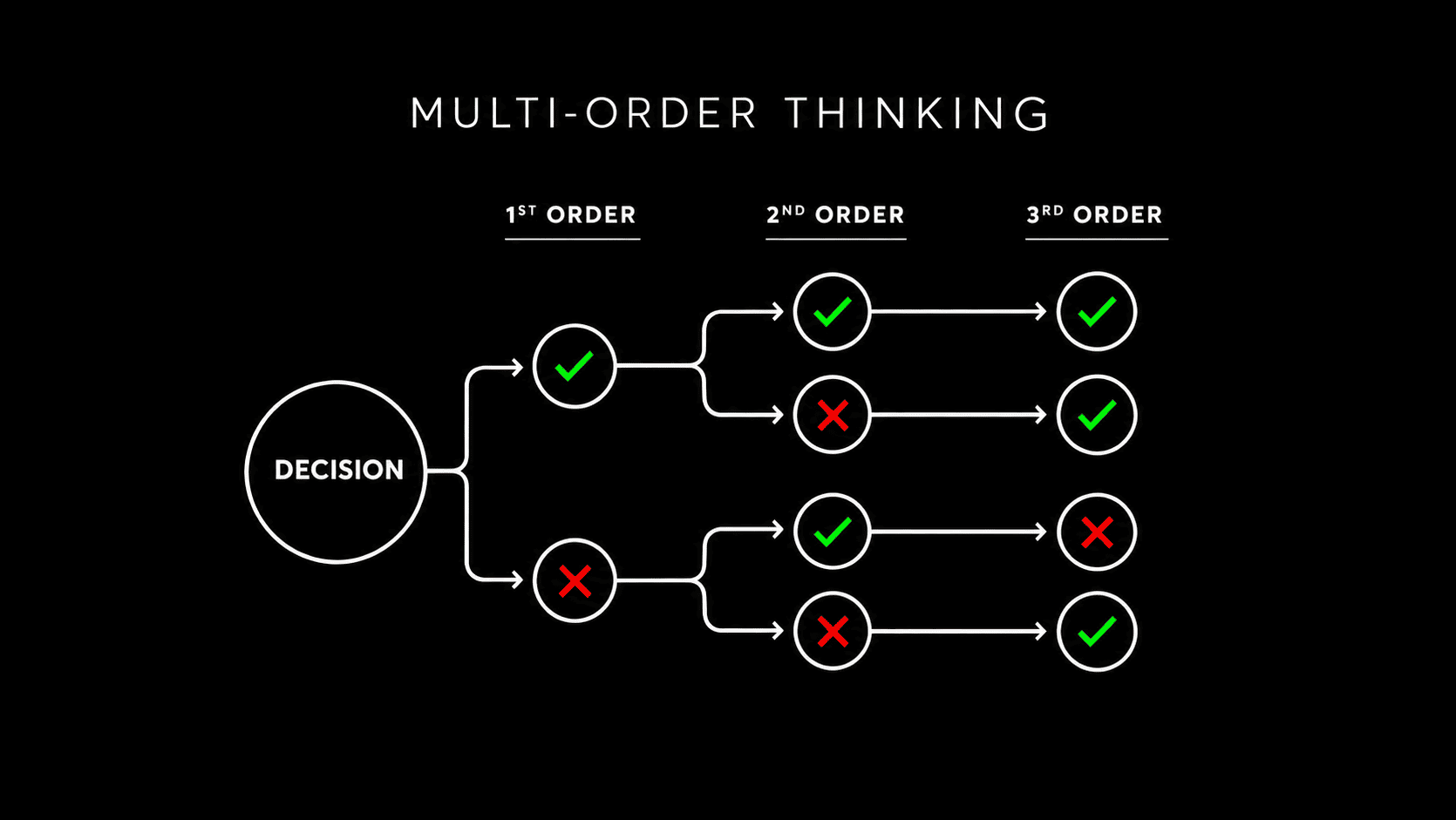
2. Multi-Order Thinking. Don’t just consider the immediate consequences of a decision. Consider what those consequences might lead to (second order, third order, etc.). Repeatedly ask yourself: “And then what?” Think multiple moves ahead.
3. Probabilistic Thinking. Good decisions don’t guarantee good outcomes. Consider how likely each outcome is and how much you stand to gain or lose. Look for opportunities where the potential upside far outweighs the potential downside.
4. Inversion. Instead of asking yourself how to succeed, ask yourself what would cause you to fail. Then figure out how to avoid those things. Humans are great at detecting threats, so sometimes it’s easier to identify what you shouldn’t do.
5. Reversibility. Make reversible decisions quickly and irreversible decisions carefully. Don’t waste hours thinking about a decision you can easily reverse. Save that time and mental energy for decisions with lasting consequences.
6. Sunk Cost Fallacy. Make decisions based on future potential, not past investments. Just because you’ve invested a lot of time, money, or energy into something doesn’t mean you should continue investing in it.
7. Personal Policies. If you repeatedly make the same type of decision, create a rule for yourself. For example, decide to never check social media before noon no matter what. Make a decision once so you don’t have to make it a thousand times.
8. Decision Journaling. When making an important decision, write down your reasoning and what you expect to happen. Read it later to see what you got right and what you can learn from it. This helps you improve the quality of your future decisions.
9. Opportunity Cost. When you spend time, energy, or money on one opportunity, you can’t use those same resources elsewhere. So the question isn’t simply whether something is beneficial. It’s whether it’s the best use of your resources.
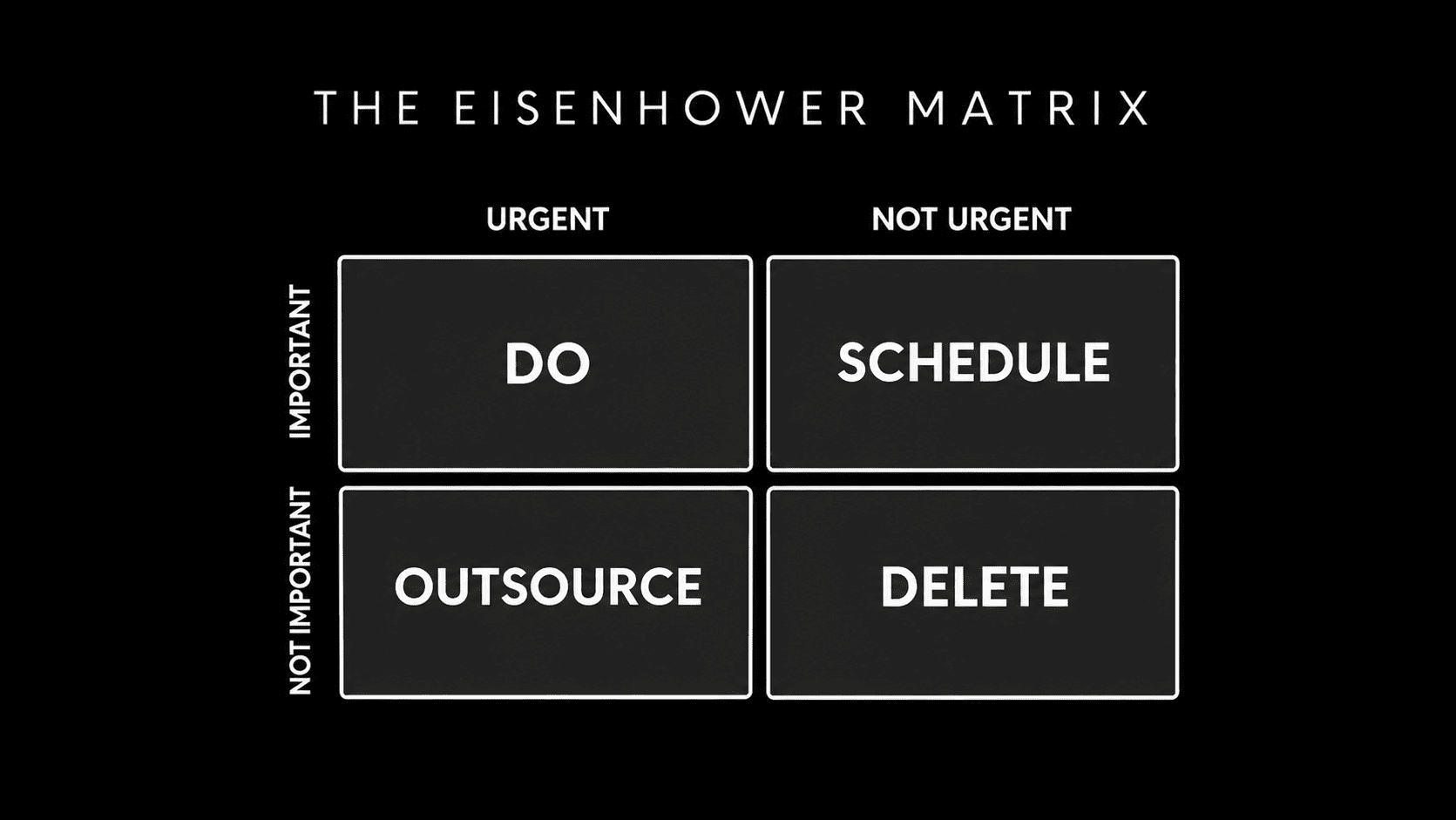
10. Meta-Decisions. Before you make a decision, decide how to make decisions. The Eisenhower Matrix illustrates this concept. It uses importance and urgency as criteria to determine which tasks to do, schedule, delegate, or eliminate.
If you use these, you’ll make better decisions.
If you make better decisions, you’ll significantly improve your life.
The next skill will help you to know which decisions matter.
II. Strategic Thinking: Find the Smartest Path
The essence of strategy is choosing what not to do.
— Michael Porter
Strategic thinking is the ability to figure out the most effective way to achieve a goal and develop a plan to get there.
While decision-making is about making the right moves, strategic thinking is about figuring out how those moves fit together to achieve a larger goal.
Think of chess. You can make a series of seemingly good moves and still lose the game because those moves don’t contribute to a larger long-term strategy.
The same applies to business, your career, and life in general.
As AI makes it easier to execute individual tasks, it becomes more important to understand which tasks to execute and in what order.
Technology (AI) gives you more ways to get somewhere.
Strategic thinking helps you determine which path to take.
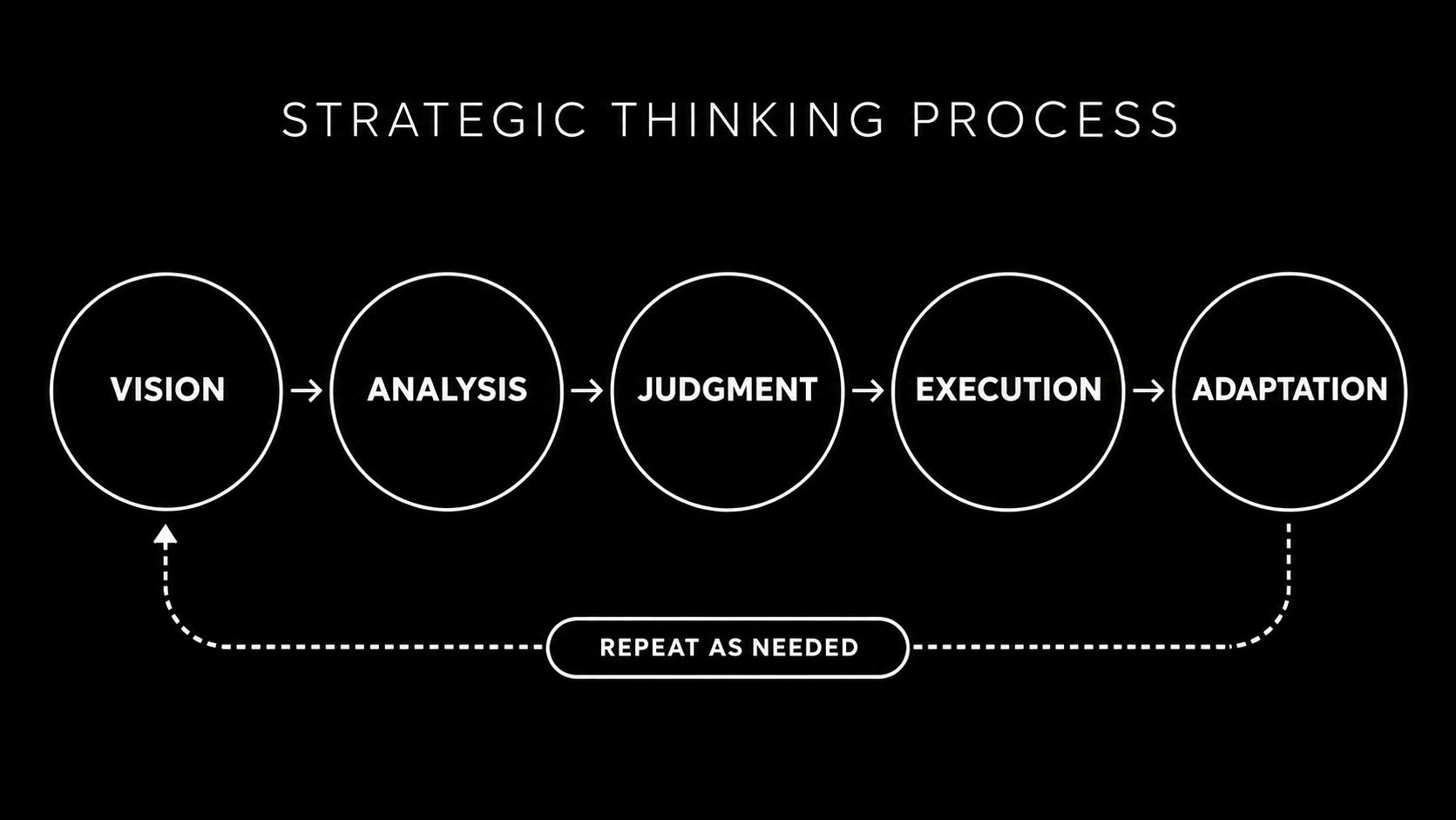
In one of my previous articles, I broke strategic thinking down into 5 pillars:
Here’s a quick summary:
1. Vision: Know exactly what you want to achieve.
You can’t determine the best path without knowing your destination. The clearer your vision, the easier it becomes to see which actions contribute to it and which don’t.
2. Analysis: Understand your current position.
Get clear on your strengths, weaknesses, resources, and constraints. Understand the environment you’re operating in, the opportunities available to you, and the obstacles standing between you and your goal.
3. Judgment: Find the smartest path toward your goal.
Consider different ways to achieve your goal. Identify high-leverage moves, anticipate obstacles, and try to find a path that maximizes your chances of success.
4. Execution: Concentrate your resources and take action.
Once you’ve identified the most promising path, concentrate your resources on it.
One of the biggest strategic mistakes people make is spreading their resources too thin. You win by identifying the weakest point and attacking it with full force.
5. Adaptation: Learn from your results and continuously improve.
Every strategy is based on assumptions. Some of those will turn out to be wrong.
As you execute your strategy, you’ll gain information you didn’t have when you created it. Use that information to improve your strategy rather than blindly sticking to your original plan. The battlefield always changes, so you need to change with it.
To develop your strategic thinking skills, apply these 5 pillars to an important goal in your own life. Write down your vision, analyze your current position, explore different paths, develop a plan, and start executing it.
Strategic thinking is one of the most valuable skills to have because it maximizes your chances of achieving a desired outcome with the resources available to you. And in a world where those resources are becoming increasingly powerful, knowing how to use them is an enormous competitive advantage.
III. Learning: Adapt to Any Future
The illiterate of the 21st century will not be those who cannot read and write, but those who cannot learn, unlearn, and relearn.
— Alvin Toffler
Learning is the ability to acquire, understand, and apply new knowledge and skills.
You’re probably familiar with the term survival of the fittest. Many people interpret this as the survival of the strongest. But in evolutionary biology, fitness is about how well an organism is suited to its environment. When the environment changes, the traits that make an organism successful can change too.
The same principle applies to your career and business.
A skill that gives you a competitive advantage today might be worthless in 5 years.
And the faster technology advances, the shorter the lifespan of many skills becomes.
In the past, you could get away with learning one skill or trade. But today, it’s different.
That’s why I believe your ability to acquire new skills is becoming more valuable than the skills you currently possess. We don’t know exactly which skills will become worthless in the coming years. But we do know that some skills will become valuable.
So if you can learn to learn any skill faster, that’s an extremely valuable skill to have. It’s a meta-skill that will help you in any environment. Instead of trying to predict the future, develop your ability to adapt to it. And while AI is making adaptability more important, it’s also making it easier to learn new skills.
You essentially have access to a personal tutor who can teach you almost any subject, explain complex concepts in simple language, answer your questions, and give you personalized feedback. Learning has never been easier.
However, this is also where many people get stuck. They mistake collecting information for learning. But there’s a big difference between having access to information and understanding it.
AI has made information abundant. But understanding is still rare.
Consuming information is not the same as acquiring knowledge and skills.
You can read 10 books about social skills without improving your social skills. You can watch 100 videos about entrepreneurship without becoming a better entrepreneur.
You don’t truly learn if you only consume information. You need to implement it.
A useful way to think about learning is as a change in behavior or capability.
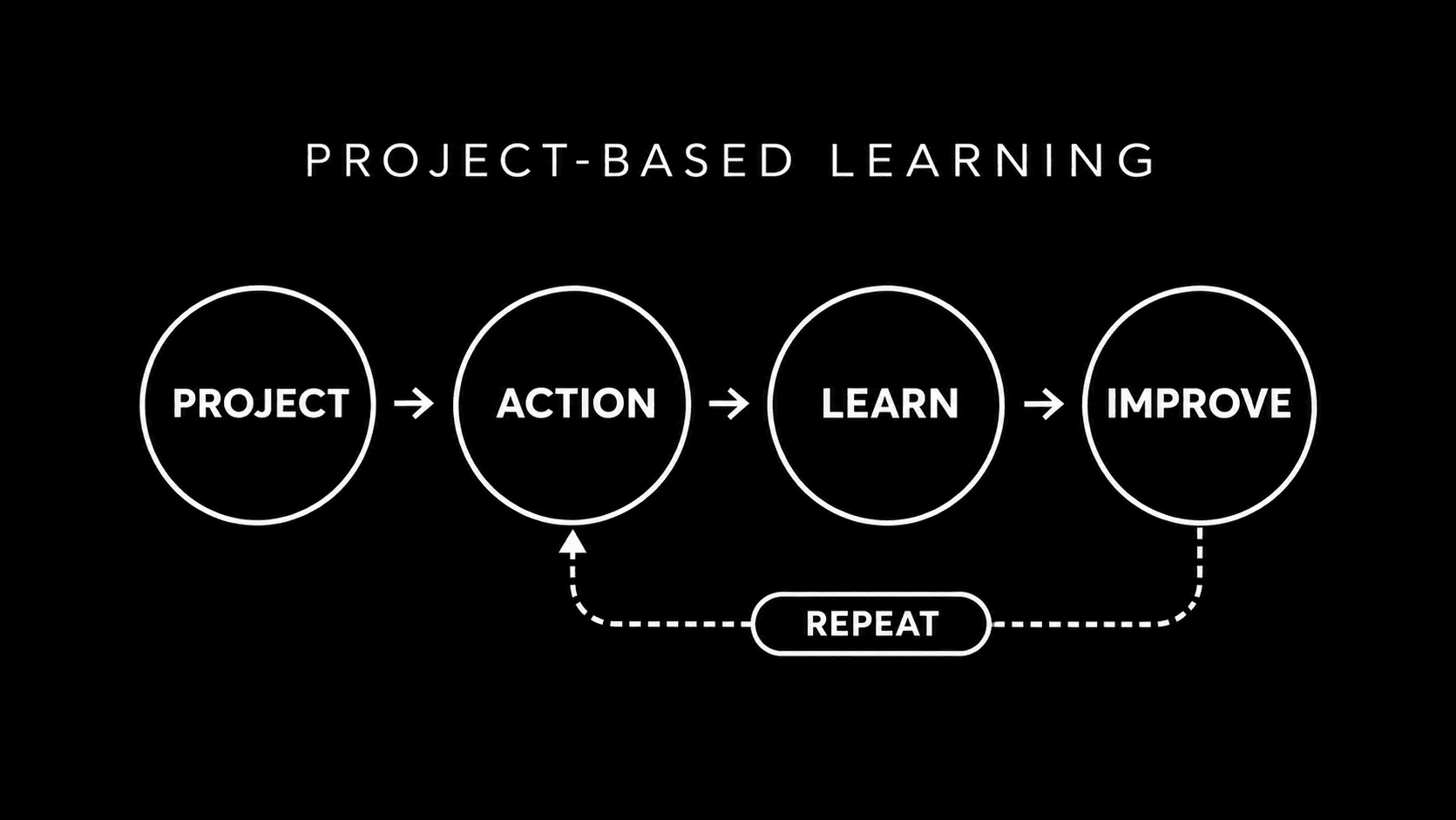
This is why I’m a big proponent of project-based learning.
Instead of spending months learning about something before you start, start a project and learn what you need to know along the way.
There are several advantages to learning this way:
You know what information is relevant to you
You immediately apply what you learn
You discover gaps in your understanding
You get feedback from the real world
You develop skills while building something valuable
AI makes this approach to learning even more effective. Whenever you encounter a problem or a gap in your knowledge, you can use AI to help you overcome it. This is how I learned to build a website. I just started building it and every time I got stuck, I either watched a tutorial or I asked AI what to do next to get unstuck.
This was much more effective than if I had watched the tutorials without applying the information. You may get useful information when you do that, but you only truly learn and understand something when you apply the information.
You don’t need to know everything before you can start.
You need to be able to learn what you need to know when you need to know it.
The faster you can do that, the faster you learn.
Start, then learn. Don’t learn, then start.
IV. Self-Discipline: Do What Needs to Be Done
Discipline is choosing between what you want now and what you want most.
— Abraham Lincoln
Self-discipline is the ability to manage your thoughts, emotions, and behavior so you can act in alignment with your long-term goals rather than your short-term desires.
I like to divide it into 2 parts:
1) Active Discipline:
Doing what you know you should do, even when you don’t feel like it.
2) Passive Discipline:
Not doing what you know you shouldn’t do, even when you feel like it.
Both are becoming more important.
This is because technology is a double-edged sword.
It’s making it easier to work on your goals, but it’s also making it easier to distract yourself from them. The same device that gives you access to almost all of humanity’s knowledge gives you access to nearly unlimited entertainment and other distractions.
And since some of the brightest minds in the world are working together to get you to use their apps more, it will only get more difficult to resist these distractions.
That’s why you need self-discipline.
You can have great judgment, create a brilliant strategy, and know exactly what you need to learn. But none of that matters much if you can’t control your behavior.
Fortunately, self-discipline is not something that you’re born with. It’s a skill you can develop. Or rather, a decision you can make.
It’s deciding to do what you should do regardless of how you feel.
This is hard because your brain will try to convince you to take the easy route because this saves energy (which is good for survival). But you can learn to do it.
One of the most effective ways to improve your self-discipline is to change the environment in which you make decisions.
Think about it.
If you’re trying to eat healthier, you could fill your kitchen with junk food and resist the temptation to eat it every day. Or you could simply stop buying junk food. Both require willpower, but the second option requires considerably less of it.
This is the underlying principle of Environment Design:
Make it easy to do what you should do
Make it hard to do what you shouldn’t do
I like to think about this in terms of friction.
Friction is anything that makes a behavior more difficult to perform. The more friction there is between you and a behavior, the less likely you are to perform it.
For example, if your phone is on your desk while you’re working, checking social media takes a few seconds. But if you log out of your accounts, turn off your phone, and put it in another room, checking social media requires significantly more effort.
I call this adding Tactical Friction.
You can also apply this principle in reverse by removing friction from desirable behaviors.
For example, if you want to exercise in the morning, lay out your workout clothes and pack your gym bag the night before. The fewer steps you have to take before exercising, the more likely you are to do it.
The goal is to make desirable behavior almost frictionless.
You can’t eliminate every distraction or temptation, so you still need to train yourself to become a disciplined person. But if you make it easy to do the right thing and hard to do the wrong thing, then it becomes a lot easier to become disciplined.
I also recommend practicing mindfulness. At first, I thought this was some woo-woo nonsense, but I was wrong. It’s extremely practical. Mindfulness helps you become aware of your impulses before you act on them. The better you become at noticing an impulse without acting on it, the more control you gain over your behavior.
To develop it, you can start by meditating for 10 to 20 minutes per day. Close your eyes, focus on your breathing, and observe your thoughts. Try not to label them. Whenever you get distracted, bring your attention back to your breathing. Every time you do this, you do one rep for your mindfulness muscle. This helps to create space between you and your thoughts and impulses.
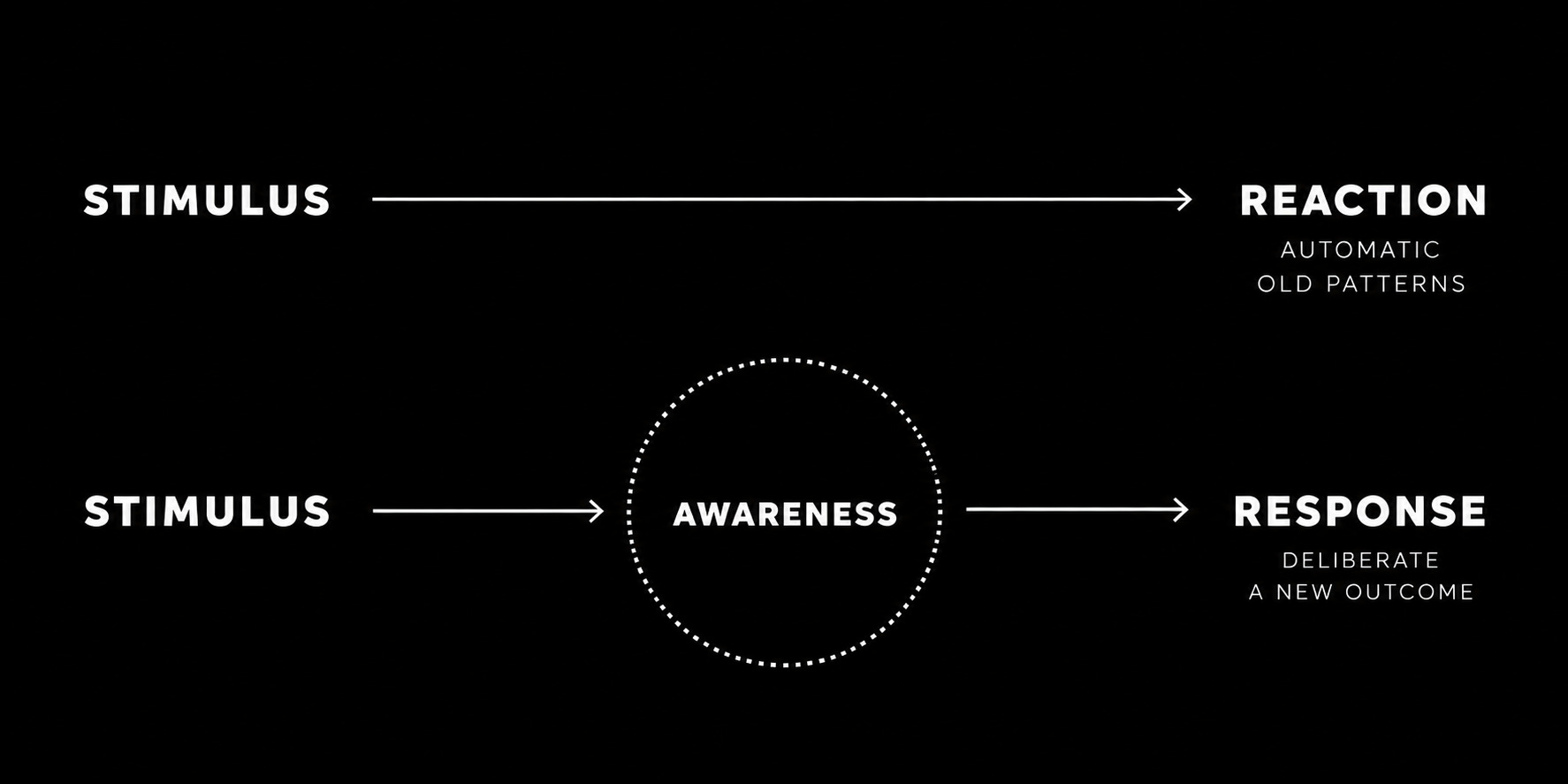
This makes it easier to become more disciplined because discipline is about making a choice and awareness helps you recognize when you have a choice.
The goal is to become less dependent on how you feel in the moment and more capable of doing what needs to be done.
As technology makes it easier to satisfy your short-term desires, your ability to prioritize your long-term interests becomes increasingly more valuable.
V. Writing: Think and Communicate Clearly
Writing is thinking. To write well is to think clearly. That’s why it’s so hard.
— David McCullough
Writing might seem like a strange skill to include here because you can use AI to help you to write. But most people massively underestimate the value of the writing process because they only look at the value of the output.
Writing isn’t just a way to communicate what you think. It’s also a tool that helps you develop, organize, and improve your thoughts.
There are 4 important skills you develop through writing:
Thinking: Clarifying your thoughts and improving your reasoning
Learning: Deepening your understanding and identifying gaps in your knowledge
Creativity: Connecting seemingly unrelated ideas and developing original insights
Communication: Expressing ideas in a clear, persuasive, and memorable manner
These skills are useful regardless of what you do for a living.
An idea can seem completely logical in your head. But when you try to put it into words, you suddenly notice contradictions or gaps in your reasoning. I often sit down to write about something I think I understand, only to realize that I don’t understand it nearly as well as I thought I did.
Writing exposes these gaps in your thinking and helps you to close them.
I like to think about knowledge as a web of interconnected dots. When you read books, watch videos, or listen to podcasts, you’re collecting dots.
When you write, you connect the dots.
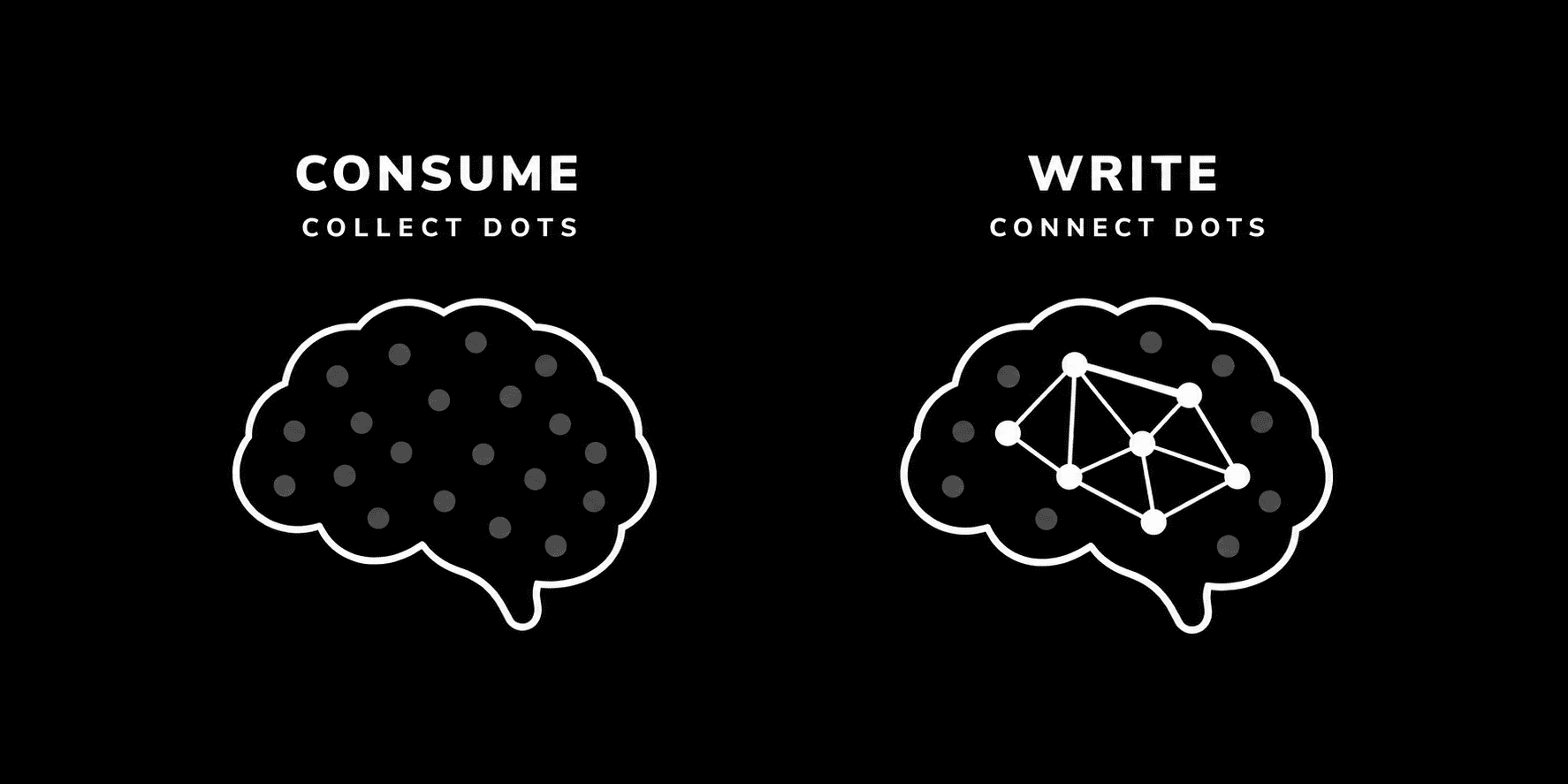
The more connections you make, the better you understand things. And by connecting ideas from different fields, you can develop insights that you wouldn’t have arrived at otherwise.
This is one of the reasons why I don’t recommend outsourcing your entire writing process to AI. You might write an article in less time, but you miss out on many of the cognitive benefits of writing it yourself.
I’m not against using AI to write. I use it myself. But I think it’s important to distinguish between the parts of the writing process that are valuable to automate and the parts that are valuable to do yourself.
I would recommend doing the deep, original thinking yourself. Then use AI to enhance and distribute that thinking. And also use it for research and fixing grammar mistakes.
This makes you more efficient and it improves your writing. But you are still the one who is doing the thinking and this will improve your critical thinking abilities. This is one of the most valuable skills there is, especially now that most people are outsourcing their thinking to AI.
To develop your writing skills, I recommend writing one or two articles per week about topics you’re genuinely interested in.
Here’s the process I use:
Pick a topic you want to understand better
Research it and take notes on interesting ideas
Organize your ideas into a logical structure
Explain what you’ve learned in your own words
Identify gaps in your thinking and try to close them
Edit your writing for clarity, simplicity, and value
Publish it online and learn from the feedback
You don’t need to be an expert on something before you start writing about it. Writing is part of how you become one. And by publishing your writing online, you’re not just improving your skills. You’re also building a body of work that can attract like-minded people, create opportunities, build leverage, and generate income for years to come.
I’ve written more about this in this article: Please Start Writing. It’ll Change Your Life.
If there’s one habit I’d recommend in the age of AI, it’s writing.
Because even if AI eventually becomes better than you at writing, the process of writing can still make you much better at thinking. And this is a crucial skill to have.
I don’t know what the world will look like in 5 years. And neither does anyone else.
But regardless of how the world changes, I believe these 5 skills will serve you well:
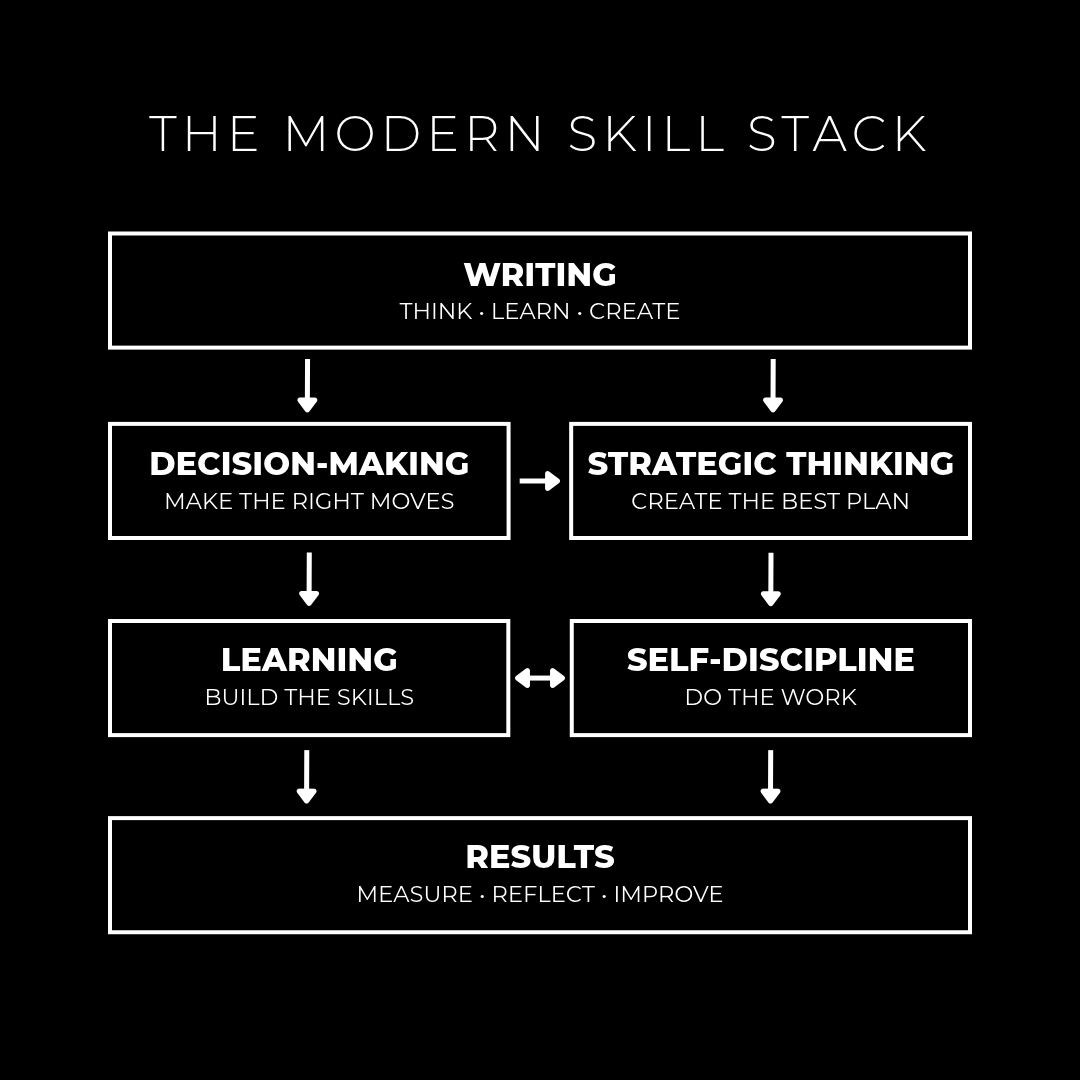
Decision-making: Make better choices
Strategic thinking: Find the best path toward your goals
Learning: Rapidly acquire new knowledge and skills
Self-discipline: Do what’s good for you and don’t do what’s bad
Writing: Think more clearly, develop creative ideas, and build leverage
The beauty of these skills is that they also reinforce each other. Writing helps you learn. Learning improves your ability to make decisions. Better judgment helps you develop better strategies. And self-discipline helps you execute those strategies.
Don’t waste your time worrying about how the future might change.
Develop the skills that will allow you to thrive in any future.
I’ll leave it at this for now. If you have any questions about becoming a digital writer or anything else, feel free to message me. I’d be happy to help you out.
Talk to you in the next one!
Stijn
PS: If you want to learn how to write content that grows your audience, don’t forget to check out The Digital Writer. It contains all my best strategies that helped me gain 120,000+ followers, 12,000+ newsletter subscribers, and 200M+ views. You can get 50% off until Black Friday and 25% off until Cyber Monday.
How I Can Help
1. YouTube videos. I turn my articles into videos in case you prefer to watch or listen.
2. Articles & Workshops. I publish 1–2 free articles like this every week. Subscribe by clicking on the button below. I’m also working on a paid newsletter with extra guides and workshops to help you write better, grow your audience, and build your business. Sign up today to lock in the lowest price before it increases (coming soon).
Best morning starter 🫣
Insightful🔥