

Motivation is not something you are born with.
I rarely engage in debates because most people care more about winning an argument than getting closer to the truth.
But sometimes, I let myself get sucked into one. And when I do, it’s almost always because someone says something like:
“I wish I was as motivated as you are. I’m just not a very motivated person.”
These types of statements really annoy me.
Because it’s the perfect excuse.
If motivation is something you’re born with and you don’t have it, you don’t have to take responsibility for changing it.
It’s not your fault. It’s just “not who you are.”
But motivation isn’t something you either have or don’t have. It’s actually something that you have a lot of control over. And in this newsletter, I want to show you how you can significantly increase your motivation so it becomes easy to do hard things.
My goal is to make this the last newsletter you need to finally fix your motivation.
To achieve this, we’ll start by looking at what neuroscience tells us about why we often lack motivation. Then we’ll talk about how you can change this with insights about psychology, dopamine, and intrinsic motivation. After that, we’ll discuss how you can turn hard work into a fun game to make it enjoyable and easier to sustain.
I’ve cut out the fluff and tried to keep this as concise as possible without sacrificing depth. But it’s still a fairly long newsletter, so save it for later if you don’t have a few minutes to read right now (or if you want to revisit the action steps).
Before we dive in:
I’m running a special final sale for the 𝕏 Growth System.
Inside, you’ll learn the strategies I used to grow to 74,000+ followers on 𝕏 and generate 100M+ yearly views. These strategies also work on other writing platforms (I used them to get 20,000+ Threads followers and 12,000+ Substack subscribers).
This is your last chance to get it before it closes at the end of this week.
» Click here to get the X Growth System.
With that out of the way, let’s dive into it.
Why Your Brain Avoids Hard Work
The consequences of behavior determine the probability that the behavior will occur again.
— B. F. Skinner
To understand why we often lack motivation, we first need to understand what motivation is and how it actually works.
Motivation is the internal drive that helps us to take action and pursue goals.
But not everything motivates us equally. This is because of evolution.
Our brains evolved to motivate us to pursue things that increased our chances of survival and reproduction, for example: food, sex, social connection, and safety.
We may live in a very different world today, but our brain is still pretty similar. So if it thinks that something helps you to survive or reproduce, it will motivate you to pursue it. And one of the most important chemicals involved in this process is dopamine.
Most people think of dopamine as the “pleasure chemical”, but that’s not entirely accurate. Dopamine isn’t just about experiencing pleasure for the sake of it. It plays an important role in anticipating rewards and motivating you to pursue them. In other words, your brain basically uses dopamine to motivate you to take action.
And here’s where things get interesting.
Your brain doesn’t motivate you equally to pursue every reward. It also considers how much effort something requires, how long you’ll have to wait for the reward, how likely you are to get it, and whether it is new and exciting (novelty releases dopamine).
For example, imagine you have two options:
1) Scroll on social media: Almost no effort, immediate rewards, and constant novelty.
2) Work on your business: Significant effort, delayed rewards, and uncertain results.
When we look at this, it’s obvious what the better option is. But your brain disagrees.
Because it does not care about what you think is good for you.
It cares about what it thinks is good for your survival and reproduction.
So it will often favor the thing that takes the least effort because saving energy is good for your survival. In the past, you might have needed your energy later to find food or to run from a predator.
This is why your brain avoids hard work.
It doesn’t prioritize what’s best for you in the long run.
It prioritizes what helps you survive (and reproduce) in the short term.
It tends to favor rewards that are:
Valuable: Worth the effort
Easy: Require minimal effort
Immediate: Little or no waiting
Certain: High chance of success
And your brain uses emotions and urges to influence your behavior.
When it expects something to be rewarding, it can create feelings of excitement or desire to motivate you to pursue it. But when something requires a lot of effort, you might experience boredom, frustration, or resistance instead.
This is why you might feel a strong urge to scroll social media, even when you know it’s not in your best interest. And why you might struggle to start working, even when you know it’s exactly what you should be doing.
We’ve all been there.
The interesting thing about this is that your brain isn’t trying to work against you when it tries to get you to do instant gratification activities.
It simply thinks that these actions are best for your survival or reproduction.
That’s why it releases a lot of dopamine to make you feel motivated to pursue these things. But most people aren’t aware of how this works, so they mistake this feeling for pleasure and label the activity as ‘something they like’.
They don’t actually like the thing, they just like the feeling of the dopamine release they get when they do the thing. But the only reason you get this is because your brain mistakes the thing for something else.
Your brain didn’t evolve in a world with smartphones, pornography, and junk food. So in terms of dopamine, it acts as if instant gratification activities are the real thing.
Even though they’re actually cheap substitutes for the real thing:
Porn → Real intimacy
Junk food → Healthy food
Alcohol → Genuine social connection
Social media → Real-life experiences
Video games → Real-world achievements
The problem is that these activities are extremely stimulating. Some of them, like porn or certain drugs, are even more stimulating than the real thing. Scientists call these exaggerated versions of natural rewards supernormal stimuli.
Your brain didn’t evolve to deal with those types of rewards, so this creates another problem. When you repeatedly expose your brain to intense rewards, it will adapt to that stimulation. It basically works like this:
Activity → Dopamine release → Dopamine binds to receptors → Effect
When you do a lot of instant gratification activities, your brain can adapt by becoming less sensitive to dopamine. In simple terms, this means that the same activity won’t feel as rewarding as before. You need more stimulation to get the same effect.
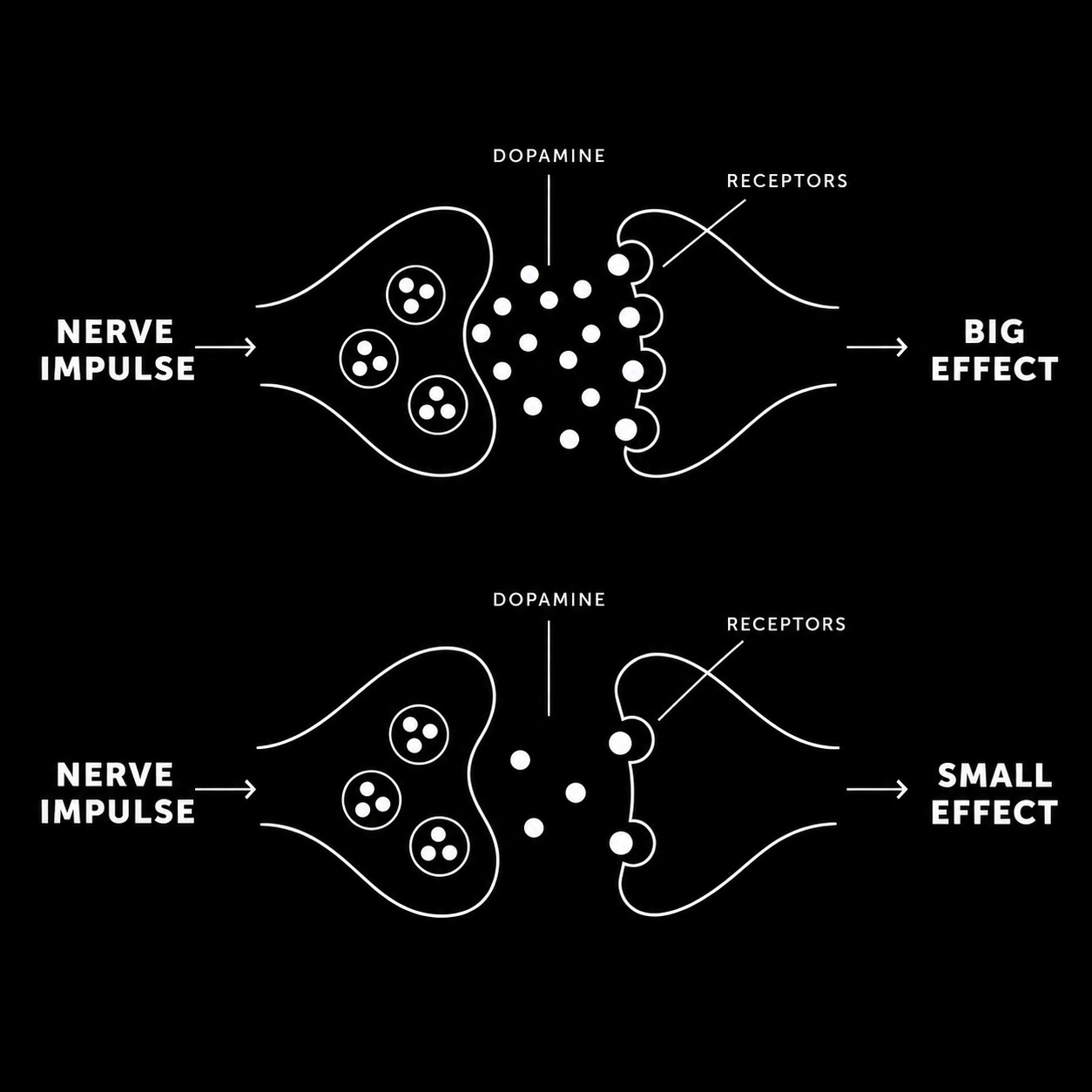
Over time, this can make less stimulating activities feel less rewarding.
And when hard work requires more effort while giving you fewer immediate rewards, it's easy to see why motivation becomes a problem.
This is why reducing instant gratification is so important.
For example:
Gambling
Watching porn
Eating junk food
Excessive gaming
Alcohol and drugs
Excessive online shopping
Binge-watching shows or videos
Mindlessly scrolling social media
Constantly checking your phone and notifications
You don’t have to eliminate everything pleasurable from your life. But you should be mindful of highly stimulating activities. Only do them if they actually improve your life.
Reducing these activities can help, but that’s only half the solution. The other half is learning to enjoy the things that require effort.
And that’s what we’re going to focus on next.
In the next section, we'll combine what we've learned about your brain with insights from psychology, intrinsic motivation, and meaningful work to make hard things easier and more enjoyable. The goal is to make you genuinely want to do the work instead of constantly having to force yourself to do it.
How to Make It Easy to Do Hard Things
You listen to the song to enjoy the song, not to finish listening to it.
— Rian Doris
One of the things that influences how motivated you feel is the potential reward. Or to be more precise, how valuable the reward is to you.
This is subjective. Most people won’t feel motivated to meal prep, but bodybuilders will. This is because the reward, a better-looking body, is more valuable to them.
This is why having meaningful goals is so important for motivation.
When you have a goal you genuinely care about, the work that moves you closer to it becomes more rewarding. It’s no longer just a task that you need to complete, but it’s something that brings you closer to your desired future.
We experience positive emotions when we see ourselves move closer toward a goal we value. The more we value the goal, the more positive emotions we experience.
And here’s the interesting part:
You don’t have to achieve the goal for this. It’s about movement toward the goal.
This is important because most worthwhile goals take years to achieve. If you only feel rewarded when you reach the finish line, you’ll spend most of your time working without feeling particularly motivated. That’s why your brain rewards you with dopamine to motivate you when you move toward your goal.
So it’s important to get clear on what you want to achieve so that you have something to move toward. It’s also important to get clear on what you don’t want so that you have something to move away from. I call this your Heaven and Hell, and together they are your ‘why’. You can then break this up into smaller actions to make it practical.
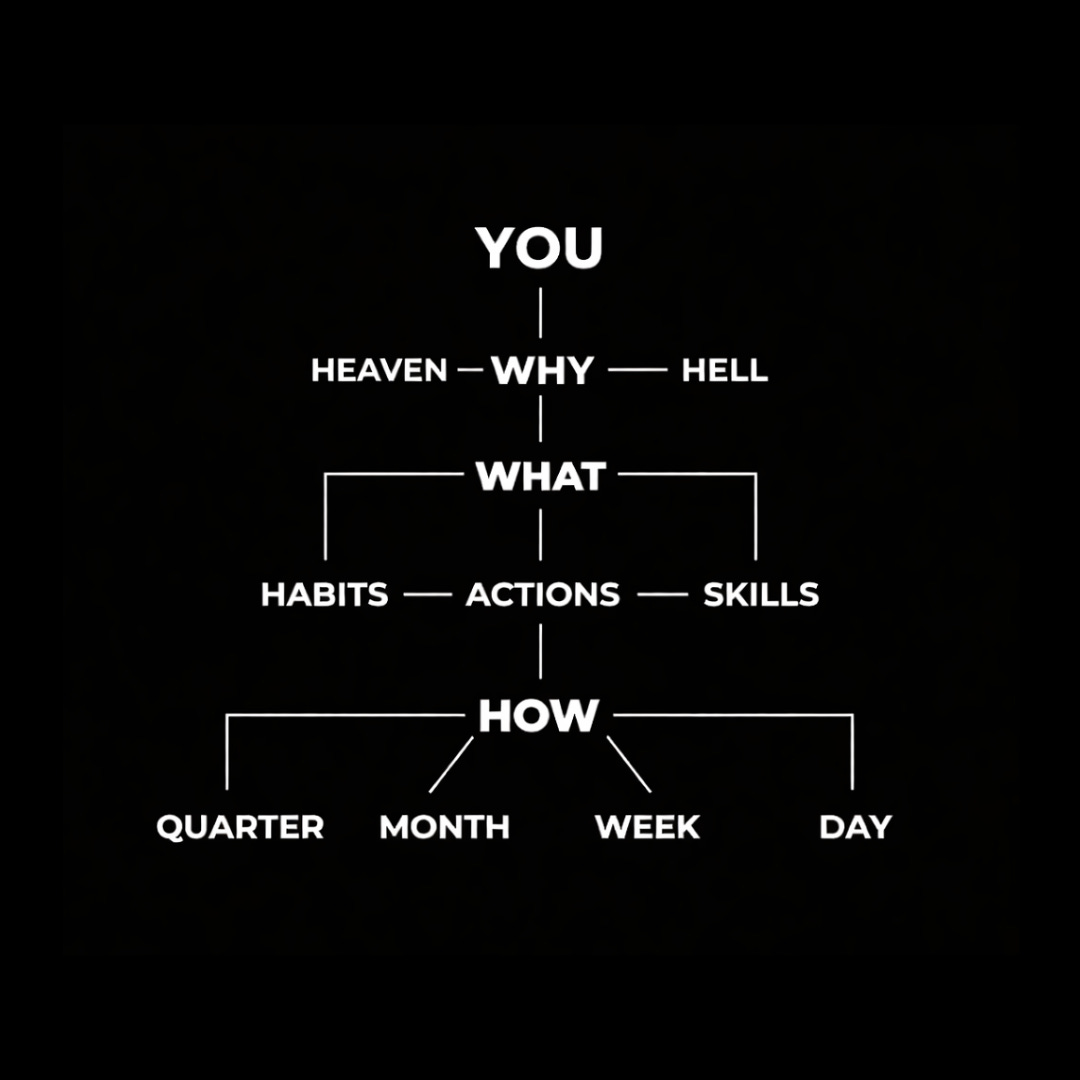
As Friedrich Nietzsche said, “He who has a why to live for can bear almost any how.”
If you can figure out your why, then you’ll become much more motivated.
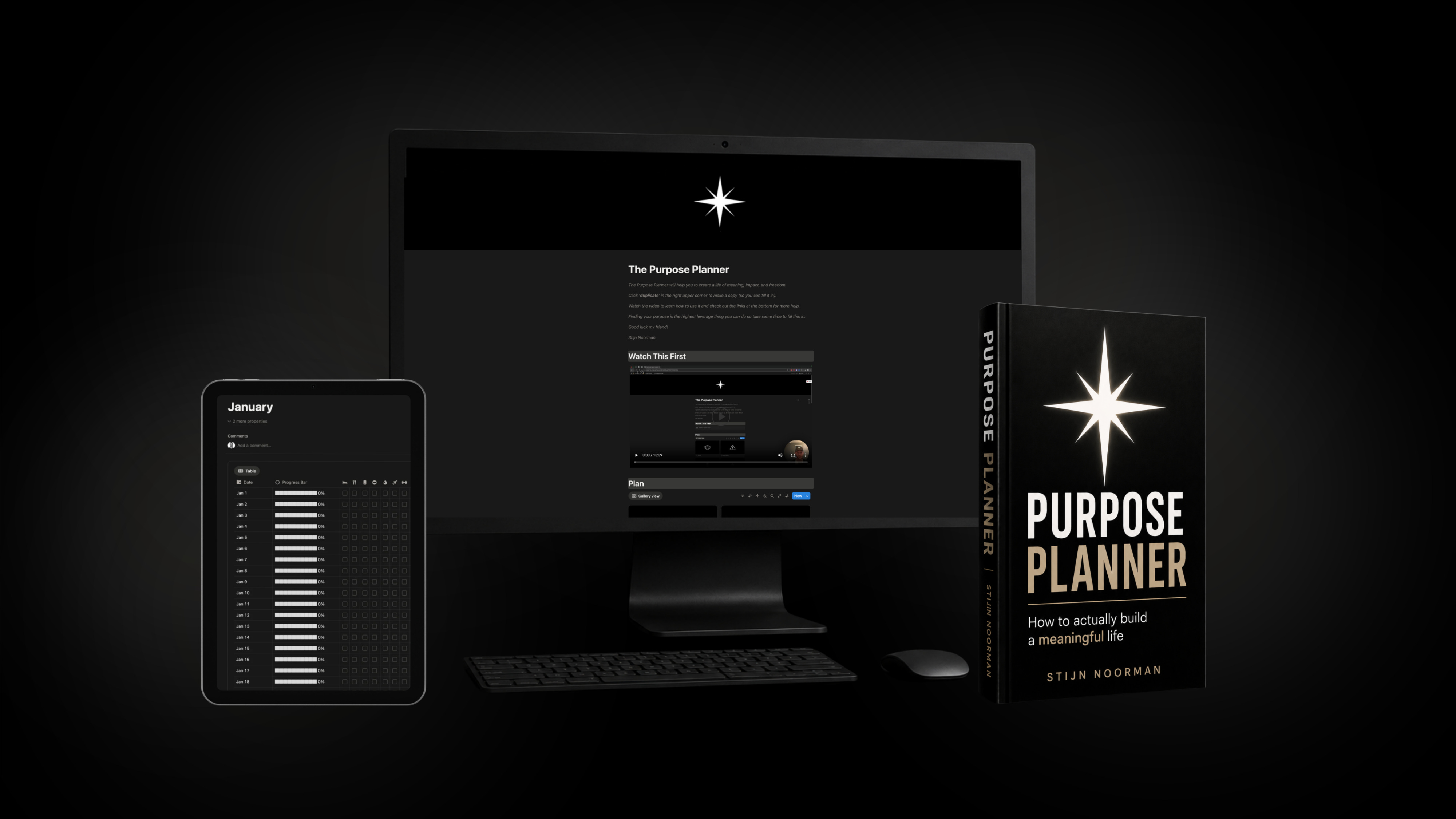
If you struggle with this, you can get my Purpose Planner for free. It will help you find your purpose and develop a clear vision for your life. I believe this is one of the most important things you can do, which is why I made it free. Click the button below to subscribe, or reply to this email if you’re already subscribed and I’ll send it to you.
Another way to make hard work more rewarding is to develop intrinsic motivation.
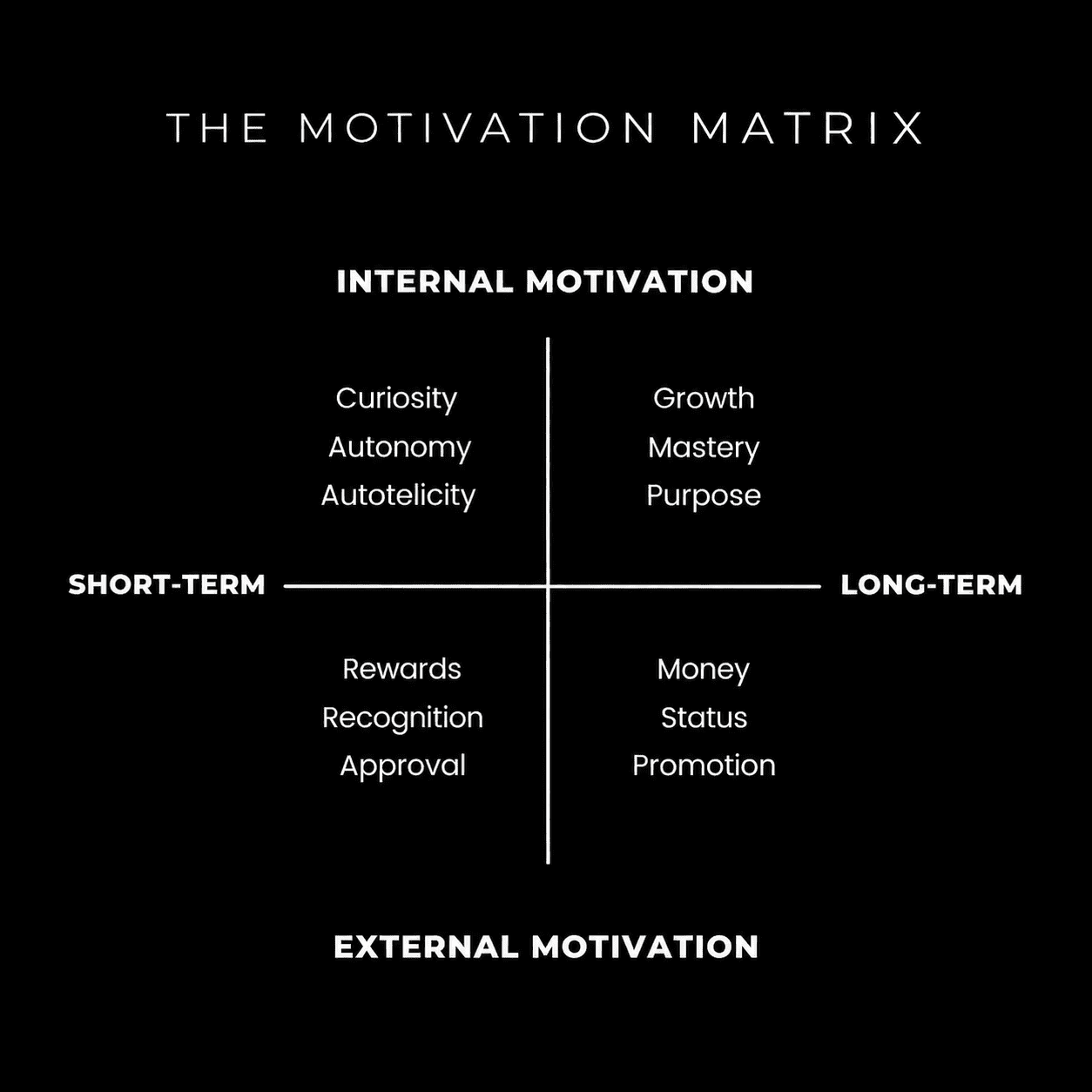
Intrinsic motivation basically means doing something because you find the activity itself enjoyable. You do it for the sake of doing it, not because of what it gets you.
Extrinsic motivation is the opposite. This is where you do something for an external reward (like money or status). External rewards can be powerful motivators, but they often lose their appeal over time. If you only do something for the money, and you get the money, you often lose your motivation to do the thing.
Intrinsic motivation is more sustainable because you actually like doing the thing.
If you can make your work more intrinsically rewarding, you’ll feel much more motivated and you’ll find it easier and more enjoyable to do hard things.
There are 5 important things that can help you develop intrinsic motivation:
Curiosity: You want to learn, explore, and discover certain things.
Mastery: You enjoy improving your skills and becoming better at what you do.
Autotelicity: You genuinely enjoy the activity itself, regardless of the outcome.
Purpose: You believe your work contributes to something meaningful.
Autonomy: You feel in control of what you do and how you do it.
The more of these motivators you can bring into your work, the easier it becomes to enjoy the process. You can still add external motivators on top of this, but make sure that you have a solid foundation of intrinsic motivators first.
But even when you have meaningful goals and enjoy your work, some tasks will still feel boring. We can fix this by applying the same principles that make games so engaging. Let’s look at how to turn hard work into a fun game.
How to Turn Your Work Into a Fun Game
The more a job inherently resembles a game—with variety, appropriate and flexible challenges, clear goals, and immediate feedback—the more enjoyable it will be.
— Mihaly Csikszentmihalyi
We all know someone who can spend hours playing video games but struggles to spend an hour working on something important.
Some people might say that this person is lazy, but I disagree. Video games often require a lot of effort. You have to solve problems, learn skills, overcome challenges, and sometimes repeat the same task dozens of times before you succeed.
But most gamers can easily do this for hours.
The reason for this is that games are designed to be enjoyable and effortless.
They give you clear objectives, challenges that match your skill level, immediate feedback, and a constant sense of progress. One of the reasons these principles work so well is that they help us enter a mental state called flow.
Flow is a state in which you’re completely absorbed in what you’re doing. You’re focused and so immersed in the activity that you might even lose track of time.
The psychologist Mihaly Csikszentmihalyi studied this state and identified several things that help us experience flow.
Some of the most important ones are:
Clear goals: You know exactly what you’re trying to accomplish.
Immediate feedback: You can tell whether you’re making progress.
The right level of difficulty: The challenges match your current skill level.
Deep concentration: You’re focused on what you’re doing without distractions.
Sense of control: You feel capable of handling the challenges you’re facing.
The first three help create the conditions for flow, while the last two are experiences commonly associated with it.
The right level of difficulty is especially important. When something is too easy, you get bored. When it’s too difficult, you get stressed or anxious. But when the challenge matches your skill level, you’re more likely to enter flow because it requires your full focus. Ideally, you want a challenge that is 4% above your current skill level.
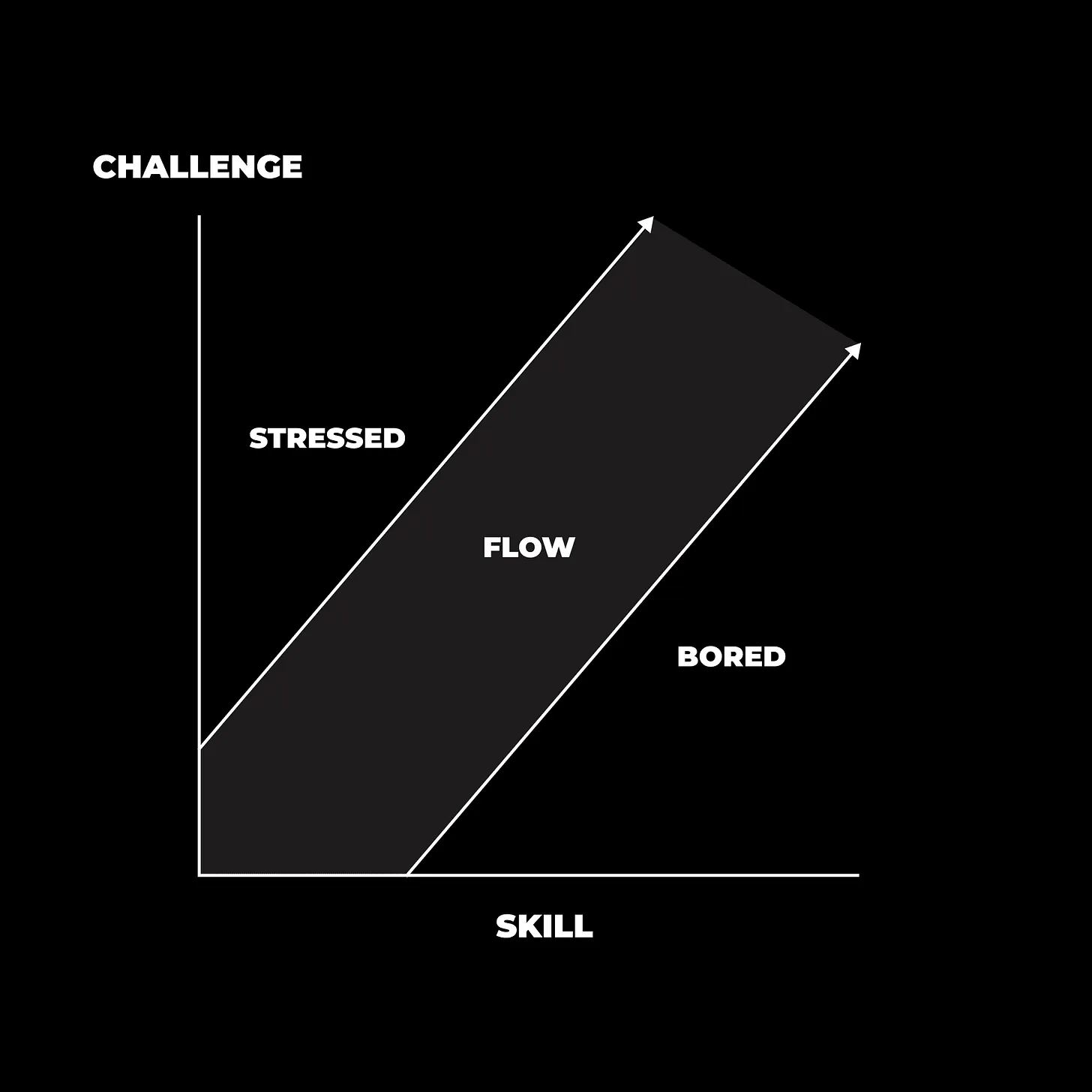
You can use these same principles to make your own work more engaging.
Here are 7 practical ways to turn hard work into a fun game:
Turn your work into missions. Give yourself a larger goal to work toward. For example, building a profitable business so that you can quit a job you hate, writing a book, or getting in great shape.
Break big goals up into smaller quests. Turn your mission into smaller quests to make it practical and so you can experience progress along the way.
Keep score. Make your progress visible by tracking things you can control, for example, workouts completed or articles written. The free Purpose Planner also includes a habit tracker and weekly review section to help you with this.
Create feedback loops. Regularly review your results to see what’s working, what isn’t, and how you can improve.
Look at yourself as a character in a game. Act as if you are a character that needs to do certain tasks to level up.
Increase the difficulty. As you improve, challenge yourself with harder tasks to keep things interesting. Pick challenges just above your current skill level.
Reward progress. Celebrate your achievements and meaningful milestones.
The more you do this, the more enjoyable the process will become.
When you combine all of this with reducing instant gratification, building better habits, pursuing meaningful goals, and increasing intrinsic motivation, you can train your brain to find hard work more rewarding, more fun, and easier to sustain.
This is how you force your brain to crave doing hard things.
That’s it. Thanks for reading. Talk to you in the next one!
Stijn
PS: I write 2 newsletters like this every week. Click the button to subscribe for free:
How I Can Help
1. X Growth System. Learn how to grow your audience on X with the strategies that helped me reach 74,000+ followers and 100M+ yearly views. It closes this tomorrow.
2. YouTube videos. I turn my articles into videos in case you prefer to watch or listen.
Turning hard work into a game works well for repeatable tasks, but the "4% above your skill level" rule breaks down when you are starting from zero. When everything is unfamiliar and you have no feedback loop yet, it will not feel like flow, and expecting it to feel like a game is usually what makes people quit in week two.
I have left watching A\V(audio and video) content altogether for the last 2 months , this has helped me solve the problems which are mentioned in the first half.
The second half of the article will be help full for making hard work enjoyable.
Thank you for this wonderful article💌