

There are almost 7B people on this planet. Someday, I hope, there will be almost 7B companies.
– Naval Ravikant
I built a one-person business that hit 6-figures last year.
I hit my first $10K month within 1 year of restarting on Twitter, but the truth is that it cost me over 3 years and $30K in courses & mentorships to figure things out.
Oh, and also a LOT of mistakes.
I have worked very hard in the last few years, but when I reflect on everything that I did, almost 80% of it wouldn’t have been necessary to get where I am today.
Don’t get me wrong, I needed those mistakes to learn, but now that I’ve learned I know what actually matters and what’s a waste of time.
So in this newsletter (or written mini course), I’ll show you exactly how I’d do it faster if I had to start over.
You’ll learn:
How to actually make money online
The best one-person business to start
The best high-income skills to master
How to pick a profitable niche you enjoy
The 3 most profitable (eternal) markets
8 practical steps to build a 6-fig person business
At the end, you’ll know exactly how to go from zero to 6-figures faster than me.
One-Person Business Model Simplified
Sensible people get paid for doing what they enjoy doing.
– Alan Watts
The one-person business model is turning yourself into the business.
You are the business.
By improving yourself, you improve the business (and vice versa).
It’s a business model that allows you to get paid to do what you love.
You pursue your interests
You solve your own problems
You sell the solution to others
You literally get paid to improve yourself.
You pursue your curiosity and you help people with similar interests.
Learn a skill. Teach the skill. Sell the skill.
This is why I think it’s the ideal business model.
You have creative freedom, control over your time and location, and the potential to make millions if you stick with it (and if you provide enough value).
Most people, including me, massively overcomplicate it though.
There are actually only 2 things you need to make it work:
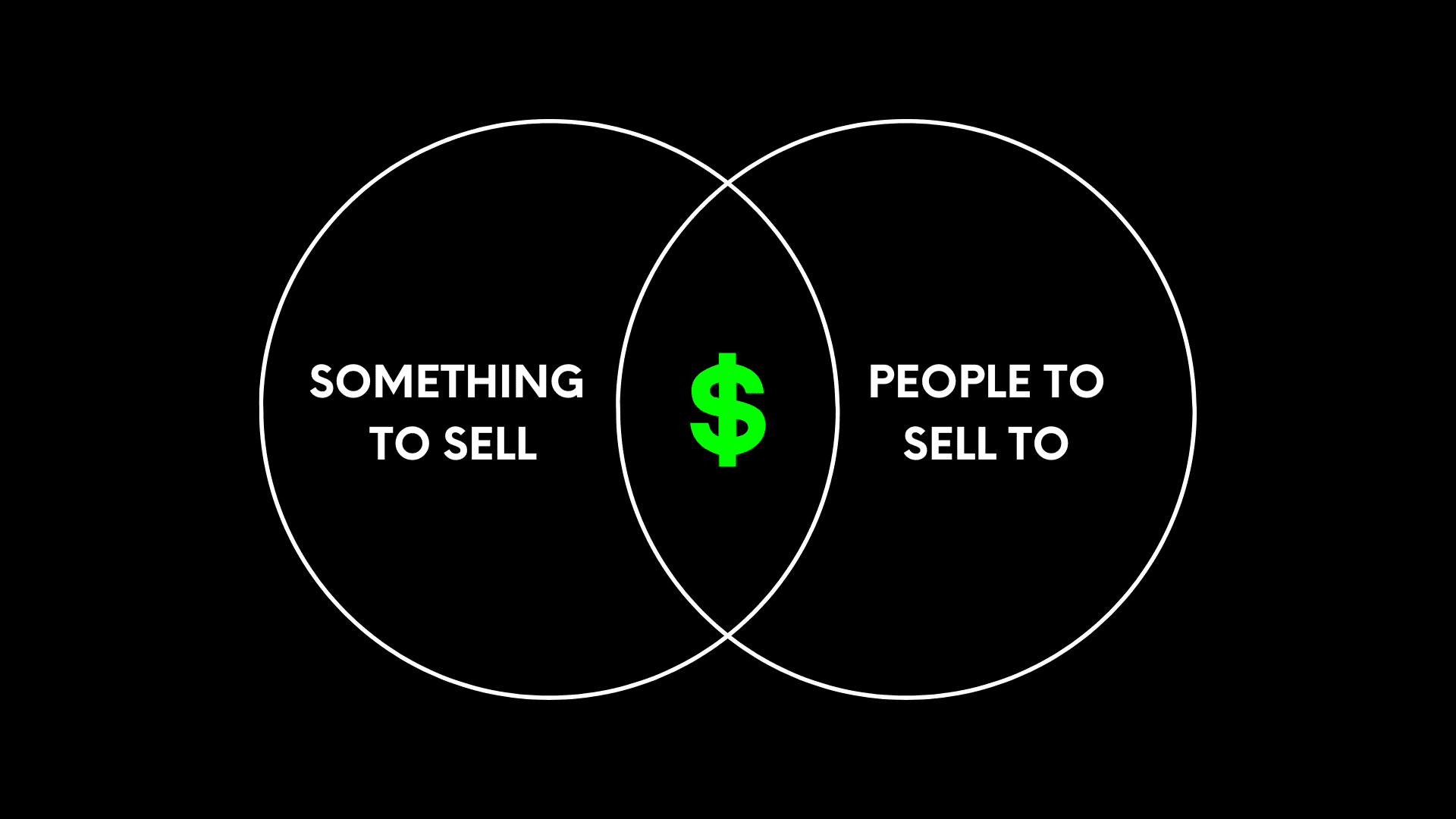
People love to overcomplicate it, but this is what it all comes down to.
1) Something to sell = your offer & product or service.
2) People to sell to = your audience (followers + email list).
These are the first principles of online business.
Once you understand how to grow an audience, how to create a valuable product or service, and how to turn it into a valuable offer that sells, you will be set for life.
This is what we’ll talk about in the rest of this article.
In order to build a profitable audience, there are certain high income skills you need.
So let’s talk about the most important high-income skills you need to learn now.
High-Income Skills For Solopreneurs
Learn to build. Learn to sell. If you can do both, you’ll be unstoppable.
– Naval Ravikant
I differentiate between 2 types of high-income skills:
1) Primary skills: skills you need to learn (hard to outsource).
2) Secondary skills: skills you’ll need (easy to outsource).
In an ideal world, you have all of the skills I’m going to explain.
But you have a limited amount of time.
So it’s best to focus on the primary high-income skills first:
Sales
Writing
Speaking
Marketing
You can build a business with just these skills.
Sales helps to sell your offer and make money
Marketing helps to make people aware of your brand
Writing and speaking help to make high-quality content
There’s also some overlap:
Speaking helps you to sell more
Writing helps you to create better offers
Sales makes you persuasive which improves your content
Learning these skills should be your first priority.
If you combine these with your craft, you won’t become a starving artist because you have what you need to make money as a creator.
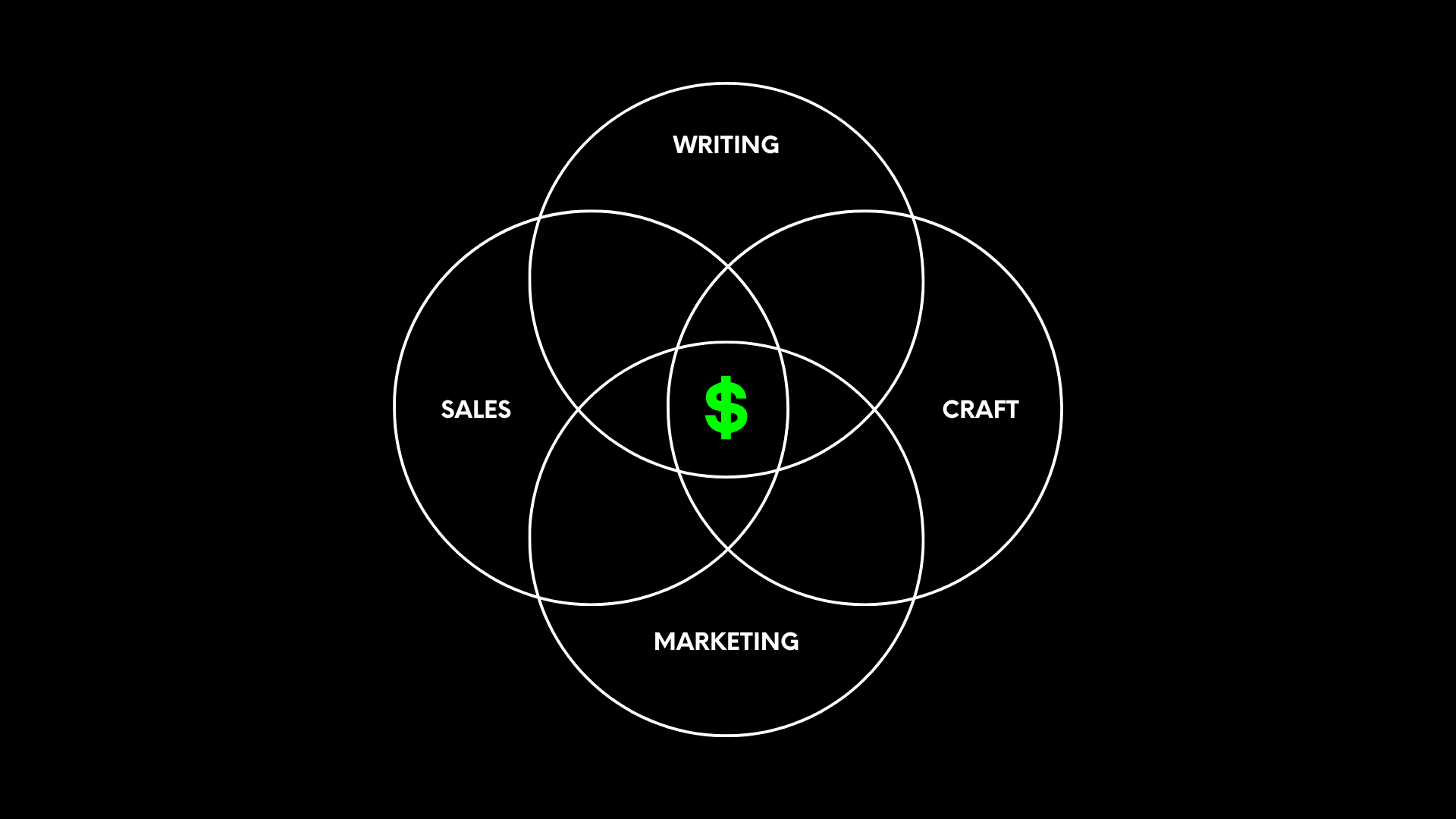
So these are the primary high-income skills.
But it’s also important to have the following secondary high-income skills:
AI use
Design
Storytelling
Video editing
These skills are also very valuable.
But they’re secondary because you can build a successful one-person business without them and because they’re also easier to outsource.
You can hire a video editor or a freelancer to design your website.
But it’s harder to outsource sales or writing.
Sure, you can hire a sales rep or ghostwriter, but if you’re starting out, this won’t be realistic (because it’s expensive and you consistently need to write and sell).
If you don’t understand how writing and selling work, you probably won’t make it.
But you can easily make it if you can sell and write, but aren’t able to edit videos or design websites.
So that’s why you want to learn those skills first.
Don’t try to learn them all at once though.
Learning high-income skills is like learning to juggle.
Jugglers start with one ball.
Once they have good control over it, they add a second one.
Then a third. Then a fourth. Then a fifth. Etcetera.
High-income skills are the same.
I recommend starting with writing.
If you can write, you can create content that grows your audience and email list.
This puts you in the perfect position to learn the second high-income skill: selling.
Learn to write. Then learn to build and sell. If you can do these things, you’ll be unstoppable. If you want to master digital writing, check out Aesthetic Writing.
But anyways, now you understand:
1) How a one-person business works
2) What skills you need to make it work
This puts you in the perfect situation to learn the next topic we’ll cover:
Your niche (or lack there of, let me explain)
The Nicheless Niche (Specialists vs. Generalists)
There are usually 2 camps when it comes to picking a niche.
1) The specialists. They urge you to niche down as much as possible. If you don’t, you’ll never make money. They prioritize money and have usually boring businesses.
2) The generalists. They tell you to write about whatever you want. If you do, people will magically give you money. They prioritize passion and usually barely make money.
I’ve tried both approaches - and both failed me.
As a specialist, I made money but I hated the process.
As a generalist, I liked the process but made no money.
This led me to develop my own approach to it:
I call it the Specialized Generalist.
You specialize in one thing and you still talk about what you want.
But in a way that makes it interesting to other people.
You niche down your offer, but you don’t niche down your entire brand.
This sounds a bit abstract, so let me clarify it with an example.
For this, you need to understand the Customer Journey.
This is the journey that your customer needs to go on to go from where they are to where they want to go to.
In my case, here are the things they need to learn for this:
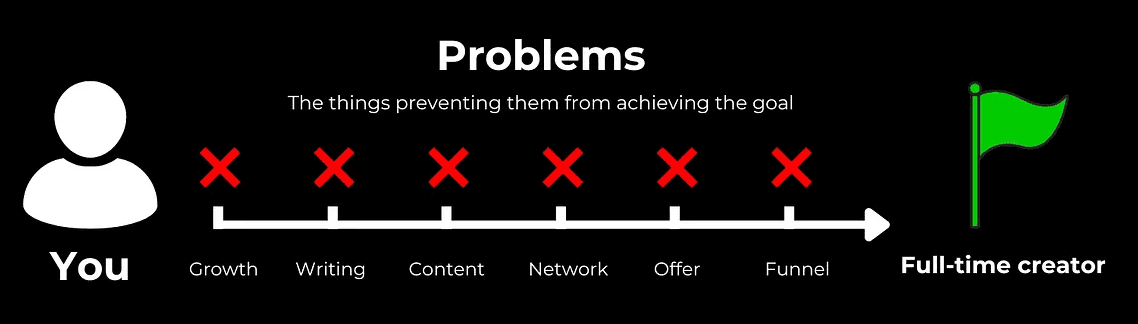
According to specialists, you should stick to these topics to make money.
And they’re right that I need to talk about these topics to build authority.
But here’s what they miss:
People who want to grow and monetize their audience care about much more than just growth and business tips.
You could call business and writing the primary topics.
Because you need these to get the outcome.
But there are also tons of other topics that might be useful to people who want to build a one-person business.
For example:
Habits
Fitness
Mindset
Productivity
Emotional control
And many more.
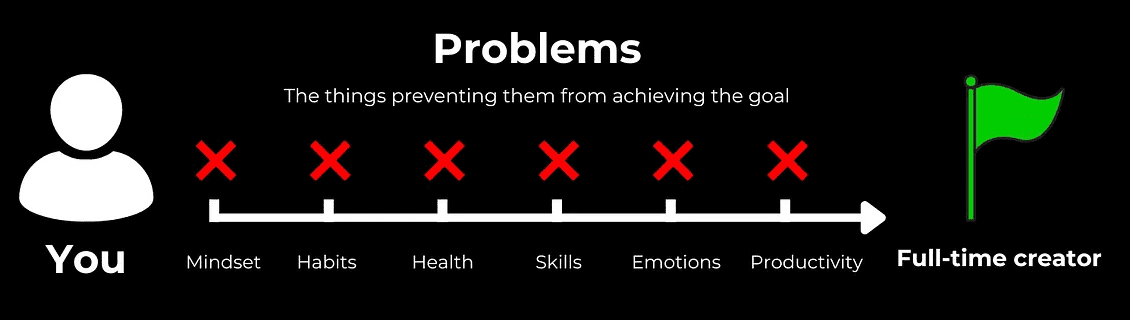
We can call these your secondary topics.
These aren’t required to build a business, but they will make it much easier to build a successful business.
So most people who want to build a business will also be interested in these topics.
Because it helps them to achieve their goal(s).
And this is what makes it interesting to them.
It’s not so much about sticking to certain topics.
It’s about showing people how a topic will help them to achieve their goals.
That’s the secret to talking about whatever you want while still make money.
I’m not in the walking niche.
But if I want to, I can talk about it by showing my audience how it’ll help them to achieve their goals.
Like this:
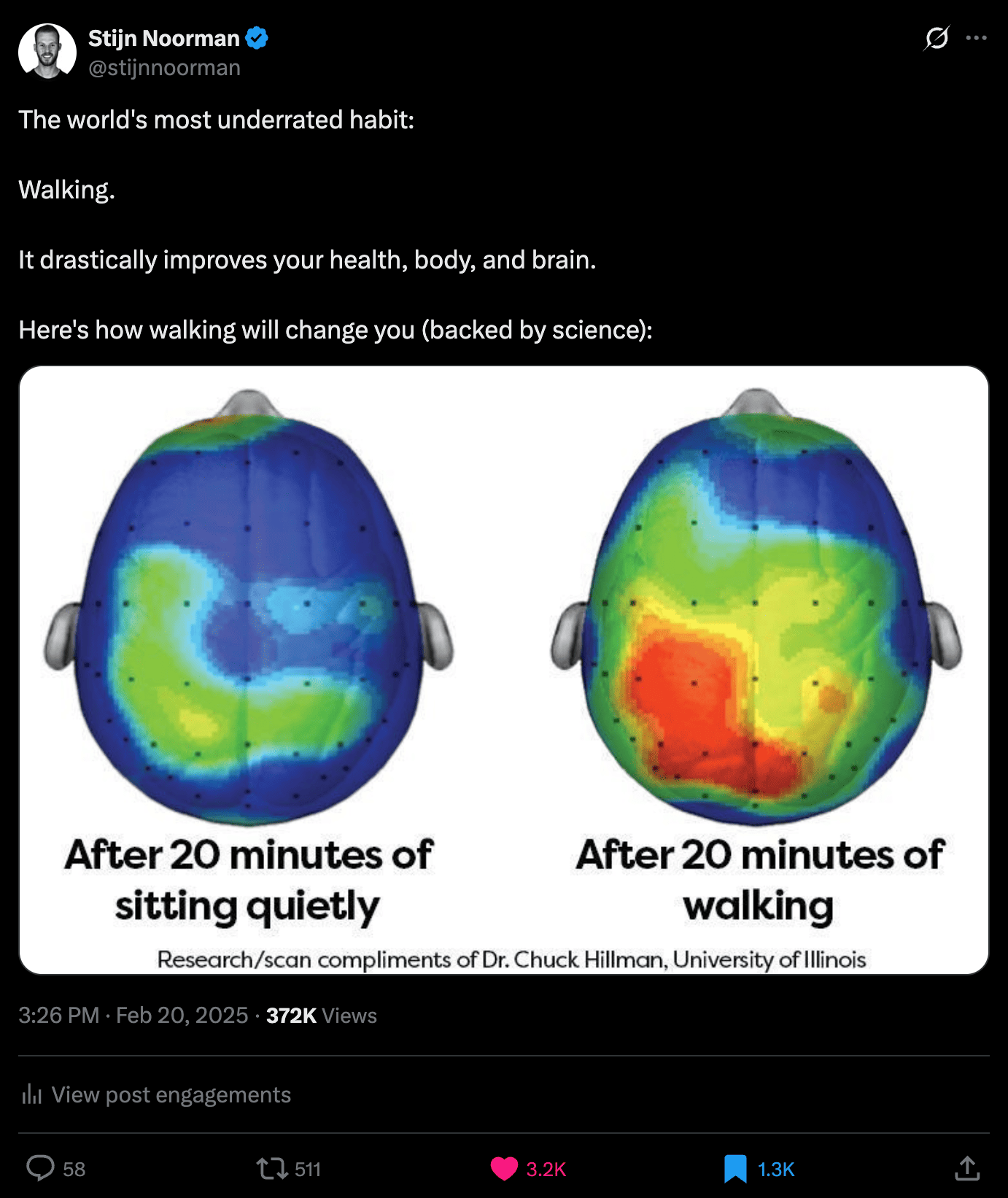
See what I did there?
My audience may not care about walking, but they care about growing their audience, making more money, and improving their health, body, and brain.
So if I show them how walking helps them with this, they become interested in it.
It’s not about the topic, it’s about showing how the topic benefits them.
People don’t care about your ‘topics’ or interests, they care about what these topics can do for them.
So clearly show them how it will help them and they’ll be happy to listen.
But how do you know what people care about?
People figured that out long ago, so let’s talk about the eternal markets.
The Eternal Markets
The 3 eternal markets.
Health
Wealth
Relationships
Or the one overarching market: happiness.
You need to pick an outcome that people care about in one of these markets.
Examples:
Health: getting a sixpack
Wealth: making $5k/mo online
Relationships: getting a girlfriend
Then you identify the problems they need to solve and the primary and secondary skills that they need to develop.
Then you make a list of the topics they need to understand for that and the interests you want to talk about (that could help them).
This will give you plenty of content ideas.
If you need a place to start, it can be helpful to come up with your Ikigai and Brand Ikigai.
Your Ikigai is your ‘reason for being’.
Your Brand Ikigai is your ‘reason for brand’.
I created the Brand Ikigai because ‘Ikigai’ is great, but your Brand Ikigai is more practical when it comes to building your brand.
Make a list for 4 for of the categories and look where they all connect:
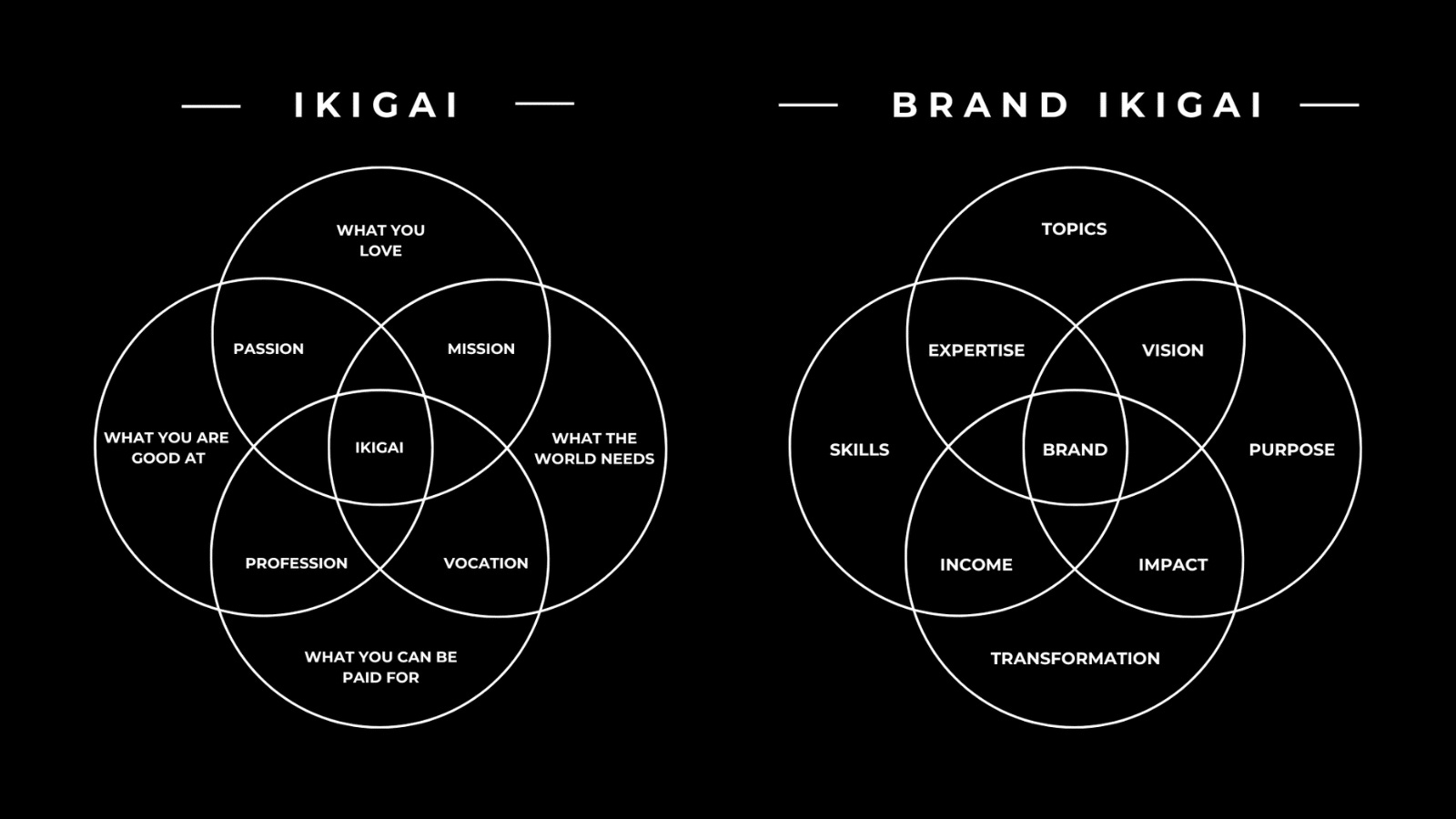
After you’ve done this, you’ll have clarity on:
How to sell
What content to create
How you build an audience
So now that you understand all of that, let’s jump into the 8 practical steps you can take to build a one-person business.
How To Build Your One-Person Business
There are 8 steps to building your one-person business.
1. Pick a Platform
I recommend you start on Twitter (and Substack for long-form writing).
I started on YouTube and Instagram and it cost me a lot of progress.
X and Substack are better to start on because only need to learn writing.
Not design or video editing.
So it’s more efficient and it gives you the chance to test your ideas.
In the case of Twitter, the people are business-oriented and it’s great for networking.
Substack is good because it’s still in the early stages so it’s a bit easier to grow.
When you start growing on Twitter, you collect a lot of validated content ideas that you can repurpose later to other platforms.
If you want the system that I used to gain 18K followers and 70M views in 90 days on Twitter, check out the X Growth System (paid) or my Twitter Simplified ebook (also free once you sign up to my free newsletter on Substack). It’s made for twitter, but the same principles apply to other writing platforms like Substack, Threads, and LinkedIn.
2. Optimize Your Profile
Your profile needs to look professional.
It determines if people follow you and if they see you as competent.
So iterate until it looks like you could have 100K followers.
Include the following 4 things:
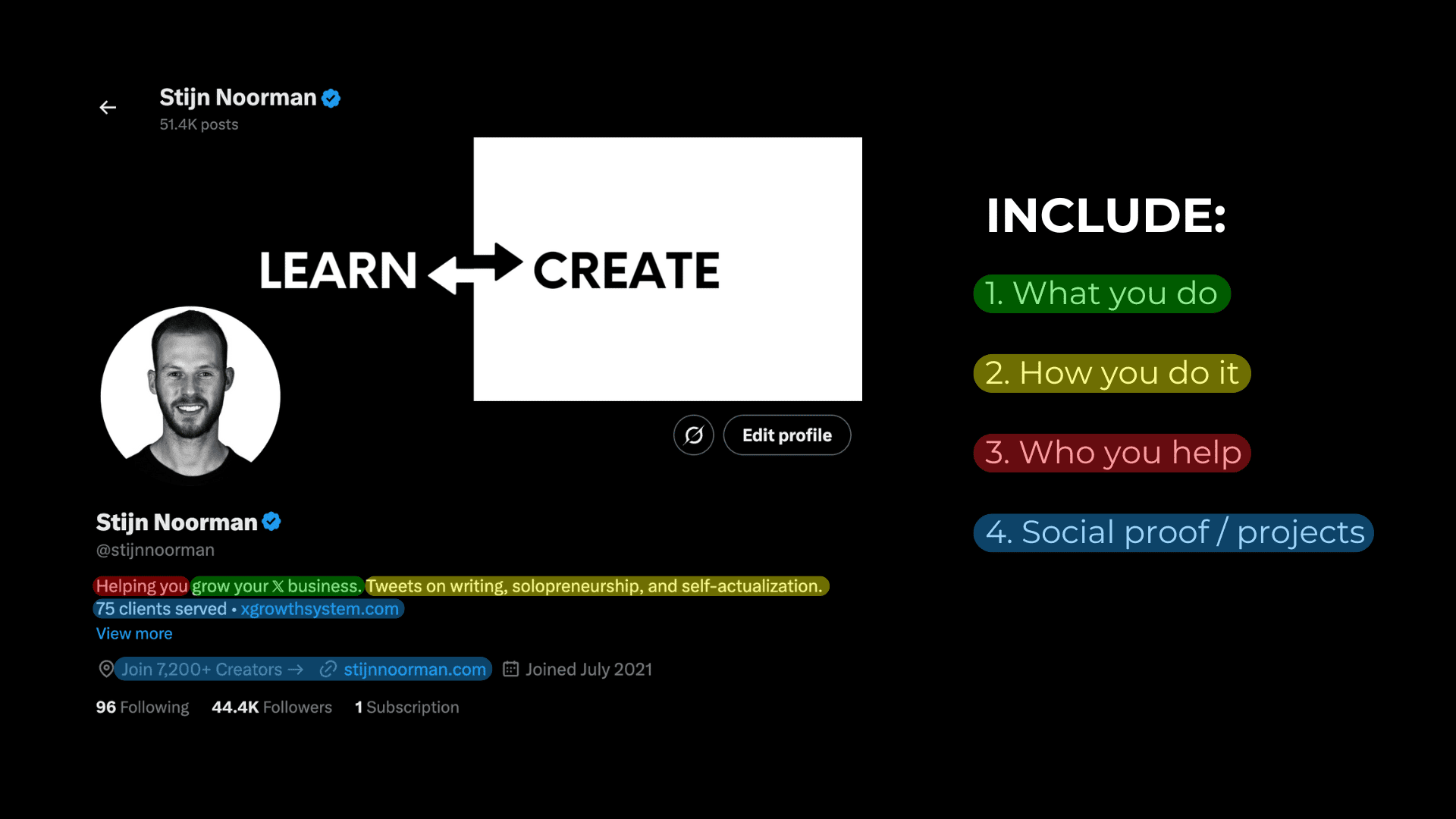
If you want to keep it simple, just use this template:
“I help [who you help] achieve [outcome] with [main topics].”
Bonus points for adding social proof.
3. Create Content
The goal of content is to gain followers and customers.
You gain followers with growth content.
Listicles
Platitudes
One-liners
Social hacking
Inspirational posts
You gain customers with competence content.
Stories
Insights
Systems
Case studies
Educational posts
Use growth content to grow your audience.
Then use competence content to filter out the customers.
The best creators combine both (I explain the 24 best content types I found after +60K tweets in the X Growth System).
4. Network & Engage
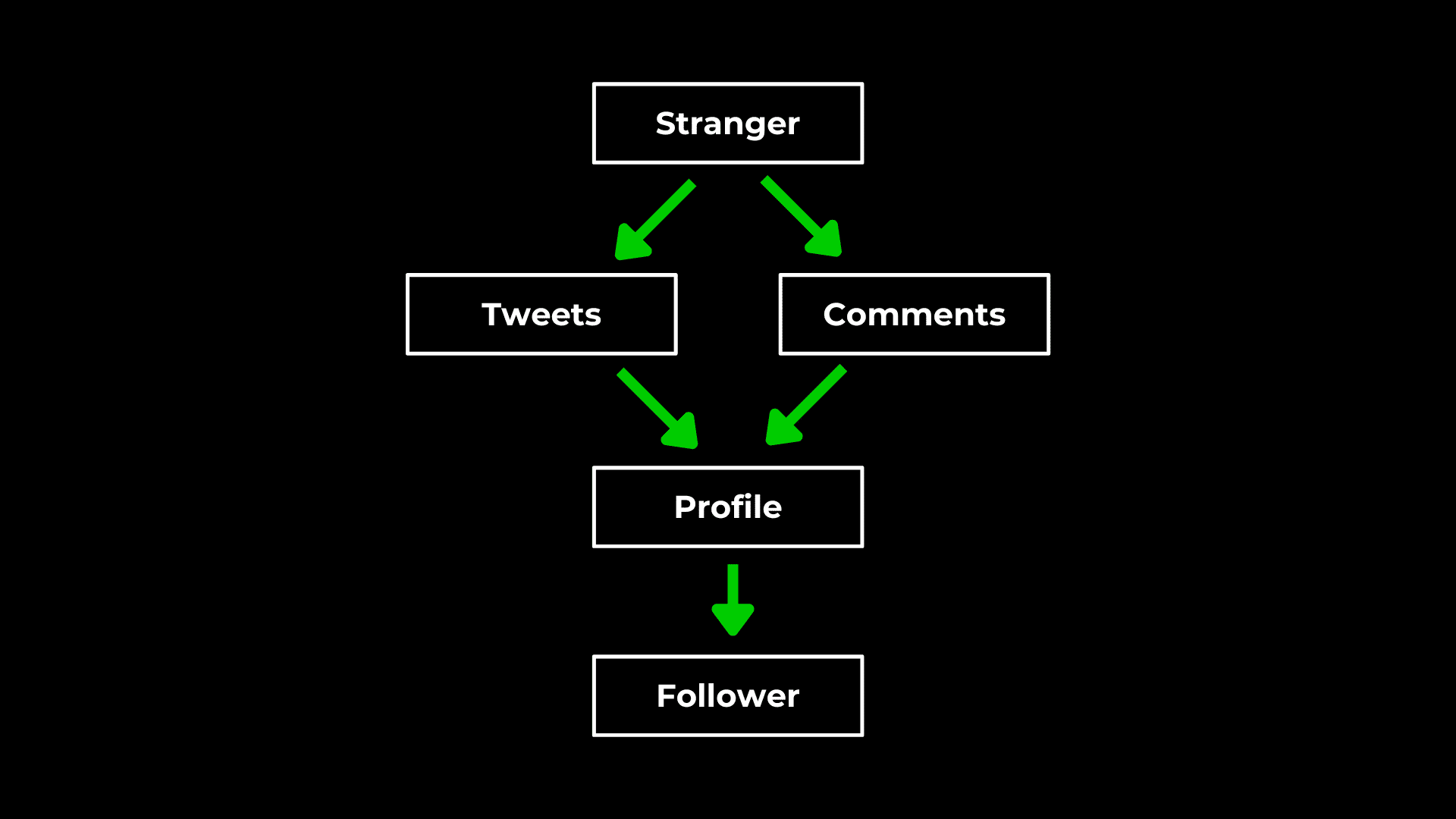
Here’s how audience growth on writing platforms actually works:
People see your post or comment
If it’s good, they click on your profile
If your profile is optimized, they hit follow
But at the start, your content doesn’t have a lot organic reach yet.
So you need to leave comments.
Make a list of 100 people in your niche and leave 50-100 comments per day.
Also follow and DM the people you like best to help each other grow.
This is how you escape beginner hell.
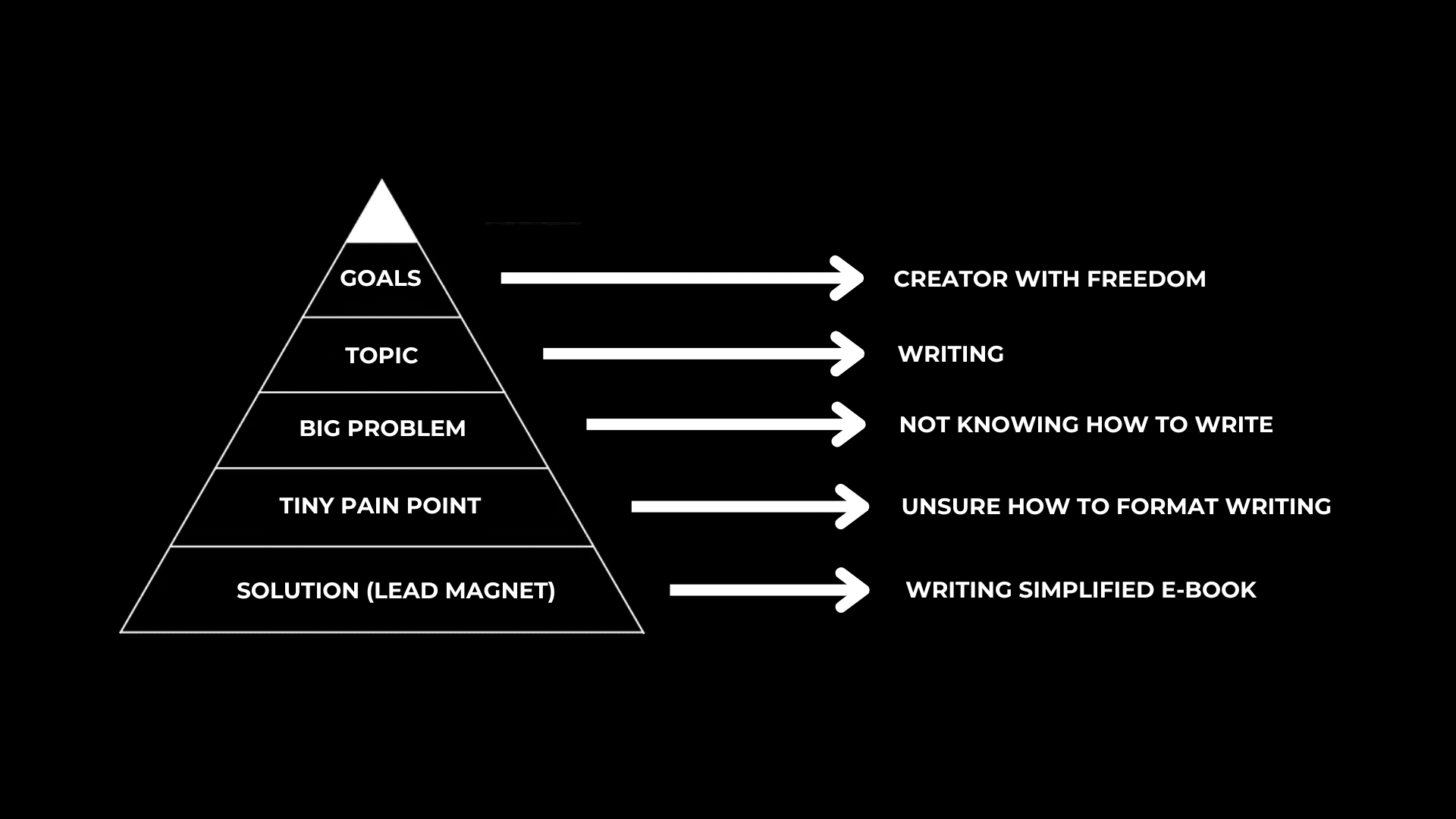
5. Create Lead Magnet
A lead magnet helps you to gain email subscribers and potential customers.
It’s usually a small valuable solution to a problem that your audience has.
To make a great lead magnet:
You start with the goal
You identify the important topics
You write down the problems people face
Then you target one small problem and you make a valuable free product that solves it completely (for example my Writing Simplified eBook).
6. Create Offer
You want to create an offer based on the outcome that you help people to achieve.
It needs to include:
Person
Outcome
Timeframe
Steps to take
Guarantee (optional)
Required effort (time)
Then put a price tag on it that makes sense.
And you determine which type of offer you want to create:
Done For You (DFY) - people pay you to do the work for them.
Done With You (DWY) - people pay you so you help them through the process.
Do It Yourself (DIY) - people pay you for your information so they can go through the process themselves.
All of them work well, and you can even have an offer for all 3 if you want.
I prefer DIY and DWY offers because they scale better (especially DIY offers, but more on that in a second).
7. Build Leverage
Build distribution, then build whatever you want.
– Jack Butcher
Leverage allows you to get a bigger outcome with the same inputs.
This image illustrates it best:

You get a bigger return on your input if you push at the place with the green check.
Business is the same.
Which is why we want to build leverage.
So an audience and an email list.
The bigger it gets, the bigger your returns will get as well (without you having to do more).
It takes the same amount of effort to write an email to 100 or 100,000 people.
But the outcome will be 1000x bigger.
Do work that scales.
8. Productize Your Knowledge
When you have enough leverage, and a process that helps people to achieve a specific outcome, you want to productize your knowledge.
Digital products are great because you build them once, and then you can sell them forever.
This is the stage you want to get to because it’ll help you to sell while you sleep.
You make a product, write the salespage, and then you promote it.
Forever (if you want to).
The bigger your audience gets, the more money you’ll make. And the more people you will help.
Check out Productize Knowledge if this business model appeals to you.
So in short:
Pick a platform (𝕏)
Optimize profile
Create content
Network & engage
Build a lead magnet
Create a valuable offer
Build leverage (audience)
Productize your knowledge
If you do this, you’ll be able to build a one-person business that hit 6-figures.
Talk soon my friend,
Stijn Noorman
PS: if you want my help to build a 6-fig business in 2026, reply AC to this email or DM me AC on Twitter or Substack. If you want my system but prefer to do it yourself, check out the X Business System (removing this soon but customers keep lifetime access).
How I Can Help You
1. X Growth System: How I grew from 0 to 55K 𝕏 followers, +100M organic views in a year, and built a 6-fig creator business without sales calls, ads, and cold outreach.
2. Aesthetic Writing: Learn the best writing strategies I used to gain 70M organic impressions and 18,100 followers in only 90 days.
3. All Resources: Click here to see all my workshops, courses, and other resources (discounts ending soon).
4. Work with me 1-1. DM me ‘AC’ (or reply via email) if you want my help to build a 6-fig Asset Creator business with +50K followers and +100M organic views per year. The Asset Creator model only requires 2-4 hours per day and we focus only on content, emails, and digital assets (no cold outreach, sales calls, or sleazy tactics).
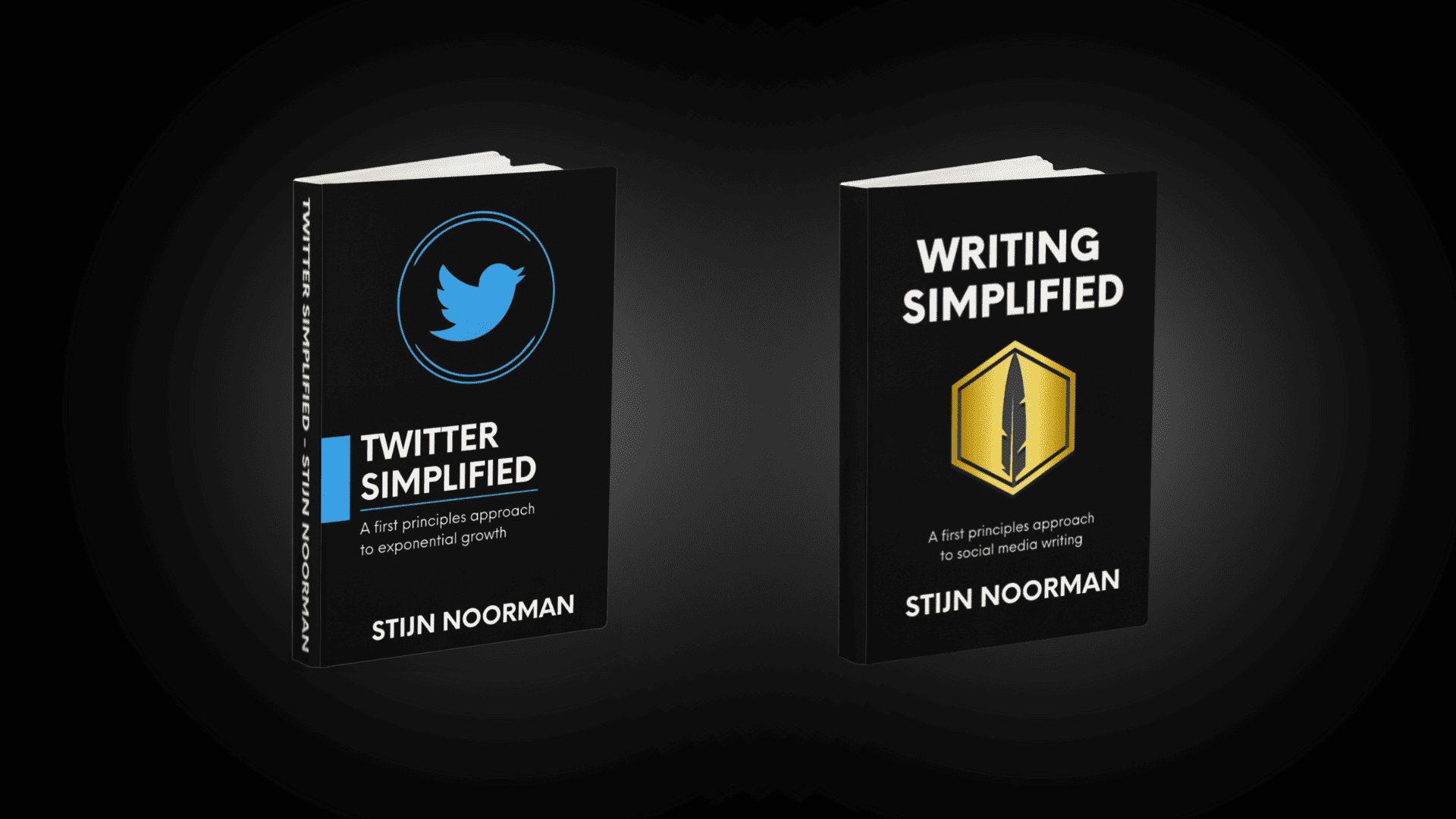
5. Free eBooks. Get my Writing and Twitter Simplified eBooks for free by subscribing to my free newsletter (you also get a bonus worksheet that will help you to build a unique personal brand on social media). If you’re already a subscriber and haven’t received these yet, reply ‘ebooks’ to this email and I’ll send them to you:
The path is here.
Great roadmap