

99% of writers and creators never make enough money to live off.
Not because their writing is bad, but because they’re missing two things:
1) An audience.
2) A way to monetize it.
Most writers ignore one or both of these, and that’s why they stay stuck.
I used to be the same, but once I built an audience and learned how to monetize it, I was able to build a 6-figure writing business.
The good news is that there’s nothing special about me.
I just used monetization strategies that don’t require a large audience.
In this newsletter, I’ll break down the 8 models that actually work, and I’ll show you how you can start earning no matter how big your current audience is.
Monetization Strategies
There are dozens of ways to make money as a writer.
But in this newsletter, I want to focus on the ones that are realistic for most people.
So before we get to those 8 things, let me give you the ones that didn’t make the list:
Books
Retreats
Ad revenue
Sponsorships
Brand collabs
Speaking gigs
Tips / donations
Affiliate marketing
Live events / meetups
SaaS (software as a service)
All of these can work but they usually require a large audience and take much longer to pay off. So I don’t recommend starting with them.
If one of these sounds like your dream business model, don’t let this discourage you. You can still do it, just be mindful that it might take longer because you usually need a large audience or another form of leverage to make it work.
With that out of the way, let’s talk about the 8 ways you can make money as a writer.
Consulting
Consulting is the most direct way to monetize expertise.
Someone has a specific problem, and you help them solve it with your knowledge.
They pay you for your time, but it’s not about time.
For them, it’s about:
Certainty → “Is this the right move?”
Clarity → “What should I actually do?”
Speed → “How do I avoid wasting months on the wrong things?”
Personalization → advice tailored exactly to their context
They pay you to help them to solve their problems faster.
Consulting is usually 1-1 but it can also be in a small group.
If you have some valuable knowledge, you can start selling 1h consulting for $50-$100. As you grow and get more skilled, you can keep increasing your prices.
This may seem expensive at first, but it’s really not. People don’t pay for one hour of your time, they pay for your help to solve their problem(s). And these problems are usually worth far more than what you charge for the consulting. That’s why it works.
In short:
Consulting is a direct transfer of expertise that helps someone to solve their problems.
Courses
A course is a structured path that takes someone from Point A to Point B on a specific topic.
It’s more than “a bunch of videos.”
A good course has:
A clear starting point (who it’s for)
A clear end result (what they’ll be able to do after)
A step-by-step path in between (lessons that teach them what to do)
A common argument against courses is that “all information is free.”
But this misses the point entirely.
People don’t buy courses for information.
They buy them for:
Reassurance → “Am I doing this right?”
Clarity → “What do I actually need to do?”
Order → “In what sequence should I learn this?”
Speed → “How do I avoid wasting 6–12 months on trial and error?”
You could probably find all information online, but it would take a lot of time and effort.
Free content is scattered. A course is organized.
Free content gives pieces. A course gives a complete path.
Free content gives information. A course helps you make a transformation.
Free content is like collecting puzzle pieces without knowing what the puzzle looks like.
A good course gives you all the puzzle pieces, shows you the final picture, and explains the steps to recreate it.
Information might be free, but it takes time and effort to find it all and to see how all of it is connected.
Courses cost money, but they save a lot of time, effort, and avoid expensive mistakes.
Good courses can save you thousands in opportunity cost.
As a creator, a course is also a very attractive business model:
It’s infinitely scalable
You earn with your mind, not your time
You build it once and you can sell it forever
You do need some leverage to make it work though.
In short:
A course is a repeatable system that helps people achieve a specific result.
Community
A community is a place where people gather around a shared goal or interest.
It’s about connection, support, and belonging.
People join communities because they give them:
Belonging → “I’m surrounded by people like me.”
Access → the ability to ask questions and get clarity
Identity → being part of a group reinforces the behavior
Momentum → seeing others progress makes you progress
Accountability → being in a community holds you accountable
Support → answers, encouragement, and feedback on demand
The value isn’t just the content.
It’s the environment.
For the creator, a community is:
A brand asset that strengthens loyalty
A long-term container for your audience
A direct feedback loop on what people need
Recurring revenue with high retention (if you do it well)
It’s an effective model, but it’s time-consuming. I had a successful community but had to shut it down because it drained me (I’m very introverted).
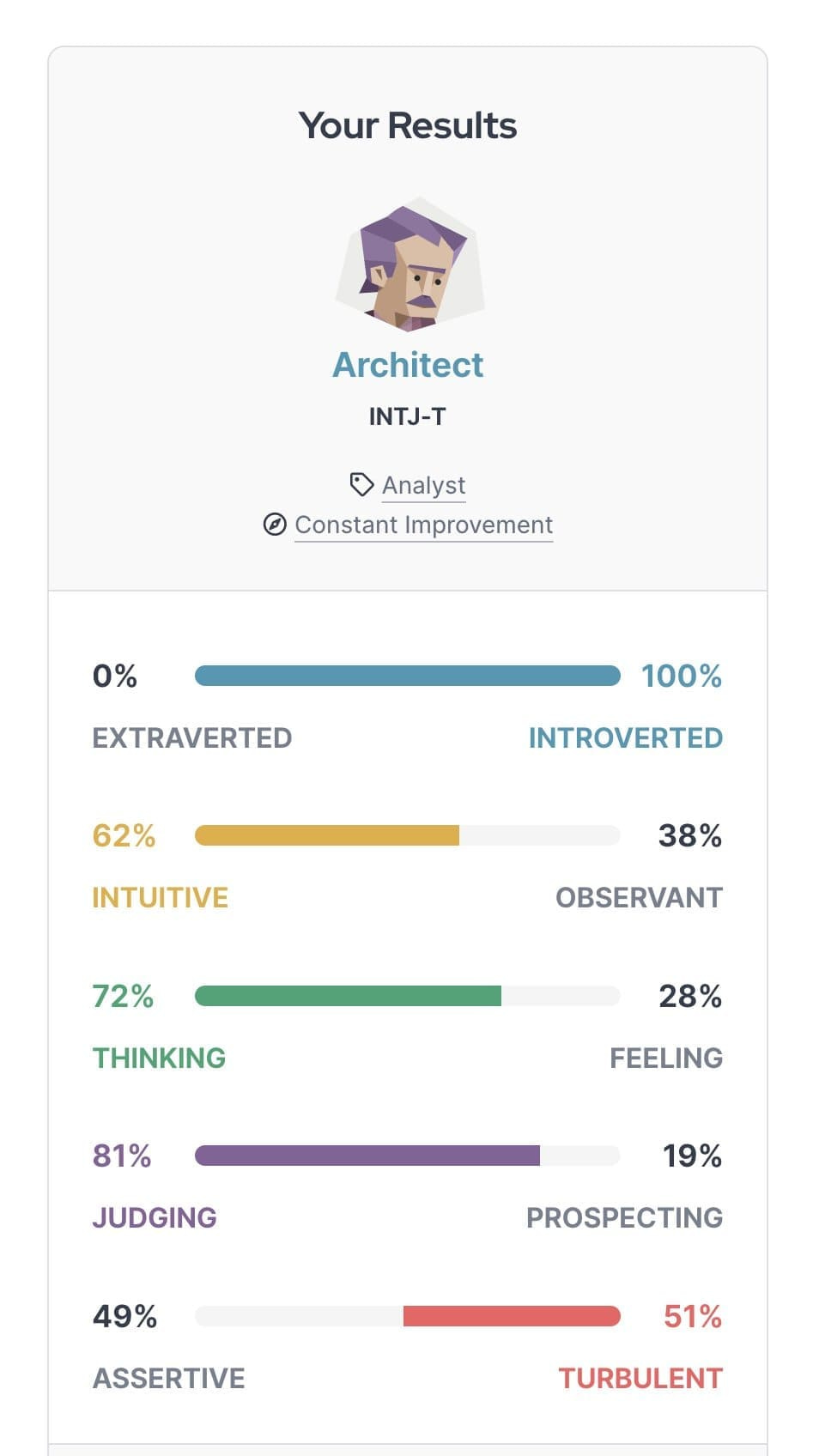
Side note: any other 100% introverts here? If you took a personality test as well, let me know your results in the comments!
In short:
A community is a place where people grow faster because they’re not doing it alone.
Cohort
A cohort is a structured program that a group of people goes through together.
You can think about it as a course with consulting for a set period of time.
It combines the best parts of courses (lessons and a clear path) with the best parts of coaching (feedback and accountability).
People join cohorts because they give them:
Structure → a schedule that forces progress
Accountability → others moving alongside them
Feedback → real-time corrections and guidance
Momentum → deadlines that remove procrastination
A cohort isn’t just information.
It’s a guided experience designed to create results in a certain timeframe.
For the creator, a cohort is:
High-impact (your involvement increases results)
High-value (people pay more for access and feedback)
High-testimonial (every student hits milestones together)
High-feedback (you prove your system works and can improve it)
In short:
A cohort is a structured program where you help a group of people to achieve a certain outcome in a certain timeframe with your support.
Workshops
A workshop is a focused session where you solve one specific problem completely.
It’s short, practical, and immediately useful.
People buy workshops because they want:
Speed → learn something in 60–120 minutes
Clarity → examples and practical action steps
Confidence → seeing the process live reduces doubt
Support → the ability to ask you questions after the workshop
Workshops are a great way to give people a change to try out your stuff.
The commitment is small, the price is accessible, and people can quickly see whether they like learning from you.
They’re also good for you because if someone gets a quick win from a workshop, they’re far more likely to trust you with a bigger transformation later.
For the creator, workshops are:
Easy to sell
Fast to produce
A good way to make money quickly
Perfect for solving one problem at a time
A great testing ground for bigger products
You can sell workshops for $50-$200 each. If you want to remove all risk, you can offer a refund if they don’t find it valuable.
I’ve sold 11 workshops to hundreds of people and only 2 people asked me for a refund, so it’s worth it as long as you make the workshops as good as possible (click here to get all my 11 workshops for a $1703 discount).
In short:
A workshop is a focused lesson that solves one problem completely. It’s simple to deliver, valuable to the audience, and easy to turn into an asset.
Digital Assets
Digital assets are small digital products that solve a specific problem quickly.
Examples are eBooks, templates, swipe files, checklists, scripts, and toolkits.
They’re not full courses. They’re more like useful shortcuts.
People buy digital assets because they give them:
Clarity → proven examples instead of guessing
Speed → a complete solution they can use immediately
Simplicity → no long lessons, just the exact thing they need
Implementation → tools they can plug directly into their work
These products work because most people don’t want to reinvent the wheel.
They want something that removes friction, saves time, and gets results quickly.
For the creator, digital assets are:
Fast to produce
Evergreen once built
Easy to price and easy to buy
Perfect entry products that turn followers into customers
Potential bonuses you can use later to increase the value of your courses
In short:
A digital asset is a practical small tool that helps someone do one thing faster, better or easier.
DFY Services
Done-For-You (DFY) services are the most hands-on model.
Instead of teaching someone how to do something, you do the work for them.
Some people don’t want knowledge.
They want outcomes.
And they don’t want to spend time and effort to do it themselves.
People hire DFY providers because they get:
Certainty → they know it will be done correctly
Quality → they leverage your skill, taste, and experience
Energy → the work gets done without them lifting a finger
Speed → faster results than if they have to learn it themselves
The people who buy these services usually have enough money but not enough time.
That’s why they don’t mind hiring someone to do the work for them.
This model works because time, skill, and attention are scarce.
Examples for writers:
Ghostwriting their content
Writing their YouTube scripts
Writing their sales pages or emails
For the creator, DFY services offer:
High-ticket prices
Fast income early in the business
Direct experience with client problems
Skills that improve fast through repetition
Clear case studies that give you social proof
You can earn well almost immediately with this.
It’s also helps you to learn more and to practice a lot, so that’s why it’s a great business model at the start. But the trade-off is that it costs you a lot of time, so it’s not scalable if you do it by yourself.
In short:
Done-for-you services are where you do the work for someone. You learn and earn a lot, but it’s not scalable by yourself so your income is capped.
Paid Newsletter
A paid newsletter is basically a weekly newsletter that helps people to get smarter, healthier, richer, or more productive.
People pay for these newsletters because they get:
Depth → ideas you don’t share publicly
Access → a closer relationship with the creator
Results → systems and strategies that work right now
Consistency → valuable content arriving on a schedule
A great paid newsletter offers one or more of these:
Frameworks
Industry analysis
Exclusive insights
Actionable strategies
Practical breakdowns
Behind-the-scenes thinking
A clear theme or transformation over time
It works because people want to stay sharp without doing all the research, filtering, or thinking themselves.
You become their “mental shortcut”, someone who sees patterns, connects dots, and gives them the signal without the noise.
For the creator, paid newsletters offer:
A loyal audience
Predictability and stability
Monthly recurring revenue
A direct line to your buyers
A way to test ideas before turning them into products
The downsides are that you need an audience to make a decent living with it and that it’s time-intensive because you need to give them new value every week.
In short:
A paid newsletter is a weekly newsletter that helps people to get smarter, healthier, richer, or more productive. It scales well but it doesn’t pay well short-term.
Practical Gameplan
After reading the above, you probably feel drawn to 2–3 of these models.
My recommendation: pursue the ones that seem like the most fun.
All of them are extremely profitable when done well, and the best way to do them well is to actually enjoy the work because:
Enjoyment leads to practice
Practice leads to mastery
Mastery leads to wealth
That being said, some models are easier to monetize early on.
If short-term income is your priority, here’s the fastest path:
Build an audience with valuable content on X and Substack
Start with consulting and/or a DFY service like ghostwriting
Get great results for your clients and productize your solutions
Use writing to grow your audience and sell the product on scale
Sell workshops, courses, cohorts, and digital assets once you have an audience
Start a paid newsletter or community only later if you have an audience (optional)
That’s what I would do if I had to start over.
But it’s your call.
I just wanted to give you the fastest path to becoming a full-time writer.
You can also ignore this advice and go all-in on whatever feels right to you.
If your desire is strong enough, you’ll figure it out.
For example, I’m focused on digital assets, courses and books right now, even though I could earn far more with consulting and DFY services in the short-term.
But I don’t mind because I’d rather earn “enough” doing work I enjoy than earn “the most” doing work I don’t.
A lot of business people call me crazy for this.
But I don’t care and neither should you.
If the model you’re excited about isn’t “optimal” according to gurus, ignore them.
Do what feels energetically aligned.
That’s what will get you the best results long-term.
I’m curious, which of these monetization strategies feels energetically aligned to you?
Let me know in the comments!
I hope this was helpful. If it was, please like it, restack/share it, and subscribe for more.
Until next time,
Stijn Noorman
How I Can Help You
1. X Growth System: How I grew from 0 to 55K 𝕏 followers, +100M organic views in a year, and built a 6-fig creator business without sales calls, ads, and cold outreach.
2. Aesthetic Writing: Learn the best writing strategies I used to gain 70M organic impressions and 18,100 followers in only 90 days.
3. All Resources: Click here to see all my workshops, courses, and other resources (discounts ending soon).
4. Work with me 1-1. DM me ‘AC’ (or reply via email) if you want my help to build a 6-fig Asset Creator business with +50K followers and +100M organic views per year. The Asset Creator model only requires 2-4 hours per day and we focus only on content, emails, and digital assets (no cold outreach, sales calls, or sleazy tactics).
5. Free eBooks. Get my Writing and Twitter Simplified eBooks for free by subscribing to my free newsletter (you also get a bonus worksheet that will help you to build a unique personal brand on social media). If you’re already a subscriber and haven’t received these yet, reply ‘ebooks’ to this email and I’ll send them to you:
I wrote 2 eBooks to help you to write better content and grow faster.
Subscribe to my free newsletter and you get them for free:
Love this.